Archives

so-duh

I have a confession to make. I recently had a soda. Yes, I did. That means, of my own volition, I purchased the vibrantly colored 12-oz. can, pulled up on that little flip top, and brought that fizzy, bubbly nectar–rife with all its high fructose corn syrup–up to my own lips…and swallowed. Then I swallowed again. And, I did all of this under the bright lights of the public eye. I tell ya. That little burst of Sunkist Orange Soda was quite satisfying.

It was a cold winter’s night. Pete and I had gone to our little local community-run movie theater where nice volunteers staff a humble concession stand. I don’t really know how it happened. I was thirsty. Ordinarily, I would have just purchased water–which was what I was assuming I was about to do again as I approached the counter. However, uncharacteristically, my thirst informed me right then and there that it would not be humored this time by just plain water and it insisted that I consider the offerings stocked in the small glass-front refrigerator.

shutterstock_110861171

Alice and the Cheshire Cat

I was stunned. I did not know what to do. Healthy-oriented me does really enjoy a few lines of lightly sweetened specialized iced teas but there were none of those to be found in that bastion of freon-cooled fare. Instead, there were just waters, sodas and those pouches of Capri Suns that you stick little straws into. I panicked. The cloyingly sweet fruit juice concoctions aroused a mild nausea, the sodas provoked my usual disgust and disdain and the concession people were beginning to look at me funny.

Suddenly, the sun logo on the little orange can seemed to wink at me and I found myself saying, “Yes, I’ll have an orange soda.” When I went back to sit in my chair, Pete turned to tell me that the seat was saved…for me. He really did not recognize me with that can in my hand. The last time he saw me with a can of soda was about 1981 when we were parched and poor living in Dallas, Texas.

Now, you might not think this was such a big deal without appreciating that I have about the lowest per capita soda consumption and am kind of like the Carrie Nation of the soda-drinking world. I tote around soda bottles emptied of their original content and refilled with their hidden sugar equivalency. Like I described in Private Health, I paste pictures of skulls and cross-bones on these bottles. I make my victims hold those bottles while I read them the insidious list of ingredients that their beloved brands contain. I make them weep as they promise to not ever imbibe again. When forced on rare occasions to empty the bottles of their original contents so I can use them for my own devices, I don plastic gloves and a face mask. That is how corrosive I consider these substances to be. And, if anyone had ever dared offer my own kids a soda in my presence, who knows what their fate may have been.

So, imagine my inner confusion as I leaned over and whispered to Pete during the movie, “This is pretty good.” Now, don’t get me wrong. It is not like I never had the stuff. I was raised on soda. The only thing that had stopped me from having a relationship with it long ago was an early adoption of a whole foods, crunchy granola lifestyle, an understanding of the depleting aspects of white sugar and resistance to large multi-national corporations. If I had not had such a strong philosophical position on such matters way back, I might have just gone along enjoying these nice little fizzies with the rest of the masses. Especially the innocent flavors like orange, black cherry, and ginger ale. Sometimes they do just hit the spot like nothing else can. If not bolstered by my iron-clad conviction that soda should be a banned substance, I could easily imagine getting another one of these little cans of sunshine the next time I go to the movies. And then, maybe when I go to a restaurant or if I am on a trip. I could then just keep a few in my own fridge.

Maybe I should have relaxed a little last week with my lovely 300 plus-pound 35-year-old client who was diagnosed with diabetes a year ago. His blood sugars are better but still not in good control. He is drinking way less Pepsi than he used to. Now, he only has one or two cans a day, sometimes none, while on the job during the day as a building maintenance supervisor. Should the fact that he is the father of five– the youngest of which was with him during our consult and who was the cutest thing ever–matter? Is it just a coincidence that he sees a connection between his blood sugar levels and his soda consumption?

Maybe I shouldn’t have tried so hard last week to figure out what was up with my 34-year-old pregnant client. Prior to this pregnancy, her chart indicated that there was evidence of high blood sugar–hyperglycemia–without a full diagnosis of diabetes. She came in bemoaning her foul moods, agitation and lack of both patience and energy. Came to find out she has been consuming 2 to 3 liters of Cherry Coke daily for a long while. Imagine her surprise when I pulled out a sugar-filled bottle of her favorite blend from under my desk.

Once again, there is a new hoopla in the divisive soda world as Coca-Cola is releasing these commercial spots touting their supposed corporate responsibility in the fight against obesity while at the same time ignoring the true effects of their confectionery concoctions. You can watch one of them here. My peeps, Mark Bittman, Marion Nestle, CSPI, and others are thankfully responding to this deceptive campaign accordingly. This is good because I am busy in the trenches.

These little stories I cite above are just examples of situations I really encounter over and over, even in the course of a day. Corroded teeth, eroded stomachs, poor mood regulation, extreme belly fat and of course, diabetes lie in the wake of soda consumption and its adherent addiction. It is this that fuels my manic reaction to the stuff–and will continue to do so.

Being diagnosed with diabetes is like falling down Alice’s rabbit hole. Every day I meet the people who have unfortunately fallen into the hole chasing some elusive White Rabbit. Reality changes mighty quickly and quite extremely. Simply awakening from a strange dream will not make it go away. Eating cake will certainly not help and the Red Queen is apt to yell, “Off with her toes!” And, Coca Cola and Pepsico will have nothing to offer except a Cheshire Cat smug grin.

So, though I enjoyed that little refreshment, it will be a long time until my next one.

Thank you for listening, sharing, following and supporting my writing. Please subscribe in the sidebar to receive notice of new posts. Comments and greetings always welcome.

In health, Elyn

IMG_0595

A Bank of Beverage Machine’s My Plate

My Plate Haiku

Did you really think

That you could hide fish in rice?

Oh, the green paste burns!

by A Cat

(from I Could Pee on This and other poems by cats collected by Francesco Marciuliano)
of poverty and light

Amid all of the celebrations of the holiday season it sure is easy to overindulge and to gain those few–oh excuse me for a moment–my dilemma is tugging at my sleeve. Sorry, it seems to be interrupting me to say something about property. Property? Puberty? You know, despite its omnipresence in my life, I don’t even understand my own dilemma sometimes.

It is like when my son was little and (prematurely) learning to talk, he would get so frustrated when his word was misinterpreted. When I would repeat the statement to make sure I had heard it correctly, like, “You want some bed?”,  he could only surmise that his mother must be severely limited and he would implore the heavens for some relief. Who on earth he would beg says, “I want some bed”, and even if they did, why would they say that when standing in the kitchen after nap time? What part of “bread” does my mother not get?027

My dilemma is reacting the same way now. So, with a deep breath, I will take its sweet little face between my hands and ask it to calm down and try to tell me again. Oh, I get it now. Poverty. My dilemma is asking me if I could please not write about holiday eating, but instead about poverty.

Oh, poverty. “Right now?” I ask, in the midst of this season of tinsel-tinged holiday cheer? Yes, it replies. Write about it on this darkest day of the year when we most crave the light to illuminate all that should be revealed. “Can you just try?” it says in that adorable little voice. “About poverty and nutrition?”

What do I know about this topic and what credentials do I have to write about it? Well, I do work in a Federally Qualified Health Center that serves the economically poor–the uninsured, the underinsured, those who sit at the bottom of the economic ladder, those lacking in many of the resources that others easily possess. And, I do educate on nutrition. Yet, I am still nervous to presume that I have the right to tread here. My own perceptions are actually a bit blurry.

Though every day I am deeply privileged to have my clients share the stories–somewhat intimate–of some parts of the realities of their lives, I cannot claim to really know what their impoverishment feels like. And, though yes, the majority of my clients are poor, some poorer than others–they all mainly go to sleep with some roof over their head and some food in their tummies. Furthermore, they possess a richness that nourishes and inspires me as well–whether it be of spirit, honesty, feeling, fortitude, resilience, wisdom, story-telling, family and community connection, self-reflection, humility or appreciation.

Yet, I am still perplexed, so I look back at my dilemma and ask, “But, don’t people already know about poverty and nutrition? That it is complicated but it has something to do with the cheapest (hunger-slaying) food often being the least healthy; the battered economy; governmental food subsidies; food deserts; reliance on convenience and processed foods; income inequality; the history of supplemental and commodity food programs and the lack of a just and sustainable food system?

And, haven’t I already discussed things like food addiction and the impact of excessive sugar-sweetened beverages on emotional and physical health? And, I probably have already ranted about even bigger, more amorphous issues like lack of breastfeeding, TV advertising, health disparities, a stress-based society and may I now even add environmental toxins and gun violence which disproportionately affects our poorer neighborhoods–and how I believe all these things affect our bodies and who we are as eaters.

My dilemma nods and whispers, “Well, is there anything else you’d like to add?” I sigh. Maybe it is on to something. There are many disparaging assumptions made regarding how the poor feed themselves. Maybe what I can do for today is to shed some light on how poverty in modern-day America infringes upon the hunting, gathering, and metabolic fundamentals required for normal human nutrition–a process that has become quite enigmatic for many, but more profoundly for those who must often do with very limited resources. In the daily conversations that I have about this elusive, ill-defined quest for proper eating–oft imagined as being as simple to prescribe as popping a pill–I am perpetually filtering many realities that are probably rather obscure.

So, here it is. Most of my clients would like to eat better. They would–but there are numerous hindrances. Many are tired. Very tired. Those who work, often work very exhausting types of jobs. Many of them–the home health aides, the certified nursing assistants, the truck drivers, the cleaners, the warehouse stockers, and even the retail workers–work variable hours, often with overnight shifts which distress the natural circadian rhythms and thereby the sleep and eating patterns. Those who don’t work are often depressed or in chronic pain. Food provides easy relief. They live in neighborhoods where people get shot and murdered. They forget how to use and move their bodies. Many over their lifetimes have cared for so many others that self-care is just an amusing oxymoron. Often, just the physical requirements that cooking entails become difficult.

Additionally, when money is tight for food, so commonly it is for all the things associated with food preparation and eating. This includes appliances like stoves, ovens, dishwashers, refrigerators, and freezers–and even the kitchen table and chairs. Some of my clients live in accommodations where not all of these are provided or where they are not properly working. Some only have a microwave to cook their food. Some live in settings where they have to share a kitchen with random roommates. Some people keep food in their bedrooms to prevent others from eating it. Those who live in group programs have no control over the type of food that is provided.

And, then there are the even smaller things like a set of good knives, measuring cups and spoons, pots and pans, a blender, a cutting board, a steamer or a food processor. For many a modern cook, one could not imagine even basic food preparation without most of these accouterments, if not even more. Yet, for some, these are downright luxuries. Just recently, I did a display on winter squashes to promote these nutritionally blessed, fiber-dense and delicious denizens of the food kingdom–but even so, I was cognizant that unless one buys them pre-cut and frozen these pretty gourds demand a whack of a proper, well-sharpened knife to reveal their inner gifts.

Each person has their own circumstances. Though I must serve my clients quickly and effectively I have to obtain some information before I venture in with suggestions. I cannot assess for all of the above. I must pry for information with the utmost gentleness and respect to get a quick sense of where we are starting from. Depending on the person, sometimes it is obvious, sometimes not. The foods that are now commonly touted to be required for a healthy diet, I sometimes must ask permission to utter. I say things like olive oil, brown rice, walnuts, almond milk, and on a good day, quinoa, preceded by “may I?” and followed by “thank-you.” What might seem like a molehill of a price differential could quite truly be a mountain.

Thankfully, there is usually space for an appropriate conversation about food and eating when the context is understood and appreciated. And, fortunately too, the realm of health-giving foods contains some low-cost and readily available options. My clients are glad to be reminded of them. Usually, they learned of them from their grandmothers as well. But, most importantly is when that light goes on that says that they are worthy of nourishing themselves in the best way that they possibly can. That they matter. Then this abstract matter of nutrition begins to make some sense.

So, I guess, my main observation is that bottom line, despite our economic differences, we are foremost eaters–doing the best we can with what we know and what we have at the moment. And, that somewhere, somehow, it is always about love. I look back at my dilemma for some confirmation. Oh well. It has fallen fast asleep.

Thank you for listening, sharing, following and supporting my writing. Please subscribe in the sidebar to receive notice of new posts. Comments and greetings always welcome.

Read below on the new My Plate Invitational

In health, Elyn

ChooseMyPlate

USDA MyPlate Plate

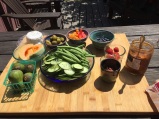
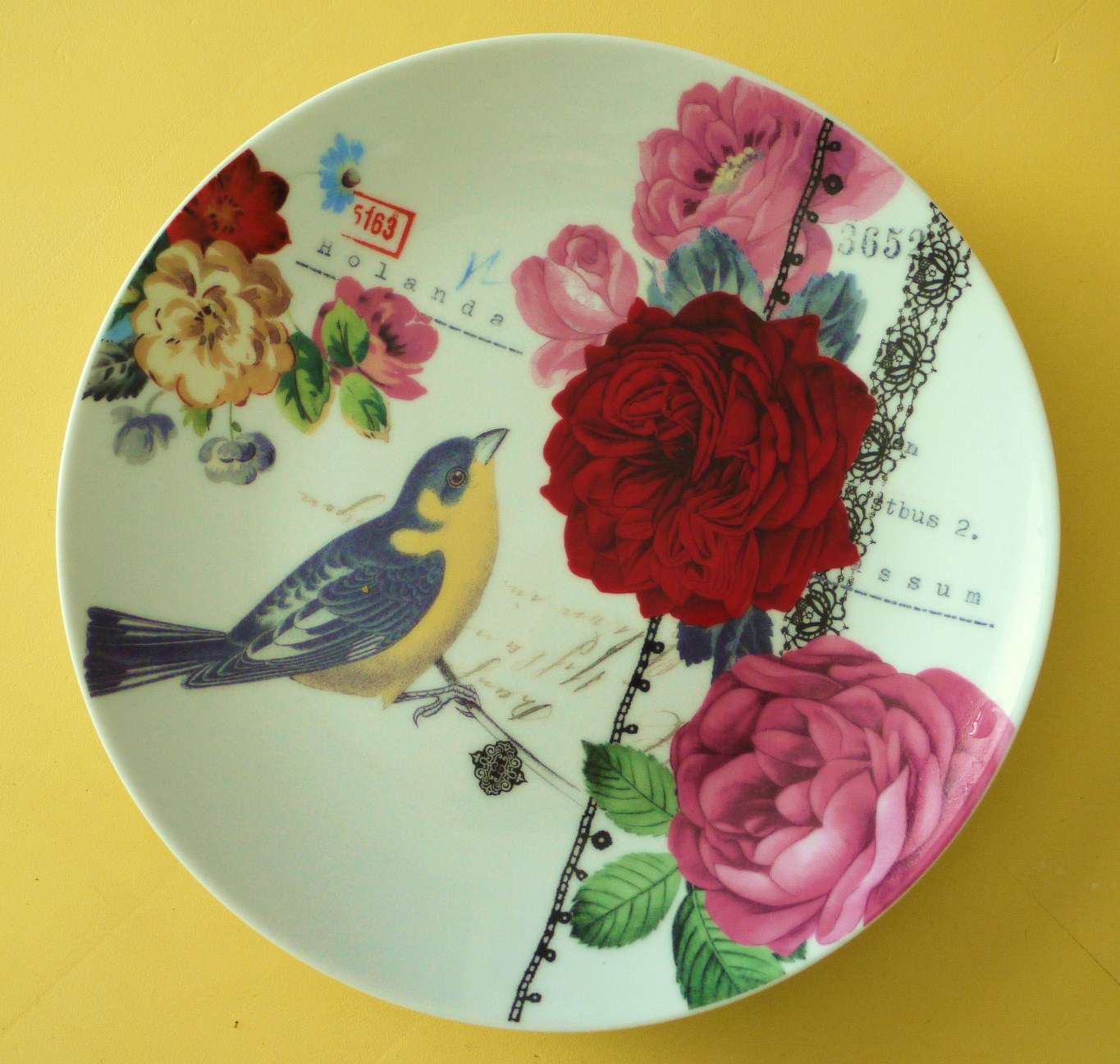
My Plate: In honor of the New Year, I invite you to submit a photo of your own beautiful plate to be placed in the rotation along with the My Plate Haikus. My Plate (your plates) will offer a prettier and more personal representation of the MyPlate put forth by the USDA as a model of how Americans should feed themselves–which replaced the MyPyramid. I can’t wait to see your plate. It can portray whatever nourishment, pleasant eating, or mealtime means to you. It can contain a meal you have prepared or been lovingly served, a depiction of feeding, or just some beautiful dishware. My Plate Haikus always welcome too.

You may include it in a comment or submit to zimmermanelyn7@gmail.com/Subject Line: My Plate Photo

dear eaters

Recently, having taken the commuter bus to work, I walked past a low-income housing complex that is on the way to the Health Center from the bus stop. As I approached the complex, I saw two women standing on the sidewalk in front of the buildings. I would guess they were both in their sixties. One of them was blind and holding her white cane. The other stood very close to her, ready to guide her if necessary.

Bissau, Guinea-Bissau

I was quickly scurrying along, gauging my pace on my need to arrive at my office on time. As I only take the bus on occasion, I was aware that my mind was taking in very different impulses along this route than when I drive. As the two women came into view, I processed thoughts about the nature of their relationship, kindness, the burden of poverty coupled with blindness, and a reminder to myself to work on my gratitude list. Just as I was passing them, the blind woman said, “And I heard that sugar substitutes aren’t that good for you and that they make you crave more sugar.” The sighted woman replied, “Yes, I heard that too.” (Resources: Sweet Deception, Sweet Misery)

I often say that it does not take long in the course of my day for some nutrition-based message to filter into my consciousness. Yet, this was an unexpected source. By the time the women exchanged the two sentences my steps had already taken me just past them. For a split second, I thought to stop to engage them in a conversation, to inform them of my nutritional proficiency and expound on the topic of artificial sweeteners, affirming what they had heard. Instead, I felt my lips turn into a mild smile that was intended to be for them, but that neither would ever see.

I think I absorbed the experience as a quiet lesson that one never knows how or where new information flows. In this regard, it related to my own work of attempting to expand nutritional consciousness and yet not always knowing how or where my own or others’ efforts are reaching. I internally thanked the women and carried their story into my day–and referenced them as my teachers with some of my clients.

This story also has meaning for me as I come full cycle of having written this blog for two years–and as I contemplate beginning a third. Looking back, I see that I have written seventy-five posts on various nutrition-related issues. I see them as vignettes that describe the milieu that defines eating in this current and complicated time; the challenges that dictate and mutate our food culture and the experience of the real and humble people who eat in response and reaction to this environment. I hope others see them in this way too.

I often wonder if my stories have resonance and purpose and whether they are instructive. Or, if they need be. Many people out there are doing incredible work and informing in clear and beautiful ways on how to address and improve human nourishment. It is not infrequently that I have doubts about the service of my writings and if they justify the time they demand. Are my words flowing into any cracks and crevices that may be helping others that I may never know about? Or, as my wise friend Lisa Dungate, who writes Lion’s Whiskers suggests, if my writing serves to fulfill some need of personal expression, that is adequate as well. Sometimes I don’t know.

But here are a few things I do know:

Every day a small but real number of people from all over the globe are reading my blog. Thanks to the amazing stat collecting abilities of WordPress, I know that people from eighty-four countries have seen The Nutritionist’s Dilemma. Just yesterday I had readers from Poland, Bangladesh, India, Pakistan, and Saudi Arabia. People in Azerbaijan, Mauritius, Guinea-Bissau, Estonia, and Oman have crossed paths with my ideas as well.

My blog is listed in Healthy Living Blogs and I get some nice readers from that connection. This site offers a very vital community for people writing on many diverse topics devoted to health. I encourage anyone interested in writing and reading about these issues to visit and support the members of this site. I give thanks to Lindsey Janeiro and the staff at HLB for creating this exciting space and offering all the amazing opportunities that they do.

That my blog was also chosen by Marc David and the Institute for the Psychology of Eating as one of the Top 50 Emotional Eating Blogs of 2012. Check out #47. This was a big surprise and very exciting. It is particularly meaningful as Marc David’s work has been phenomenally inspirational to me on my own path. I have shared my feelings about the importance of Marc’s contributions in Three Good Mark(c)s.

And finally, that I have a circle of subscribers who do follow me and who offer words of kind support along with relevant insights of their own; as well as a few hundred clients a year who I am privileged to work with and who always inspire me with their courage and capacity for change.

So, though the anniversary date of my blog just happened to occur during one of the most intense of times–in the post-Superstorm Sandy and pre-election week; and, while my own dining room table was still littered with hurricane preparedness supplies and Halloween trappings; and my head swam with thoughts about health care reform and the millions affected by the storm for whom eating had suddenly taken on a new meaning regarding survival, I committed to continuing the blog that I had birthed into being one fall day, two years ago. For the occasion, I have dressed it up with a new decorative theme that I think is very nice and makes for a cleaner read. If you are a subscriber and usually receive my posts via email, do go to my home page to see its new threads. I hope you like it.

My commitment includes my decision to allow myself greater voice and visibility. In my tiny corner of the world, in the confined spaces of my offices, I bear witness to some big and powerful stories. If I can participate in the larger conversation and in turn can give expression to someone’s experience that may help others–then that can be a good thing. Who knows? Maybe a person standing on a sidewalk in Baku, Port Louis, Bissau, Tallinn or Muscan, or even in my own community will help carry the information or inspiration forward.

As always, comments, clicks on the like button, subscribing, sharing, stories, feedback, my plate haikus–and any suggestions for improving the quality, content or technological capacities of my work are greatly appreciated. No, let me amend that–deeply craved. Let me know you dropped by for a virtual cup of tea with me. Thanks.

In health, Elyn

image

Julie’s My Plate

My Plate Haiku

Eat food

Mostly plants

Not too much.

by Michael (Pollan)

michelle, my first lady

Dear Michelle,

I have been worried about your husband Barack’s eating habits. From following him on the campaign trail during these very arduous times, it seems that news items abound about him chowing down on ribs, chili dogs, pizza and pastries. Yes, I know that he needs to go meet and greet his constituents and that he is eager to support small business owners around the country. This does mean that he must go and find where the people gather–and that is often in settings that involve the communal act of the serving and eating of food.

I deeply appreciate that he is of the people and can get down and chow down with the common folk. I also know he is a very generous guy and stories have reported that he is sometimes buying goodies to bring back to his hard-cranking campaign workers or public servants in the numerous locations where he has touched down.

Michelle Obama - white house kitchen garden

Michelle Obama’s White House Garden


I do not mean to undermine his profound need for nourishment to keep him going, but it seems that a lot of yellow and red light foods are speeding their way down his own gullet–with obvious gusto–and with no traffic infractions being incurred. Just for those of my readers who don’t live in the world of nutrition education, the traffic light metaphor refers to a system of identifying foods as either green, yellow or red light signifying always, sometimes or rarely ever to be eaten.

I am reminded that when Barack’s friend and mentor, former President Bill Clinton was in office, his legendary appetites were the subject of much attention and downright mockery. I remember hearing he lusted for Philly Cheese Steaks. So, why are your husband’s eating habits not garnering the same scrutiny? Unfortunately, unlike pudgy Bill, it is because he is thin–actually, it is worse than that. He is skinny. I say, unfortunately, because being skinny can sneak up and bite ya. I imagine it must have been a bit disconcerting for you when that burly pizza parlor owner, came right over and just picked poor Barack right up off the ground with that big bear hug.

With all the attention on obesity, we forget that the non-obese can suffer health consequences as well and are equally vulnerable to the effects of poor diet, smoking and stress–which I know are issues your husband contends with. These can be more detrimental than just extra pounds alone. I think I heard that he has quit smoking–so that is good.

I will assume that when at home, our dear President consumes lots of White House grown organic vegetables, and grass-fed, hormone-free animal products prepared by some of the best chefs in the land. And, that he plays basketball and does other activities to stay fit. Hopefully, he also has a team of massage therapists and other holistically-oriented practitioners to assist with his well-being. Maybe he just eats these ‘red light ‘ foods when he is on the road–like kids who go crazy for sweets at other people’s homes when such foods are forbidden in their own.

Believe you me, I do know that it is impossible to control our husbands’ behaviors. Here I am a nutritionist, and my own hubby has quite the pedestrian sweet tooth. No amount of my homemade kale chips can keep him from occasionally going out and finding a bag of Cheeze Doodles and the perfect dish of ice cream. I bet Hilary knows what I mean. Still, I am wondering, if given your highly touted platform and efforts regarding the urgency of improving nutritional status and decreasing the burden of illness on our nation, whether Barack could and should be modeling more healthful eating behaviors.

I was troubled by a story I heard on the radio just last week. NPR reported on what Obama and Romney were doing to sustain their non-stop high-energy requirements on the final leg of the campaign. This was right before Hurricane Sandy changed the agenda. They interviewed some campaign assistant who started out by saying that when Barack got off the plane that morning, he headed right over to get some Krispy Kreme doughnuts. You probably don’t know that I have a little, shall we say, vendetta against Krispy Kreme, so you may want to read my posts, Kicking Butt with Krispy Kreme and Magic Doughnuts–The Nutritionist’s Nemesis. So, upon hearing that, I was all ears.

It got worse. I was shocked to then hear Barack himself saying something to the effect that all that nutrition stuff is your thing, but he doesn’t care. It is an election year and the White House will be giving out lots of candy for Halloween. My, I don’t know how you felt about that, but I was disappointed to hear such an off the cuff remark that indicated to me a disregard of the real importance of proper nutrition in improving the health of our citizenry.

To really turn the tide on the dire consequences attributable to the Standard American Diet  (SAD) will take more than lip service. It will take courage to exhibit true leadership in this matter–and leading by example. Sugary sweets are not a substitute for the relief this electorate truly seeks, and perpetuating good-natured excuses and exceptions for our food behaviors will not reduce our massive health costs and its drain on our economy. That quick sugary fix will ultimately lead to a massive crash in mood and energy.

Never you mind. Your husband still has my vote. Yet, I am writing this with trepidation as the election is still a few days away. I do wish for him to have four more years–healthy years– in office. I hope it will not take a quadruple bypass surgery for him to appreciate and attend to the benefits of a healthful and vegan diet as it did his friend Bill. It would have been nice if while stumping in North Carolina he had stopped in at that wonderful restaurant, The Laughing Seed Cafe that I mentioned in Forks on the Road.

Though Barack might not need them, the future of health care, Medicare and Social Security are seriously on the line right now–and we need him to make sure that those programs are there for those of us who will. Perhaps too, with a second term, he can work to integrate some more holistic preventive health measures into Health Care reform. Please, keep up your good work and see if you can get Barack to eat his beets. I read that he does not like them. Do let him know that betalain-rich beets are blessed with many health benefits. Great for the cardiovascular system and the lowering of high blood pressure. And, that makes those beautiful red gems a nice little aphrodisiac food too–wink wink

Thank you for listening, sharing, following and supporting my writing. Please subscribe in the sidebar to receive notice of new posts. Comments and greetings always welcome.

Respectfully,

In health, Elyn

P.S. Congratulations on your beautiful new book, American Grown, The Story of the White House Kitchen Garden and Gardens Across America.

Related Recipe: Minted Spring Pea Salad from American Grown courtesy of Eating Well Magazine

American Grown (Michelle Obama book).jpg

Michelle’s My Plate

My Plate Grace

We hope we live long and strong.

by Obama Family

just today

Just today, I got an email informing me that the way to eat carbohydrates more efficiently and prevent the insulin resistance associated with diabetes is to take Cinnamomum Burmannii, Berberine, Pterocarpus Marsupium, 4-hydroxy isoleucine, #5 – R-Alpha Lipoic Acid (R-ALA). These substances are available in combination in pill form. Well, that sounds nice and easy, I thought. Now just how could I obtain some of these little Burmanniis and Marsupiums for all of the inefficiently carbohydrate-eating, diabetes-prone poor folk. I wished nutritional supplements were available to my clients. I’d settle for some R-Alpha Lipoic Acid.  IMG_3170

Just today, I did not attend the bariatric conference that I went to last year and described in How Can You Say No to a Brownie.  Therefore, I missed the session on Diet Strategies: Which work and which don’t. I guess I will have to wait, along with the rest of the world, on that breaking news.

Just today, I culled through the medical records of a number of clients at the Health Center, collecting data for a project I am working on. Medical records are literature. They contain the stories of lives weathered by poverty documented by scads of lab results, vitals, hospital discharge papers and consult notes. Lives marked by the chronic health problems of diabetes, hypertension, pain, extreme weight, and hospitalizations. Conditions tended to by a boatload of pharmaceuticals, prescribed in an oft crapshoot manner.

Just today, I missed the webinar I had registered for with Renegade Chef Ann Cooper. Without an ounce of rocket science, she is feeding kids healthy foods in schools. I was disappointed. This would have brought some hope and inspiration.

Just today, I received an e-health report from the American Academy for the Advancement of Science describing that 50% of people with hypertension do not have it controlled. I thought about all the records I had just pored over. Most of those with uncontrolled hypertension are on one to three hypertensive medications.

Just today, I wished again–this time for stress reduction programs for my clients. I left my office near tears. I dreamed about a new line of work.

Just today, on my way home, I heard a news story that the US Army had declared a service-wide stand down to bring attention to the problem of suicide in the military. Army bases around the world were shut down for mandatory suicide prevention training.

Just today, I took a walk. I thought about processed food. I use tweezers to extricate it from my clients’ lives though I could use something a bit stronger–like a Jaws of Life. I wondered about a stand-down calling for a moratorium on the low-quality foodstuffs that glut our food supply. I decided that we need a National Day of Nurturing and Nourishment.

Just today, my amazing, earth-moving niece Shanti shared some stories about the beautiful and remarkable greening, gardening, and food work she does with the Clinton Housing Development Company and Cultivate HKNY in the midst of New York City.

Just today, going to pick up my daughter from crew practice, I drove along a quiet road with the sun setting spectacularly on one side while the harvest moon rose beautifully over the other. Arriving home, I read the team’s paperwork asking me to sell David’s Cheesecakes, Grandma’s Pies and cookie dough for a fundraiser. My heart sank. My inability to broker in sugar will cost me some bucks as I will have to choose the buyout.

Just today, I wrote this blog. As I was calling it a day, an old friend posted information about an organization doing wonderful work. I was glad to learn about One.org which is working with women to address childhood malnutrition and putting nutrition on the global agenda.

Just tonight, I shut out the light, deciding I would do a new little campaign at the Health Center. I will call it One Day One Way encouraging people to take back their own health. By the light of the moon, I wished you all good night.

Thank you for listening, sharing, following and supporting my writing. Please subscribe in the sidebar to receive notice of new posts. Comments and greetings always welcome.

In health, Elyn

my plate

My Plate Haiku

If only we could
Change the world on that one day
By feeding our hearts .

by Julie

oh mother

I was hoping not to have to work today. It is Sunday and I promised myself a little repose. So there I was actually lounging on the couch this morning when the news of New York City Mayor Michael Bloomberg’s announcement of the New York City Health Department’s Latch on NYC breastfeeding initiative filtered into my airspace from an NPR podcast.

breastfeeding

breastfeeding (Photo credit: sdminor81)

Clearly, the launch of this voluntary program for New York City’s hospitals was timed to coincide with World Breastfeeding Week. The story started off nicely enough with a rational presentation of the benefits of breastfeeding and informed that 27 out of 40 New York City hospitals have already signed on to the recommended policy. But, it then whacked me with a tirade of the backlash (and responses) to the initiative–bemoaning that women do not want to have their parenting decisions enforced, especially by a man–and specifically not by health policy promoting Mayor Michael Bloomberg.

I rolled over and groaned into the cushions. My hopes for a relaxing day were shattered. I intended to glue my attention to the Olympics–one of the rare times I surrender to watching TV– but this report was going to interfere. Having discussed the topic of breastfeeding previously, I had no choice but to respond to this in a timely manner. Water polo and volleyball could wait, but this must be addressed before track and field and gymnastics takes to the screen.

In brief, Mayor Bloomberg did not make up these policies, and in fact, they are not mandated. These are recommendations consistent with the guidelines of the Baby-Friendly Hospital Initiative. Other larger jurisdictions have already implemented these policies. The intention is not to take choice away from women or to impound life-giving nourishment. It will not send women back into the kitchen chained to the stove with babes pulling on the teat as some editorials that I read implied.

Instead, it is a long-overdue remediation of a situation that separated the human species from their species-specific milk and compromised in both subtle and profound ways the health of many moms and babes. The superiority of human milk, as compared to artificial milk or formula, for human babies is not disputed and its immuno-protective properties are well established. There are many other benefits as well of mother’s milk as a substance and breastfeeding as a method.

What is not as well-known is that formula companies have participated in the disruption of this mother and child feeding relationship for many years and that this has promoted a cultural ignorance about the benefits of breast milk and a communal lack of wisdom regarding supporting women in this most natural of human behaviors. Big corporations have been the beneficiaries of immeasurable profits by influencing infant feeding using extreme measures by literally getting invited right into the hospital.

Pregnant women are wooed with coupons, samples, and free merchandise. New moms are given goodie bags with loyalty promoting formula brands. What formula a baby is started on has nothing to do with the baby or the doctor, but by whatever company got their hands on those tiny sucking lips first. Where else does this marketing intrusion occur so blatantly in matters related to health?

Women’s efforts to nurse have been sabotaged in hospitals for decades by babies being given sugar-water or formula without consent. Birth attendants including doctors and nurses not educated in lactation have also impeded the mother’s success at nursing. The result is a society that for decades has been led to believe that nursing is difficult, inconvenient and an impediment to maternal freedom. What has created barriers for mothers choosing to nurse is not nursing, but a lack of education, limited support, pathetic maternity leave policies, lack of comfortable places for nursing and pumping and a prudish culture that has turned to feed at the breast into a lascivious act aggravated by laws that even make nursing in public illegal in some places.

If you wish to discuss enslaving factors as regards women’s choices, this is what people should be concerned with–not the new policies. Of course, there will be some situations where babies will require formula, and there will be women who will choose formula feeding for a multitude of reasons. But, I am pretty sure the locked cabinet that the policy suggests will not be in the hospital basement by the janitors’ supplies and that women won’t be found dragging their IV poles down the hall in desperate search of a contraband formula to sate their starving babies. And, I strongly doubt that nursing staff will be utilizing methods of intimidation to enforce breastfeeding.

This is just an opportunity to fully educate and inform and to take the profits out of our babies’ bellies. It is one of a long series of efforts by many health care professionals to enhance the health of women and children in both the short and long-term. This is not rocket science nor is it evidence of a nanny state. If we as mothers have to choose our battles–this is not the one to wage.

Thank you for listening, sharing, following and supporting my writing. Please subscribe in the sidebar to receive notice of new posts. Comments and greetings always welcome.

In health, Elyn

Related Posts: Blessed Feeding; To She Who Loves Us; A Winning Goal; Breastfeeding Redux

photo (3)

Cathy’s My Plate

My Plate Haiku

Blueberry bushes

Three children with empty pails

Pluck, pluck, crunch, exhale.

by Michael

by the time i got to woodstock

There I was having a mindful eating moment. Though I teach others the importance of this technique frequently, I rarely slow down enough to practice it myself. What it took for me to have my own blissful experience–where you sit in total oneness with a food or a meal fully attuned to the multi-sensory act of eating–was the result of a harmonic convergence between my teenage daughter and not one, but two teenage boys.  

It was a beautiful warm Friday in April when Zena and I found ourselves perfectly aligned to spend the afternoon together on the last day of her school spring break. Easily, the legendary village of Woodstock presented itself as the mecca for our little excursion. Morning obligations tended to, we hopped in the car and headed out. About a third of the way there, Zena decided to see if she could reach her summer camp friends, Ethan and Josh, who live there. Despite the fact that the two had school that day, and were actually in it when she contacted them, in vague teenage boy fashion they arranged that they would meet her somewhere after track practice.

It was the kind of day where you celebrate shedding the cumbersome clothing of winter and first drive with the car windows down. Whenever I go to Woodstock, the songs of The Band drift easily into mind, as I was once fortunate to see them perform there–in their adopted hometown. Little did I know that just a few days later, word of band member and Woodstock resident Levon Helm‘s death would pass a cloud over this sunny musical epicenter. But that day, it was all sunshine as Zena and I browsed the little shops, bought T-shirts and sunglasses and walked our way into that wonderful space where appetite is earned and asks to be rewarded with something special. We checked out a few little spots, yet in Goldilock fashion, it was not until we came to the Garden on the Green did we find the cafe that was just right.

Though the beautiful outdoor garden area was closing down for the afternoon, inside provided just as warm and welcoming a place to please my palate. Every inch was aesthetically charming. Ah, but there was more. The menu consisted of purely vegan offerings created from local provisions. We were giddy. Though I am no stranger to vegan and vegetarian restaurants when available, eating out in most places usually entails rapid eyeball movement over the menu to find the few non-meat selections. Here, every choice was seductively available.

We sat at the table by the large front window overlooking Woodstock’s little village green and ultimately decided to share a warm lentil pecan pate with sage, Tuscan arugula, and white bean salad and a wonderful black bean and roasted corn quesadilla. We settled in looking at all the pretty things that surrounded us. However, just as the food arrived, Zena said, “Oh, there’s Ethan!”  and went running out the door to greet him. I turned to find her in that kind of exuberant silly hug that teenagers enjoy with one of those Skinny Boys. She ran back in and asked if I would mind that she go hang out with him, concerned about leaving me alone to eat. I said I didn’t mind. We asked the waitress for a to-go container and I packed up a little picnic box for her to take outside–complete with the nice silverware–which we returned later.

So there I was, alone with this beautiful food. Right away, I knew what I needed to do to fill my time. I had already embraced my surroundings–taking in the other diners, the waitresses and trying to interpret the Spanish conversation coming from the kitchen. I now needed only to address all of my attention to this amazing meal. With each sense engaged, I looked at, smelled, and lingered over every single bite. I considered the textures–the creaminess of the pate along with with the crunchy crust of the bread it spread itself upon, the lovely bitterness of the arugula mixed with the tender softness of the white beans. I chewed incredibly slowly, which is not something I ordinarily do and really appreciated the unique meal. And, yes, as I tell my clients is apt to happen, I sensed my satiety rather quickly. I was actually a little bummed. I could have easily eaten all of the food that was before me while I waited for Zena to return, but with careful listening, my body said it had enough. I was determined to honor it.

Right about then, I looked out to the window and my maternal lens caught a view of Ethan loping away in one direction while Josh came bounding in from another. Zena came heading back into the cafe. She asked for more time, mentioning something about guitar lessons. On most other days or in some other place, my patience might have waned, but not there and not then. As she skipped out again I perused the very vegan dessert offerings and extensive tea listing and chose a Chinese Sencha Tea with which to extend my experience. I had recently read about specially harvested Sencha teas and was excited to try one. I stayed committed to my mindful intention and inhaled the pleasant aroma with each tiny sip.

Not too long after, a parent-propelled car pulled up in front of the cafe and whisked Josh away–and Zena rejoined me. Though the teenage boys had vanished with a cinematic flourish, my satisfaction lingered. Since then, I have been more conscious to calm myself and to eat more slowly when I bring myself to the table.

Time and again in my work I am reminded how important mindfulness is in regard to eating. Mindfulness, or simple but exercised awareness, is essential for a balanced relationship with food. In the big dietary gestalt, we tend to focus the problem on what we are eating and to seek answers in changing dietary content. I myself am apt to tend and mend in this way as well. However, commonly what is revealed in the real story of eaters, is that a deeper conflict exists. Even in those whom I assume must have their inner compasses precisely calibrated and their plates all balanced, I eventually divine the agita, angst, stress, and shame that accompanies how people feel about how, why and how much they eat. This is often more so the problem that is seeking attention and assuaging. These principles are ably addressed and applied at the Institute for the Psychology of Eating.

Slowing it down and paying profound attention ultimately can change the patterns, often dysfunctional, that repeatedly dictate our feeding relationship. From thoughts to actions, mindful eating can be a powerful tool for increasing compassion towards ourselves, helping to reassign food to its proper place and for improving physical health. In its most simple sense, it will increase the ability to truly taste and savor food. More profoundly, it can provide more information than most diets do; affords permission to eat and decreases deprivation feeding behaviors that usually backfire. Ultimately, it allows one to derive more pleasure with less intake. It can be practiced with one tiny piece of chocolate or with an entire meal. It can be explored casually or studied diligently.

Two books that are in my midst these days that address mindful eating are, Eat, Drink and Be Mindful a workbook by Susan Albers; and Peaceful Weight Loss Through Yoga by Brandt Bhanu Passalacqua. I recommend them both. I also invite you to choose a moment this week to eat mindfully. I would love to hear about your experience if you care to share it in a comment. Who knows, you may find that you shall be released and or that you begin to know better the shape you’re in.

Enough with the obtuse song references.

In health,

Elyn

My Plate

My Plate Haiku

Spread peanut butter

On whole grain sweet dark bread

Raspberry jam-yum.    by Barb

private health

My dilemma was really excited. We hadn’t been to a conference in a while. Usually, I try to keep my nutritional dilemma quiet and out of sight. But, last week as I was heading to a meeting of the New York State Public Health Association I figured nothing would be too controversial, so I relaxed my grip on it a bit as we headed out. It was an unusually warm morning and as I rolled down the car windows, my dilemma, riding shotgun, stuck its head out into the fresh air, giddily taking in all the sights and smells like a golden retriever.

golden retriever

We arrived at the hotel, easily found a parking space and the right room, and settled in. I applauded the availability of Tazo Tea and forgave the choice of bad white bagels. I knew there was some consciousness on the part of the Association to be mindful of the food so I appreciated that there was an alternative to the usual sugar-laden breakfast pastries.

The title of the conference was “Transforming Communities through Public Health Practice”.  The keynote speaker was  Michelle Davis, Deputy Regional Health Administrator for the  US Department of Health and Human Services.

As I sat through the morning, I checked the program to remind myself of the focus of the day and why I had chosen to apply my limited continuing education benefits here. Though I mainly do my nutrition and health thing privately within the confines of my small offices, working with one member of the public at a time, I also try to promote health messages to a larger audience as well. I practice what I term stealth health–introducing information or programs that enhance well-being in both supportive and unsuspecting ways. Here was an opportunity to listen and learn from others who are out there doing community transformation. This is what motivated my choice–to be with my peeps–like-minded people doing great things in this arena.

As an attendee I learned of the new goals of the Healthy People 2020 initiative; I heard about some worthy activities happening on the local scene; and, I sat in on an interesting session that reviewed a relatively well-funded menu labeling education campaign that encouraged consumers to choose fast food meals containing 600 calories or less. The initial results were apparently somewhat disappointing though the evaluation data was limited. The research ironically showed that those who did not receive the message curtailed calories more than those who did.

I thought I had my dilemma well-leashed, but in retrospect, I realize it was already starting to whimper and whine. However, it was not until I attended the first session of the afternoon, “Development and Implementation of  Formal Policies and/or Local Legislation to Increase the Availability of Non-Sugar Sweetened Beverages in Public Buildings: Reports from the Field” that its bark became disruptively loud. The session was facilitated by two women who had overseen a project of the NY State Association of County Health officials wherein monies and other resources were allocated to a handful of county health departments to assist their county governments in achieving this goal.

They effectively reviewed how the different counties applied their efforts–which really were intended to decrease the availability of sugar-sweetened beverages (SSBs). They described media campaigns, seltzer water promotion activities, revenue concerns, working with government officials from the top down and with procurement managers from the bottom up. They discussed vending contracts and how these are virtually impossible to change until the contract runs out. They explained the challenges, push back and resistance that each county encountered and the small changes that were made. This was an absolutely positive action, but it required that they had to play nice politics with these good public dollars.

I suppose I know this is how the process works but the cumulative view of the public health community working so hard for such small gains–even in the public sector–turned my dilemma rabid. It circled wildly, foamed at the mouth and even raised its hand and expressed its opinion. To calm it back down, I had to go get it a fruit kabob at the next break.

Who do we still have to convince at this stage of the game that vending machine revenues will not outpace health care spending? Who do I need to invite into my office to hear the daily stories of health compromised by tepid health care policies and timid action? How many cases of people addicted to Mountain Dew, Pepsi, and other such SSBs must I detail as evidence to show how they suffer from rotted teeth that cannot be repaired; ravaged digestive systems bandaged with a plethora of damaging antacid medications; excessive weight that has literally brought them to their knees; anxiety propelled by excessive caffeine; and, destroyed glucose control that relegates them to a life with diabetes? Is it not tragic how many are children and young adults are already affected?

I always say that if I was the ruler of the food planet, I would remove sodas immediately. There is a heavy toll on health from such irresponsibly marketed products available for consumption with the clink of just a few coins in most public places–not only here but around the globe. And, though soda addiction knows no boundaries, as usual, the economically poor, are disproportionately affected. Recently, a client of mine told me that the school bus company that he works for removed soda vending from the employee break room. Cannot our own government agencies venture such a commitment? Bearing such witness, I am perforce required to display the amount of sugar in various SSB bottles wherever I may be. Right now in the lobby of the health center, I have such a display with associated handouts. People truly gasp when they see the load of sugary stuff that otherwise stays dissolved in the highly acidic medium.

This week, just a few days after the episode at the hotel, a fifteen-year-old boy who has lived a large part of his life in a home for troubled youth was brought to see me–ostensibly for his high weight problems. He was accompanied by a case manager–and another boy who came along. We had a pretty good chat and among other things, we talked about his soda drinking. I told him I really felt sodas were toxic substances that deserved some type of poison label. He asked me if I had a Sharpie. I said, of course, dug it out for him–and he drew me a page full of well-executed skulls and crossbones. I thanked him profusely for his contribution to my crusade. Who knows, perhaps through this experience of participation, he will become a stealth health advocate. When we were done, I gave him and his little buddy two water bottles that I had actually picked up at the conference.

Afterward, I realized my dilemma had been watching the whole encounter from under my desk. It pawed at me and looked me squarely in the eye. It bemoaned that private health is truly a deeply public health matter and vice-versa, and with its tail between its legs, it quietly crawled away.

Let me know what you think about this issue. Thanks.

In health, Elyn

My Plate

My Plate Haiku

Lagoon watercress

Peppers my tongue

With spring joy.

by Roxanne

if you knew then

About thirteen semesters ago, when I was working at a college, I decided to see if I could put my finger on the pulse of the food attitudes of emerging adults. I figured what better group to study than those who were sitting in that precious space between carefree existence and burgeoning responsibility–and whose habits would markedly define the next generation of health and eating. As I had only newly forged my way into being the first nutritionist on the campus, I was also eager to see what the possibilities were for my work there.

42, The Answer to the Ultimate Question of Lif... The Answer to Life in the Universe (image by Wikipedia)

So, I designed a little questionnaire and managed to have it distributed to a subset of different types of students–150 in total. I made sure to include freshmen, sophomores, juniors and seniors; male and female athletes; and, Dance, Exercise Science, Business, Chemistry and of course, some token English majors. I found the first student I could who expressed to me an interest in the field of nutrition and together we collected, and, in a totally unscientific manner, collated the data.

The results were fascinating, or well, somewhat interesting. However, not really being a researcher and without any tools for sophisticated analysis-and, because it was a while ago–I can’t describe what they were. Though the nature of the questions was probably pretty depressing for the young cohort, I  recall being tickled pink to learn that in response to question #42, about 15% of students knew there was a nutritionist on campus. Well, at least the smart ones figured it out when they got my questionnaire. It must have been the English majors.

Recently, I came upon my modest tool of inquiry and wondered would it be interesting for others to ponder the questions I was probing then. So, here, in an altered, abridged and more grown-up version, I present the questionnaire in my continued quest to see what may have relevance for the masses. Or, to perchance find the ultimate answer to the ultimate question of life, the universe and everything regarding how and why we feed ourselves. It may, in the fashion of Douglas Adams’, Hitchhiker’s Guide to the Universe, take 7 1/2 million years to find the answer, which might just as likely turn out to be 42. And, while the ultimate question may likely remain unknown, here is my little stab at it. Ready?

1.  How much do you think about your food choices?

2.  If your diet was a class project, what grade would you give it?

3.  What do you believe are your best/worst eating/food habits?

4.  Does nutrition information interest you, confuse you or bore you to tears?

5.  Do you think that eating better could improve your well-being or prevent certain health conditions? What might inspire or motivate you to change?

6.  Do you follow any special or defined diet?

7.  What health issues are present in your nuclear and extended family?

8.  Do you think that you have any health issues that may be related to your diet?

9.  Do you think your eating habits might catch up with you someday?

10.  What motivates or affects your eating behaviors? Health, weight, performance, pleasure, convenience, finances, cooking skills, boredom, stress, emotional issues?

11.  Do you believe that you have or are sensitive to any of the following addictions?  Caffeine/Nicotine/Alcohol/Drugs/Sugar/Food

12.  Have your parents influenced your food and eating habits? Positively or negatively?  Which parent most influenced your eating habits?

13.  If you have children, or if you may someday, do you think ideas about good nutrition affect how you do or will feed them?

14.  Does anyone else in your life influence or affect your eating habits? Who? Positively or negatively?

15.  Do you feel bad about how you eat? Are you at peace with how you eat?

16.  Do you wish you would care more or care less about food and eating matters?

17.  What do you hunger for? What food(s) is most important to you?

18.  Have you consciously or unconsciously made small or large changes in your approach to eating? How has your eating changed through the years?

19.  If you knew then, what you know now, would you have approached feeding/eating differently?

20.  Do you know what kale is? If yes, have you ever eaten it?

42.  Do you know there is a nutritionist asking you these questions?

So, if any of these questions have provoked in you anything new or meaningful, let me know. What else might we be asking?

By the way, it turned out that many students–perhaps inspired by my survey–did take advantage of the opportunity to meet with me–and working with them was a real pleasure. They came to discuss their own issues or to explore nutrition topics in conjunction with a class project or campus activity. They possessed a lovely blend of personal insight, intellectual curiosity, and social and environmental awareness–all necessary and exquisite ingredients in this continued exploration of nourishment–and the future of eating.

In fact, the student who helped me in that little endeavor has already gone on to establish herself quite strongly in the health and nutrition firmament. Check out the incredible work of Sara Eddison. There is hope.

Thank you for listening, sharing, following and supporting my writing. Please subscribe in the sidebar to receive notice of new posts. Comments and greetings always welcome.

In health, Elyn

IMG_1294

John Lennon’s My Plate

My Plate Haiku

Time is an illusion.

Lunchtime doubly so.

by Douglas (Adams)


dietary linfluences

Linsanity. I am all over it. Jeremy Lin–Harvard graduate, undrafted player, turned New York Knicks phenomenon. Like I just learned that he’s a point guard. And, no, I haven’t seen him play yet–but that’s due to us not having much accessible TV in my home and something about a broadcasting contract between MSG Sports and the local cable company. So then, what do I know? I know he grew up playing basketball at his local YMCA; his other favorite sport was soccer; he does yoga; he has a charitable foundation; and, most importantly–what he eats per day to meet his protein requirements. Oh, and that he has a weakness for In-N-Out Burgers.

English: Turnips (Brassica rapa) Français : Na...

This 6-foot-3 and 205-lb rookie player has come charging onto the scene fueled with 205 grams of protein per day–as recommended by his personal trainer. Regular humans need about .4 to .7 grams of protein per pound depending on a variety of factors which include activity, age, state of health and a degree of imprecision in calculating optimal protein requirements. However, superlative athletes can extend their intake higher, and Lin’s 1.0 gram of protein per pound is probably both generous and acceptable. Sports that involve a lot of impact and pounding necessitate a large degree of repair nutrients which protein delivers–and with the compacted NBA season this year resulting in less rest between games, it seems like the players are taking quite a beating.

This means that to start him on his way each day, Lin aims for 50 grams of protein at breakfast. To reach this amount, he eats five eggs along with a serving of another protein like ham or turkey. The rest of his daily diet includes lean proteins from chicken, fish and milk-based protein powder, lots and lots of vegetables which he derives often from big salads, and a modicum of starchy carbohydrates. I was surprised at the lack of more carbs but I think they were just not clearly described in the plan that I saw.

I did not really intend to write about what Mr. Lin is chowing down–despite my being very interested in athletes’ diets. I enjoy hearing about those who credit their success or long, injury-free careers to their attention to nutrition–and will gladly delve into any Sports Illustrated Magazine that makes me privy to some piece of information about a sports celebrity’s care and feeding of their body. And, with professional sports’  fierce competition, more athletes are turning to such measures to improve their edge. I am also a champion of such stars who use their celebrity to promote healthy behaviors and give back to their communities such as Celtic’s Paul Pierce’s Truth on Health Fund.

I would love to be a sports nutritionist for a professional organization. I did once serve in that role for a college women’s basketball team. When I joined them for a team-building day–which included games and a high ropes course–my life felt a bit endangered. These tall amazon women felt entitled to some payback for my moderating their carefree college eating experiences. They were only Division 3.  Maybe, if they were more assured of a high paying basketball contract they would have better appreciated my input and might have caught me in that game where you stand in the middle of a circle, lean back with your eyes closed and trust that the others will gently receive and carry your weight.

I digress. Anyway, since I am not a highly paid sports nutritionist, my attentions go to the more pedestrian aspects of how the mere mortals are eating. The little tidbit that really led me into this Linsanity was a NY Times article this week about Jeremy’s grandmother, 85-year old Lin Chu A Muen. Though she lives in Taiwan, when Jeremy was a baby and young child, she came here and cared for him in the California home where he was raised. Apparently, one of the budding basketball star’s favorite dishes that she prepared for him was fried rice with egg and dried turnip. For me, right there was the story.

I extrapolated from this one sentence mention a whole message about childhood feeding–and grandmothers. I thought I would just use it to advance my personal theory that the whole ruckus about feeding kids is overblown and that kids will just eat good healthy food if that is what is presented to them–without a myriad of choice and being catered to and if served with love–just as Lin Chu did for little Jeremy–dried turnip and all.

This seemed like a good way to present my adopt a grandmother feeding initiative. I have long observed that there are many from the older generations who really know how to cook–but no longer have anyone to cook for. Connecting these grandmothers (and grandfathers) with households that lack such important know-how would be a brilliant solution to the current childhood culinary and nutritional crisis.

My thesis was advanced when quick research revealed that Lin’s family doesn’t cook much and so he eats out for most of his meals. I assume that this describes the situation when living at home with his parents–after Grandma returned to Taiwan. It seems like once Lin Chu left,  this family of ninth-generation descendants of immigrants from the Fujian province in southeast China, like many other American families, became clueless in the kitchen and In-N-Out Burger replaced the dried turnip dish.

One could probably argue that little Jeremy might not have grown so tall without the addition of such burgers to his diet and that a continued dietary of dried root vegetables, starch and a touch of egg protein could have deprived the New York Knicks of the divine lintervention he seems to be providing. His current protein intake far exceeds that of his ancestors. However, that raises other philosophical, ecological and nutritional issues.

I suppose he is living on his own now somewhere in the vicinity of New York City. Though he can probably afford it, his new-found fame probably makes it difficult for him to frequent the local burger joint, and besides, I don’t think we have In-N-Out Burgers here in New York. Jeremy might just have to take his eating back into the home and to find a grandmother who can prepare for him the sustenance he requires. Unfortunately, it looks like it’s too late for him to draft his own grandma for the program. Apparently, Lin Chu is too busy hanging out in sports bars in Taipei watching her grandson play basketball.

Knicks fans and Michelle Obama, what do you think?

Sunday’s stats: Knicks 104–Mavericks 97; Jeremy Lin 28 points and 14 assists  (7 turnovers–and that doesn’t mean apple)

Thank you for listening, sharing, following and supporting my writing. Please subscribe in the sidebar to receive notice of new posts. Comments and greetings always welcome.

In health,  Elyn

(Update 2020–The Real-Life Diet of Jeremy Lin 2017)