Archives

where it all began

Last week, I dug out the dark green heavy plastic bin that resides at the bottom of one of my storage closets. It’s not easily accessible, but not too hard to get to either. Years can go by without my opening it, but I like to know where it is among all of my stored stuff. It contains the artifacts of my formative years and preserves that nascent stage of my existence.

Stuffed in the bin is mainly personal correspondence of my life from pre-junior high through post-college. They are written on bright flowery stationery, thin and wide-lined loose-leaf paper, odd scraps and postcards from near and far. Some are hammered out on yellowing typing paper. They document boring summer days, summer camp activities, courses taken, teenage-angst, young love and declarations of forever friendship. There are also some official documents like my school report cards, SAT scores and college tuition bills which seem quite cachectic compared to the full robust ones of today.

On the rare occasions when I open the bin, it is easy to get lost in there, randomly opening envelopes to see what long-forgotten piece of soul revealing information lies within. On my recent excavation, I tried not to linger too long. I was looking for some particular letters to give to an old friend who had authored them many years ago–and found them pretty quickly.

However, to my surprise, I happened to dredge up a scribbled draft of my college application essay describing my intention to embark on the study of nutrition. In my once prized small script, amid the many cross-outs, the blue ink asserted that “For many years I have been concerned about my own diet and now, I have become increasingly aware of problems and inadequacies in the public’s diet due to social conditions and the lack of proper nutritional information.” It goes on to say that having worked for a summer in a local health food store, I came to understand that I wanted to pursue the field of nutrition. Every day was a learning experience as I gained knowledge from both my employer and the customers. I add that I have an interest in the social sciences and have a desire to help people. And, that I think the program I am applying for is one of the best.

It was rather embarrassing to read this declaration of purpose from my unformed self and to see my simplistic writing. It also made me wonder if I have evolved much since then, as I seem to still be living an old vision. I know it is time for me to manifest something new. Still, I was struck by my awareness at that point of the inadequacies of the American diet and its effects on our health. This was 1977. Dietetics at that time was still essentially practiced in the caverns of hospitals, nursing homes, and school cafeterias. It was also a few years before high fructose corn syrup and other chemically-transformed concoctions tsunamied their way into our entire food supply, altering the contours of the human physique which pulled the alarm bells–and margarine and saccharin were still considered rather benign.

As I mentioned in Holistic, Intuitive Eating, Community Nutritionist Seeking Michael Pollan, I thought my early intentions were focused on global hunger issues. I did not remember that health and personal feeding concerns inspired my path.

Looking back, I now know that Hy, the owner of that health food store–ironically located next to a pizza shop in a tiny row of stores in a largely industrial area–was way ahead of his time. He was a round, bespectacled man already in his late sixties who had retired from a career with the famed Harry Winston Jewelers.

Hy was self-taught, having studied the work of other nutritional gurus. From him, I learned about health issues that are only recently becoming widely accepted. He talked about the dangers of sugar, how bad it was to eat when stressed, and the importance of exposure to natural light. He knew about the healing properties of herbs. He quietly assisted customers with unorthodox treatments and kept some special products in the backroom. A few years later when I was struggling with some serious irritable bowel symptoms, I desperately sought him out. He readily guided me to a simple herbal supplement right on the shelf, and my condition was almost immediately improved. Maybe that is when my perspective changed from the global to the personal. It clearly began my departure from conventional medicine.

Little could I have imagined then where this interest would lead me. Though I have done community nutrition work, and have had some short-term experiences doing public health work in both Guatemala and Peru, my work has been very local and essentially contained within the vast personal geography of the individual.

Interestingly, the friend whose letters I was looking for was overweight as a teenager. Her frank comments about herself and her struggles with weight were a constant part of our adolescent conversations. I remember once during high school her parents went away for the weekend. Left to our own devices, she and I made a beeline to the store and giddily filled a shopping cart with boxes of junk food.

In one of the letters, she writes about being in love with some guy who she met when she started college. She describes her realization that her years of constant hunger and adoration of food had for the first time, amazingly diminished. She acquires, at that moment, an important knowing that is still barely recognized in the big chat room of culinary chastisement and dietary deprivation–that pleasure is a vital nutrient. Trying to beat down the desire to overeat without nurturing other areas of pleasure in one’s life will only foster continual frustration and unsuccessful weight loss or healthier eating attempts.

This is a very important concept that I never learned in my academic studies but which is now being beautifully presented to the world by some lovely wise women–Jena La Flamme, Tonya Leigh, and Angela Minelli. Please check out their offerings.

Right now, I am sitting on the couch taking one more glance at this old college essay before I go upstairs to pack it back in the bin. So much has changed since then. I wonder what would have happened, what would have been different if I had not been accepted to that college nutrition program. Who knows.

I’d love to hear about what sparked your interest or passion in this area.

In health, Elyn

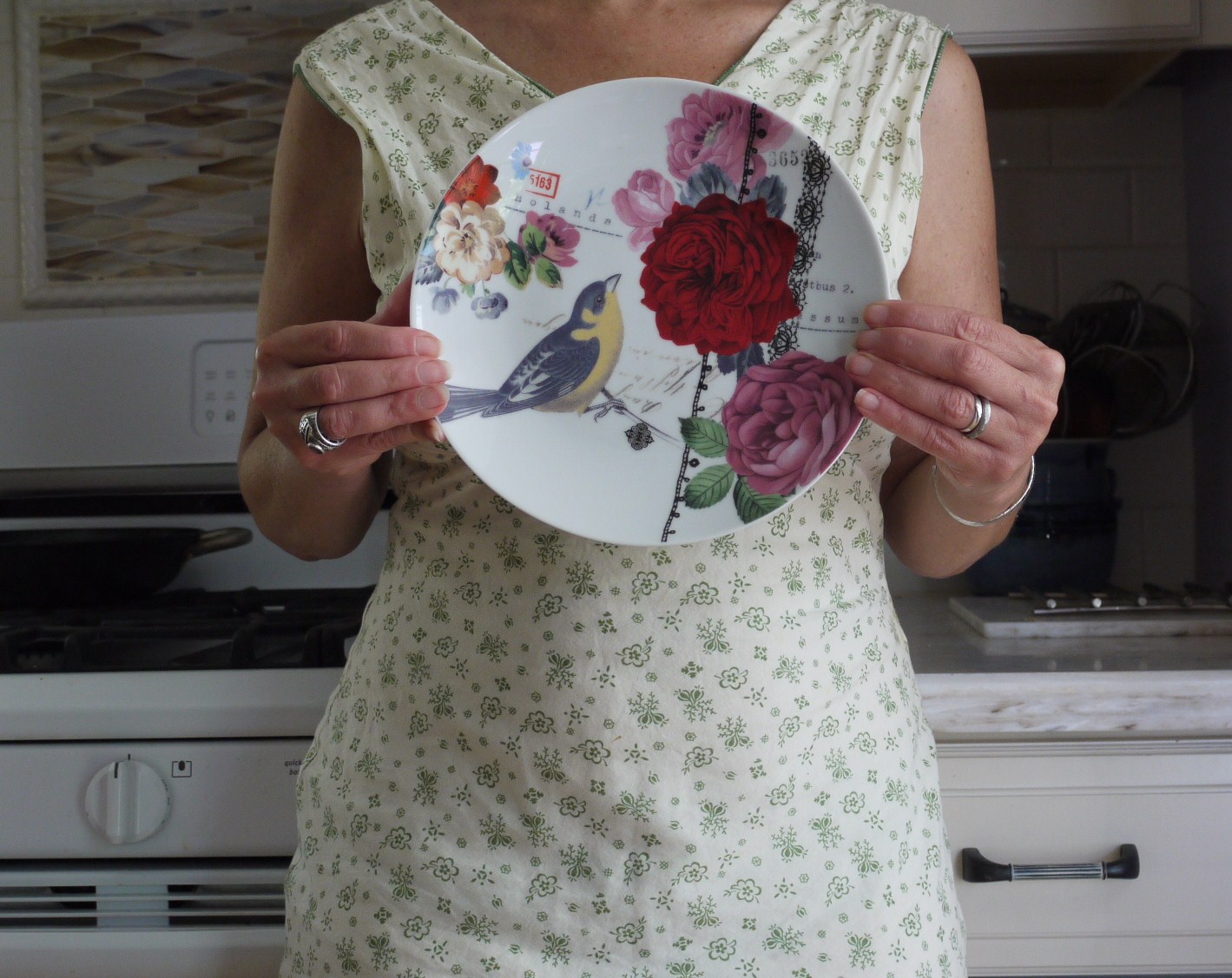
my plate

My Plate Haiku

Food made joyfully

As a gift of time and self

Feeds body and soul.    By Anne-Marie

dear you, the readers

It has been one year since I first birthed my blog.  One intention, many fears, countless hours and fifty posts.

Having mothered my blog through its infancy, I now must ponder its future as a toddler-staged blog which I call a blogger. My little bloggler is learning to stand on its own and is getting fed some nice comments and words of support. But, mothering a bloggler raises new developmental issues and it is important to have a philosophy of care. Sometimes, one must look for support and feedback from others in order to persevere.

Honest Tea Cap

Honest Tea cap

So, my dear subscribers and readers, as the days grow shorter and as those of us up here in the northern climes prepare to go inward and grow pensive, I ask you for a moment of your time in the form of a click on the “like” box, a few words in the “comment” box, a share of a post, a decision to subscribe or to follow me on Twitter, a submission of a haiku, or a message in an email to let me know what you think.

Are my writings of interest, is there a resonance in the stories, is my exploration of the experiences of real eaters meaningful for you? Are my musings too long or convoluted in their message; do they not offer the hands-on suggestions and answers that we so often seek in this vast landscape, or, are they, as my brother recently told me, intriguing but rather depressing? And if they are, might they also be, as I hope, a bit funny.

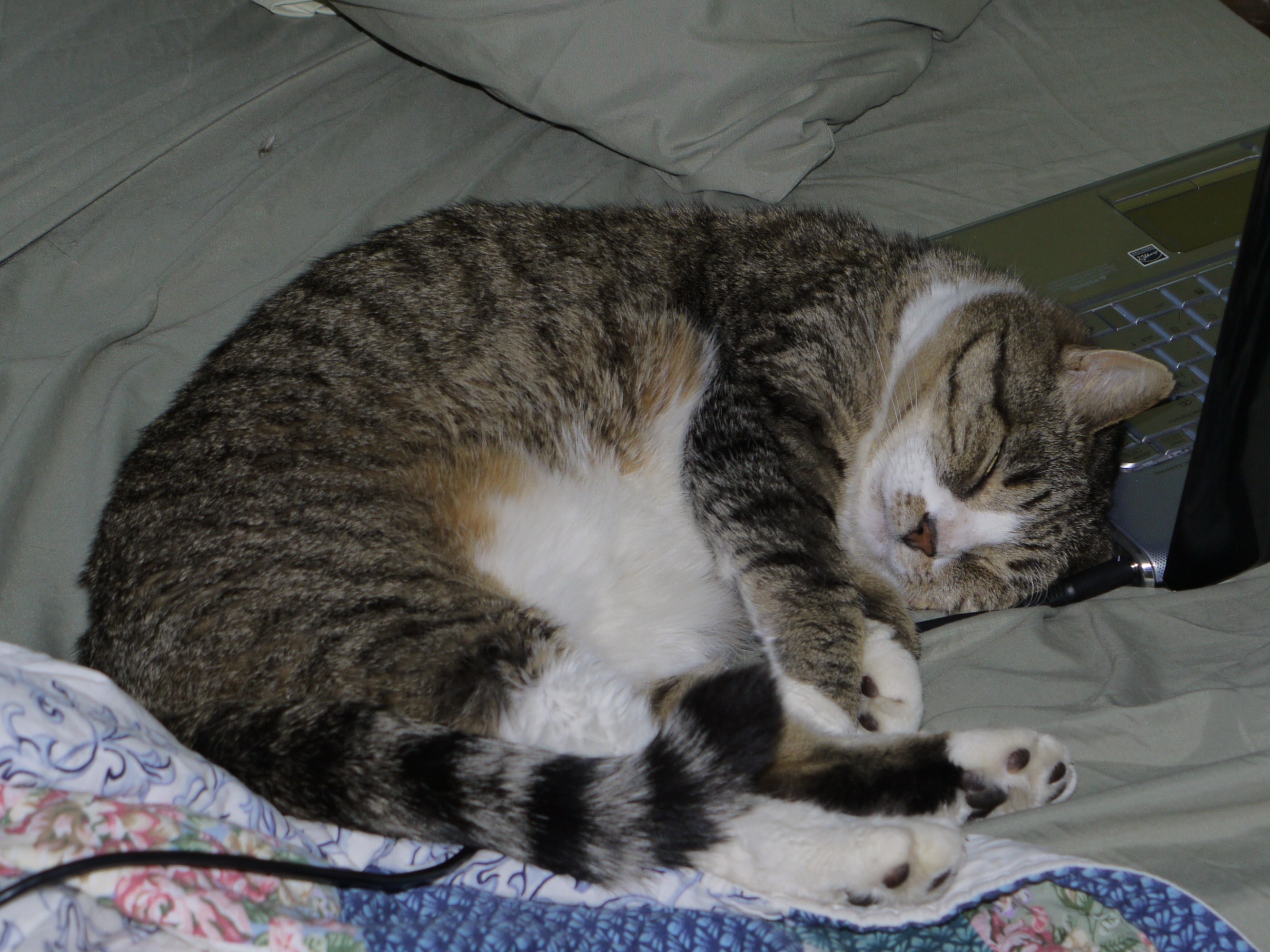
Are there topics you would like me to address more, was I remiss in not discussing National Food Daylike Michael Pollan did, should I post more photos of my cat Chico? Have I not discussed menopause enough– which really, I still plan to do?  Am I too cutesy or not cutesy enough? Would you care to know that today I ate a nice nori roll for lunch and that I tried a new flavor of Honest Tea that I really liked called Heavenly Lemon Tulsi–tulsi being another name for Holy Basil which you should really check out? And, while sitting outside on this unusually warm November day, I ventured some deep gulps of the mineral spring waters that flow freely from the fountains that immortalize my nearby town? Would it be good if I included some recipes like many other food bloggers do? Should I change my template or alter the background color? Am I too pink or does my cynicism tinge the blog a light shade of tan?

Should it matter to you that this week I worked with a 41-year-old woman who weighed 78 pounds? And, then, immediately following, a 39-year-old woman who weighed 310 pounds? That a woman at my daughter’s crew event told me that getting her house ready for the real estate agent to show was so stressful, that she needed three scoops of ice cream at Friendly’s? That yesterday, a nine-year-old told me that she feels different from everyone else, and trying on clothes that say Plus Size in the store is very embarrassing? That next week I will see a two-year-old who weighs 65 pounds? Or, that a mere few hours ago, a beautiful 18-year-old college student shared with me that being thinner than 100 pounds would make her less ugly than she already is and that she has never loved her body?

It has been a number of years now since I ended my subscription to Mothering Magazine and I am certainly feeling a little lost without it. So, any input, advice or inspiration would be greatly appreciated. Gotta run. Time to put the little bloggler to bed.

Thank you for listening, sharing, following and supporting my writing. Please subscribe in the sidebar to receive notice of new posts. Comments and greetings always welcome.

In health, Elyn

my plate

My Plate Haiku

Grasses, grain, fruit, wine

Garden flowers produce joy

Kitchen flours bread.

By Gordon

how can you say no to a brownie?

Yesterday, I attended a conference on Bariatrics and Nutrition, put on by the Bariatric Department of my local university medical center. Bariatrics is the science of obesity. Spell check is questioning my use of this word, so let me go appease it. My quick search into its derivation informs me that its root bar is the same as in the word barometer–the measure of the weight of air. The word was created in 1965 and first used in 1977. It rhymes with allopatric, geriatric, pediatric, podiatric and psychiatric, in case you wish to use it in a song or poem.

A brownie on a napkin

The seductive brownie (Photo credit: Wikipedia)

We mainly use the word regarding bariatric surgery or the surgical approach to weight reduction. I have worked with a few people who have had this surgery. There are increasingly newer and easier procedures and more centers doing them–and thereby more people having them–so I chose to attend the conference to better inform myself.

I walked into the dimly lit hotel conference room, with bad feng shui, grabbed the last seat at a table with a few other women, put my stuff down and made my way over to the breakfast spread in the adjoining room. From left to right there was coffee, tea, small glasses of orange and cranberry juice, a big tray of danish, another of white bagels with little individual cream cheese servings, a platter of fruit and an icy bin filled with Sierra Mist, Pepsi, Diet Pepsi, and Brisk iced tea.

The morning session was well presented by highly credentialed physicians, a pharmacist, and a psychologist. I did learn some things that were of professional interest to me, but I was finding myself with another one of my nutritional dilemmas. An endocrinologist spoke about how these procedures and their concomitant weight loss results are greatly reducing blood pressure, cholesterol, sleep apnea, and even the high blood sugar levels of diabetes–and are thereby also reducing the cost burden to our health care system of these conditions. However, I was still unsettled by such invasive methods with major implications for nourishment and still uncertain as to how these experts felt about their own program.

After a few hours, I was drained from the bad room energy and hungry. I stuffed my dilemma and headed out to the more naturally lit lunch area. I was pleased to find myself satisfied by a meal that met my own personal nutritional needs and headed back feeling much better and fortified for the afternoon session. It was a good thing too. Three surgeons, whose mothers or kindergarten teachers must have taught them very good craft skills, were soon to reveal to me the gorier aspects of the art of bariatrics.

Currently, there are three major types of either restrictive or malabsorptive bariatric surgeries that are performed in this country–gastric bypass, gastric banding, and sleeve gastrectomy.  Sleeve gastrectomy is the newest of the three. While I imagined something more benign, a young boy wonder doctor described the procedure by way of both schematic and actual slides of our insides. He explained that the procedure entails using a stapling device that creates a thin vertical sleeve of stomach while the other two-thirds of the stomach on the other side of the staples–is lopped off. Oh.

The next surgeon, who at least looked like he was born before the first use of the word bariatric, also described various procedures. He was very careful to explain that all of these come with some significant complications. Despite his obvious experience and calm demeanor, transparent in his message was that the safest surgery is no surgery.

As I was digesting this, the woman I had been sitting next to all day raised her hand and asked that if one had already had gastric banding, which has the highest weight loss failure, could they be a candidate for sleeve gastrectomy.

At the next break, at risk of being intrusive, I asked the woman if she’d had the band procedure. She replied that she had, and was frustrated that she only lost 50 pounds. She had the band re-tightened which is done by filling it with more saline solution. Quietly, she admitted that she was responsible for having made some bad choices. I left it at that.

A few minutes later she returned from the break room which had been freshly stocked with a new array of sodas and sweets, with a Pepsi and a brownie. The other women at the table, who I had come to realize were not medical professionals, muttered something to her and she replied, “How can you say no to a brownie?”

The final speaker of the afternoon was a plastic surgeon. This guy was a Michelangelo in GQ clothing. Through a series of slides, I witnessed the graphic photos of about twenty post-bariatric surgery patients clad only in their underpants, before and after the liposuction and body contouring procedures he had sculpted on them. I saw the flaccid flesh of breasts, bellies, arms, thighs, and butts hanging in folds from alien-looking bodies. One woman’s belly flesh reached almost to the floor. Matter-of-factly, he showed how he lifted skin, sucked out fat from one area, stuffed it back into another, and sewed people back up often around their entire circumference. He told of removing up to twenty-five pounds of skin and fat during a single procedure.

As shocked as I was by what he was showing, it was what he explained in closing that was more distressing and deeply telling. He shared that some patients have said to him, that in retrospect, even though they may even feel better, they actually liked their bodies more before the procedure. They may have been fat but they felt they at least had a healthier glow or more natural body. Some, express dissatisfaction with other minute parts of their bodies that they had never thought about before, and many still perceive themselves as fat as they ever were. There is no guarantee that the person will experience a greater sense of well-being and less depression–though many do.

At the end of the day, the Bariatric Program Director and conference facilitator asked the panel of presenters, where did they think we are heading in the next five to ten years. Are we going to be doing way more procedures as the obesity rates continue to increase?  Do we fully know what percentage of people who have undergone these procedures truly keep the weight off and the diseases at bay? Do we know the correct prevention measures? The presenters looked a bit deflated in response.

Regarding the prevention question, I left one respectful suggestion on my evaluation form–that the medical community should be particularly mindful of the food it offers at conferences. We talk about healthy eating and yet are unable to establish a new food paradigm in this culture.

Digging for my car keys, I found my dilemma at the bottom of my pocketbook where I had stuffed it. It looked me in the eye and asked, “How can you say no to a brownie?” “It’s tough”, I responded. I headed out into the late afternoon traffic.

How do you say no to a brownie?

Thank you for listening, sharing, following and supporting my writing. Please subscribe in the sidebar to receive notice of new posts. Comments and greetings always welcome.

In health, Elyn

my plate

My Plate Haiku

Adirondack lake

Soothes us from the heat–weightless

We float like feathers. by Elyn

still feeding things

One snowy, frigid day this past winter, in Feeding ThingsI wrote about how the birds at my bird feeder were complaining about the milo, millet, cracked seed with oil sunflower seed food that I had given them, squawking that they only liked plain oil sunflower seed. Ingrates, I called them. Who were they to turn up their beaks at my offering in those difficult days when food was scarce?  

Still, I relented. I donned my boots and gloves, precariously positioned the ladder and refilled the feeder with only the plain oil sunflower seed. I should have insisted that they at least try it, which is what you must do with young children who are refusing their vegetables, but instead I chose to view them as lovely guests and extended my hospitality without arguing.

Recently though, the bag of the plain oil sunflower seed was running low, so I decided to blend the milo mix in, kind of like disguising vegetables in sauces for those picky types. For the first few days, the feeder sat sadly unattended. It seemed that my fine feathered friends were not amused by my ruse. Now, however, the temperature was hovering near 100 degrees. Even the mere thought of lugging the ladder back out in the heat was too draining, so I ignored the situation.

A few days later, I did see a bird or two come by, but they did not linger. Imagine then my surprise when the next day, I returned home to find the feeder entirely empty. I thought maybe a non-discriminating crow had discovered and devoured the contents or that some other fluke-like occurrence explained the disappearance of the food–so I took the effort to refill the feeder with my carefully proportioned blend once again. Sure enough, this time I saw the birds actively feeding, and the food was once more quickly gone.

In avian fashion, I puffed out my breast and congratulated myself on my nutritional success–even if it was just for the birds. Unfortunately, my contentment at establishing peace and harmony in the eating world was to be short-lived.

Before my own feathers had even neatly realigned themselves, I came out onto the porch to find teal niblets of plastic scattered all about. A squirrel had managed to eat its way through the bin that I keep the bird feed in and had feasted with abandon. Scoundrel. This was not the first time I have been one-upped by the squirrel squad. In the past, they have actually chewed their way through my screens, entered into my house and unearthed stashes of chocolate.

While I was still contemplating the mess on the porch, Chico, the cat, was meowing fiercely. He was displeased with my decision to only offer him wet food in the evening.   Without even leaving home, I was reminded again of the perplexities and complexities of species feeding. What awaited me when I next headed out into the world of humans would only add to the story.

Over the course of the next few days, I had a few experiences that deepened my ponderings. Firstly, I came face to lips with a caffeinated water marketed locally called element. Apparently, its 50 mg of caffeine per 17 oz bottle–equivalent to a Coca Cola–sets one aloft, focused and refined at any time of day without sugars and chemicals. It is not the first caffeinated water on the market, but the newest; and the latest that has me contemplating the consequences of its extending reach. Though I am sensitive to caffeine and thus avoid it, I did take a few sips. Given its propensity for flight, I thought it might be relevant to my work in bird nutrition.

I then had a mind-blowing moment in a nearby new frozen yogurt establishment. I had observed that this place was frequently “spilling onto to the sidewalk” mobbed and sane people I knew were screaming its praises. With out-of-town guests in tow, I ventured in to meet my newest nutritional nemesis.

This was not your grandpa’s frozen yogurt shoppe. With its electric pink walls, I felt like I was in a bar scene from Star Wars. The aliens around me all seemed to think it was quite ordinary to find lightly sweetened tapioca pearls floating in their shaken Bubble Tea with royal creations named Purple Oreo, Yellow Cupcake, Marshmallow Puff, and Chocolate Stout.  Likewise, they seemed confident, sensuously dispensing their own yogurt and slathering it with a myriad of toppings, some of which I had never seen before–such as little roe-like jelly balls filled with various flavors which pop in one’s mouth. Here, the seduction of food had been elevated to an even higher level. It was jaw-dropping, or should I say jaw-filling, to say the least–and not cheap.

Bubbled up, I stumbled back to the mothership. There, in a cramped coffee shop, on the inaugural day of World Breastfeeding Week, I watched a woman struggle to fit some contraption around her shoulders so that she could nurse her baby. Nothing seems straightforward or simple anymore–even the feeding of our young.

So, as I observed in Feeding Things, this is complicated stuff. I can’t even guess what the food world will look like by the time that little nursing baby comes of age or even starts school. Will the challenges for eaters become easier or more difficult? Will we be assisted in working better with our inherited biology or led further away? What do you think?

But, what about the newt, Everest, you ask? He’s still working his way through the same little containers of flakes and pellets.

Thank you for listening, sharing, following and supporting my writing. Please subscribe in the sidebar to receive notice of new posts. Comments and greetings always welcome.

In health, Elyn

IMG_3279 (1)

Squirrel My Plate

My Plate Haiku

Blueberry bushes

Three children with empty pails

Pluck, pluck, crunch.  Exhale.

By Michael

muse of the girl

Camouflage is definitely not for me. I prefer pretty patterns and soft silky and satiny fabrics. Give me beautiful bold colors or light pastels. Browns and faded olive are not in my color palette. I may be nicely disguised in a flower garden, but I am an easy target on the battlefield. That may explain why I am fielding a lot of enemy fire in the trenches these days. The obesity war seems to be raging on all fronts.  

It’s been a bad week for news journalism with the News of the World scandal, but a few stories got through from the correspondents. First, came the release of the Robert Wood Johnson Foundation, “F as in Fat”, an annual report on the national state of obesity. Apparently, obesity rates are increasing in sixteen states, but, good news, there were fewer than twenty states with increasing rates. My state of New York, is apparently in better shape than most, with only 23.9% of its denizens classifying as obese. Our good showing can be due to the millions in New York City who don’t have cars, and still walk everywhere and climb stairs even to get in and out of the subways. Maybe an unfair advantage, but, Go, team!

Then, there was a commentary article in the Journal of the American Medical Association. Drs. Lindsey Murtagh and David Ludwig, of the Harvard School of Public Health, proposed that morbidly obese children be removed from their homes and placed in foster care, to control for the harmful behaviors by which they are affected. They gave an exception to cases with genetic causes.

Reading this made me wonder if I should have been removed from my home due to secondary smoke exposure. I suppose the smoking could have been attributed to some genetic parental anxiety and my case would have been dismissed. Just imagine though what would it have been like to live with a normal, straight-haired and non-smoking family? But, maybe those parents would have drunk too much or would not have had the patience for my crazy curls? Didn’t everyone drink and smoke, even in pregnancy, back then? It took a while for people to understand the dangers of cigarettes, and for the tobacco companies to fess up. My folks didn’t mean to hurt me.

Now, most everyone has been eating processed and adulterated food for a long while, but, it has taken until rather recently to catch onto what it is doing to us and few in the industry are fessing up. My kids tell me how all their friends’ kitchens are stocked with big bottles of soda, large bags of chips and huge boxes of fun cereals. I know they have at times wished for foster placement due to this. But, maybe I should warn those families. The jig might be up–well, only if their kids are fat.

Despite this multi-paragraph ramble, the headlines are exactly what I don’t want to talk about. I want to discuss the war that doesn’t get covered, that wages within the many girls and women–of all ages and sizes–who hate their bodies and therefore deny a large part of their selves. Or, who, by not loving themselves, direct a lot of abuse to their bodies in both thought and action. Though they often wish they were invisible, we see them walking around in all types of bodies including those we deem acceptable and those we envy. Persons, whose self-worth has long been determined by the numbers on a scale or by an image in a mirror.

The confusion and dictates about food and eating cause as much, if not more, distress for them, than for those who are large-sized without such negative judgment about their weight. The collective pain and problems here are profound as are those we ascribe to obesity–and the physical consequences can be even more severe or deadly. Here, much potential is lost and much love is denied. I think we all have wandered into and many have lingered in this place where reality is distorted and self-flagellation and deprivation seem deserved.

This is the ignored epidemic. Not many resources are designated here, but I have apparently been assigned to cover this beat. My field notebooks are filled with stories and quotes that are usually too intimate for me to share. But they imply a sense that so many girls and women believe that without perfection they cannot be whole and should not take up much space on this generous planet. It is heartbreaking to witness this.

Having been touched by the lives of so many amazing, intelligent, gorgeous, creative, warm, gentle, caring and funny individuals who have been broken in this battle of self and body, these are some things I wish would receive front-page headlines: Bodies change, contours soften, bellies round, babies fill, bloat happens, hunger informs, weight is not absolute, judgmental words injure, beauty shines, food nourishes, wisdom evolves, body protects, hormones ebb and flow, pleasure is permissible, fat is often just a feeling in one’s head and restriction revolts.

If you are living this, put down the staunch resistance, begin the surrender and trust your inner feminine voice. Please know you are all so beautiful and you possess that which really matters. Take a moment to put your hand on your heart and belly and send love to yourself. Take a deep slow breath and be thankful to your body. Send a healing thought out to other women, because I assure you, you are so not alone. Hold the daughters and ask to be held. Reclaim your place. Change the internal tapes. Know there are many paths to healing available. The world needs everything you have to offer.

Any sharings will be welcomed and respected.

Thank you for listening, sharing, following and supporting my writing. Please subscribe in the sidebar to receive notice of new posts. Comments and greetings always welcome.

In love and health, Elyn

Related Posts: Stopping Traffic, Nourish Thyself Well Day, Dolls with Faith, A Meteorological Change of Plans, Size Me Down

IMG_1294

John Lennon’s My Plate

My Plate Haiku

Deep scarlet red beets

Reveal your sweetness to me

Slip out of your skins.

by Elyn

Dietary Haiku

japanese maple

Japanese Bonsai Plant      Image by cskk via Flickr

Here are a few things that happened in my nutritional life this past week. First, I had a client come into my office bummed out about being fat. She sat down and immediately pointed to different parts of her body that she deemed fat. Of utmost disgust were her arms and her big belly. They definitely had to go. She quieted a little as she said she didn’t mind being big in the thighs and butt, and she thinks her hubby actually likes her like that. I asked about her eating habits. A number of issues presented, including the fact that her husband is incarcerated.

I asked how she felt about me making some suggestions. Without skipping a beat, she replied that she would think it was none of my business and I should leave her alone. Despite her distress, she was not ready for a change–a common human experience. Most often I find some traction, but I did not try too hard in this instance and gave her space. (She did eventually come back and see me again.)

Next, my very own brother, in a comment on my recent post, Diet for a Small Caterpillar informed me that only a small percentage of people actually care about nutrition. I wanted to protest, but he is my big brother and he does seem to know about a lot of things.

And, then, the very next day, the United States Government, without giving me very much notice, obliterated the Food Pyramid and issued the newest expression of the most up to date dietary guidelines–the USDA MyPlate.

Briefly, here is my initial response to the MyPlate. Though I appreciate the challenge and consider it an improvement, its teaching concept has been around for a while now, so I am surprised it is being touted as something unique and innovative. While hailed for its message to eat more fruits and vegetables, I think that is also old news. It is overly simplistic as our national food icon.

It does not really relate to how people eat breakfast and lunch and is not relevant to how many even eat dinner. It does not align with most cultural cuisines and supposes a basic meat and potatoes dietary structure. My dinner plate rarely resembles it. It evades many deeper nutritional questions about protein, dairy, fats, and digestion. Disconcertingly, right under the plate, it says, “Balancing Calories: Enjoy your food but eat less.” This makes a broad assumption about all eaters and ignores the serious issues of those who may need to eat more for various reasons.

Essentially, this model has convinced me that it is time to abandon such efforts. If what my brother says is true, that few people even care; or as my client suggests, that not everyone wants to hear it, why do we keep trying to promote this short shelf life, stale message with such a stagnant image? Maybe it is time to try something new to spread meaningful dietary practice.

I sometimes enjoy a line of iced teas from a Japanese company called Ito En. On their bottles, they offer a nice little haiku. Haiku is a Japanese form of provocative poetry that provides a sense of sudden enlightenment simply, intensely and directly. The bottle I now hold says: ten heron heads blow as pampas grass in the morning fog. Lovely, even though it doesn’t stick to the 5–7–5 traditional haiku structure. Maybe because the tea is distributed in Brooklyn or because it is a form that is flexible. Gazing at this bottle, I am inspired to suggest that we should develop Haikus with various themes to promote nutritional messages with greater nuance. Or, perhaps it would be more American to create some jingles. This could employ many creative artists, and I am sure their output would be funnier or more beautiful than anything produced by our governmental agencies. Michael Pollan’s missive, Eat Food, Not Too Much, Mostly Plants, could be turned into a catchy dance number.

Just as I was about to declare the week a washout, one other thing happened. On Friday, I was at one of the three schools where I work with the School-Based Health Program. It was my last visit before summer vacation. I prepared a little healthy snack for the kids I had met with during the year and called them down individually to say good-bye. The message I try to instill in these young children is that they each have an amazing and wonderful body. They are all smart enough to choose to care for their bodies in various ways and can make many decisions for themselves about what and how they choose to eat.

In this closing session, I asked these adorable nine to thirteen-year-olds, what have they been paying attention to based on things we had previously talked about. Without much explanation, they each understood this vague question and all had at least a small answer. Some had big impressive answers. My dimming faith was ignited once again. So, maybe this is the relevant dietary inquiry–What are we paying attention to? There is a lot to choose from in this crazy, nutty, nutrition world.

What message would inspire you or what do you think we need to hear? Is the truth of the matter that our governments’ policies are incongruent with an appropriate dietary promotion or our personal experience as eaters? What are you paying attention to?

Please allow yourself a creative moment to pen your own dietary haiku, jingle or other poetic expression and send it along in a comment. Let’s see what emerges.

Thank you for listening, sharing, following and supporting my writing. Please subscribe in the sidebar to receive notice of new posts. Comments and greetings always welcome.

In health, Elyn

Related Posts: Your Pyramid; Diet for a Small Caterpillar; Haiku for You; Accepting Haikus

My Plate Haiku

Eat Food. Not Too Much. Mostly Plants. by Michael (Pollan)

Moving Day

As I leaned over to pick up the box on the chair, the already strained cardboard gave out and the books that it contained went tumbling all over the floor. So, there I was on my knees scrambling to pick up the books while my guests waited awkwardly in the cramped doorway looking down at me.

The day before, I moved into a temporary office in the basement of the Health Center, as my regular office was about to undergo renovation. It was now the first thing in the morning, my new office was still in serious disarray, and my computer told me that my first client had arrived. Though I do usually try to get a glimpse of some history before going out to greet my clients, I did not then have a chance to do so.

I climbed the stairs which brought me face to face with the people in the waiting area and called my client. Two women stood up and followed me back down to my office. I quickly learned that one of them–my client–was developmentally disabled, and the other was her case manager from the group home where she lived. Arriving back at my new space, I realized I needed to empty a chair so that they would both have a place to sit–and that was when the box of books broke.

I stood back up, welcomed them, tried to glean some history from the medical record as well as the case manager–but never fully regained traction. Frances was a thirty-year-old woman with bright eyes, nice teeth, high tight little pigtails, and a child-like demeanor.  And yes, she was plump.

Right off, she scanned my office with radar-like precision and asked me if I had any cookbooks. The case manager’s eyes widened in surprise. I asked her if she ever had the opportunity to cook. She said no, but that she really wished she did and still thought it would be nice to have a cookbook. I asked her what she would like to cook. She replied cakes, sausage and, macaroni and cheese. Always willing to oblige, I did manage to find a copy of a cookbook I sometimes give out that makes healthy revisions of common comfort food recipes. I read out the names of the listed recipes with enthusiasm. Her mood quickly deflated. Devil’s Food Cake or any other such confection was not mentioned. Still, she agreed to take the cookbook anyway–and said thank you.

I then saw she was a diabetic and was told that her blood sugar was tested two times a day. Frances and her case manager described some rather high blood sugar results, especially in the morning. I learned that she ate meals prepared at the group house, at the day program that she attended, and out at local food establishments. Seeking and procuring food was a frequent activity and overeating a common occurrence. I asked if she knew that being a diabetic meant that she would have to be mindful of eating sweets. Plaintively, she said yes. She went on to explain that when people tell her to not eat sugar she gets very angry. She informed me that she has an anger problem that she is working on, but this type of control provokes her.

She went on. Her father always gave her sweets when she was young, that’s just how she was raised and that’s why she likes sweets. Eating makes her happy. Yes, sometimes her stomach hurts if she overeats, but that doesn’t feel as bad as the emptiness she experiences when she can’t eat what she wants.

It was my turn to be deflated–the dilemma hit me smack in the face–once again. I was in the presence of a truth sayer. I just wanted to hug her and tell her yeah, it’s ok–lots of people are really angry at being told they can’t have their cake. Marie Antoinette might actually be a popular figure in this current milieu.

The next visit with Frances was not fraught with technical difficulties, but the story grew. When I asked the casual question, “How are you?”, she responded that actually today she was feeling rather sad. And, she added, she didn’t really like the cookbook I gave her. Ah, it was the early reminder I needed that I was with someone who did not cover thoughts or emotions. Being with someone like that brings a stark frankness to each moment. It heightened the consciousness that I was possibly apt to be benignly disingenuous or perhaps condescending.

This time she quickly eyeballed a colorful booklet sticking out on my desk that shows how many calories and grams of measurable nutritional components are in various fast- foods. I barely remembered it was there. We explored her eating, and I heard what I already knew, that her breakfasts–as is true for many, including those who are institutionalized in some capacity–consist of lots of pancakes with syrup, sugary cereals, bagels, and fried meats. It is a lot like a breakfast buffet at a hotel but on a daily basis.  She eats what is served and is aware that she eats even more of the tastier offerings. And, it is then, without prompting or apology, she says, “And I binge, because I realize I can’t just eat normally like other people can which makes me feel bad–and this is how I respond.”

Many people spend lots of time and money in therapy to arrive at that awareness. Frances understands the crux of the struggle about food. Food gladly serves in the moment to push down all the pain and sadness that is too hard to feel. Despite her clarity, I am not sure how to give her the options, resources, and resilience that she requires.

Despite my subterranean quarters, I look upward as I often do in this work, and ask for guidance. Dear Lord, do not make me show her how many grams of fat in a Big Mac. Must I utter nutritional pabulum or make her eat Bran Flakes? What have you got up there in the way of holy alternative sweeteners? How about a dose of Big Love? Amen. As always, seeking thoughts, reflections, and hugs.

Thank you for listening, sharing, following and supporting my writing. Please subscribe in the sidebar to receive notice of new posts. Comments and greetings always welcome.

In health, Elyn

i surmise with my little eyes

A few years ago, I worked at a college full of bright and creative students. While there, I was invited to serve on a panel for a discussion on “Food: Society and the Environment”. During the event, one young woman in the audience asked me to describe the conditions I encounter in my practice as a nutritionist. Then, and still, I consider this a very insightful and important question, relevant to the issue of how we are feeding ourselves–on the personal and societal level– and what are its implications.

I have worked in medical and community environments as a nutritionist for many years, during a period marked by an increasingly modified and aggressively marketed food supply. At the time of that panel presentation, I was working at both that small, predominantly female college and a large Ob/Gyn office– so my clients were mainly women, ranging in age from about eighteen to forty. And, at the Ob/Gyn office, many of them were pregnant.

A history of poor dietary habits exerts its influence on the health of a society in more subtle ways than the common indicators of end-stage problems like diabetes, stroke and heart disease—but those are the conditions that get the ink. However, increasingly and alarmingly, I see many health issues with dietary or nutritional antecedents affecting young and middle-aged adults. Likewise, I see conditions once only ascribed to aging, presenting in younger people. Perhaps to best appreciate this– if you are more fully ripened– imagine yourself sitting in a college campus student union or going to a Lil Wayne concert. You are not having lunch at the senior center.

I would rather present this in a more artistic format, but for now, I must submit to a mundane bulleted list–along with this lovely painting of Summer by Cezanne. It consists of the conditions that I encountered while serving this young adult population–and only those which knocked on my door with at least occasional frequency–not rare occurrences. 

  • High blood pressure
  • Type 2 diabetes and insulin resistance
  • Heartburn and reflux  (GERD)
  • Constipation, irritable bowel syndrome (IBS), and digestive disorders
  • Gall bladder conditions
  • Moderate to severe obesity
  • Menstrual irregularities
  • Thyroid dysfunction
  • Polycystic Ovarian Syndrome
  • Food allergies
  • Behavioral disorders
  • History of frequent illness in childhood
  • Eating Disorders
  • Depression and Anxiety
  • Toxemia of Pregnancy—a syndrome associated with high blood pressure and kidney involvement
  • Gestational Diabetes
  • Recurrent yeast infections
  • Severe skin inflammations
  • Orthopedic Problems

Bouncing between the two work settings, on most days I had at least one client starving and struggling with an eating disorder and one who weighed more than 250 lbs—who may also have been struggling with an eating disorder. As the numbers on the scale were both decreasing and increasing, so was the volume of the diatribe against the body. Both were distressing to witness–as was considering young, diseased gall bladders.

Some of these conditions are interrelated; and many are exacerbated by stress–another marker of dis-ease affecting our youth. The prevalence of these conditions also means that many of this millennium generation is on at least one medication, including those that treat depression, anxiety, blood pressure, heartburn, inflammation, behavior, and hormones. The use of these medications will result in increased prescriptions for erectile dysfunction and osteoporosis medications for this generation as well.

My contention is that young children who are exposed to processed foods, do not develop the ability to appreciate the more distinct and varied flavorings of more natural foods—especially those of the plant kingdom. Therefore, these more healthful foods are not incorporated into their food vocabularies. These young children grow into big kids and young adults, quickly accumulating the years that their bodies are exposed to altered, nutrient and enzyme-deficient foods.

Craving the whole foods that our bodies and brains require by design in order to function, an underlying “true” hunger festers and grows. The hunger is either pursued voraciously or feared and denied. Even in the middle ground, before too long, this compromised nutritional state can take its toll and the above conditions can manifest.

One of the difficulties of inspiring behavioral change in regard to eating and nutrition, and in explaining how food matters, is that it is not very easy to show direct cause and effect between food choices and health outcomes. Many might argue that they would prefer to just eat happily and without dictates—even at the cost of a possible slightly premature end.

Could considering the consequences that physically and emotionally damage us decades before the final blow serve to amend such an attitude? Attention to dietary change has become essential. Through positive food experiences may we begin to show that nutrition can prevent not only life-threatening conditions but life-limiting ones as well.

Any thoughts on this? Any reflections of how you eat/ate at this phase of your life? Please let me know.

Thank you for listening, sharing, following and supporting my writing. Please subscribe in the sidebar to receive notice of new posts. Comments and greetings always welcome.

In health, Elyn

you ain’t necessarily misbehavin’– part 2

A while back, in my post You Ain’t Necessarily Misbehavin’, I began to explore the topic of how we arrive at being the eaters we are today, and how we berate ourselves for so many things that we had little control over.

The last week of February marks the observation of National Eating Disorder Awareness Week–which also has been expanded to reach out to the many who live in daily distress from hating their bodies. I have not been sure what to add to the conversation which is so ably cradled by many wise people. However, as this struggle is so relevant to the story, and such a part of the fabric that we are all woven into, I offer a continuation of the examination of how our relationship with food and eating gets shaped. Last time, I left off, just as we were being born.

After we slide out or are plucked from our mothers’ tummies, the messages regarding food and security are profound. Influencing this stage are many factors: how our cries of hunger were responded to; if food was used to placate other needs; whether our cues of satiety were observed; or if we were encouraged to keep feeding according to some external measurement.Image result for crying babies images free download

The emotional state of our caregivers also colors our early feedings. A premature or reluctant feeding infant whose parent anxiously counts every milliliter consumed is having a different sentient experience than the content babe who nuzzles and guzzles while mother hums dreamily.

Whether we are breastfed or formula-fed also may affect us. A breastfed baby exposed to a wider palette of flavors based on mom’s diet may develop greater food acceptability than the formula-fed baby who gets the same recipe with each feeding. Also, fullness (and growth) may be appreciated differently, due to the difference in the composition of human and artificial milk.

Other subtleties influence this early feeding stage. Our innate temperaments reveal if we eat to live or live to eat. Some babies internalize the joy of clutching the breast or bottle as core to their being; others see the business of feeding as a mere requisite to the more important work of exploring the larger world. Certainly, much is anchored when we are merely minutes, days and months old.

Then, soon enough, we are small children. By the age of four, by my calculations, we have already had at least eight thousand, seven hundred and sixty eating encounters–and we are already pretty savvy little humans. We have begun to glean that food serves a greater purpose than fueling our bodies for play. It is somehow powerfully linked with love and affection and has powers way beyond its nutrient content. Candy can mend a hurt, ice cream can cool our heated outbursts of emotion and creamy, warm, familiar foods will bring comfort in a heartbeat. We know if food is abundant or if it is scarce.

Another message we receive at this time is that our own bodily sensations are secondary to behaving according to the rules. This ensues when we are told we must wait until mealtime to eat and that we must clean our plates; or, that we are eating too much or too little. These common parenting practices can serve to teach us that our own feelings are not valid and can begin to detach us from natural signals of hunger and fullness. Age-appropriate feeding should match and support the normal physiological and growth needs of young children. (An understanding of the principles of feeding dynamics are best gleaned by reading the work of Ellyn Satter, social worker and dietitian who pioneered research in this area. Her Division of Responsibility in Feeding should be the crux of all childhood nutrition education.)

When we are a little older we may begin to experience disconnects regarding food and our bodies. As little children, we do not differentiate ourselves from our environment. This sense of separation–and its attendant self-awareness–does not occur until a child reaches the age of eight or nine. But, with the early introduction of media and abstract reasoning in both schooling and socialization, this change is happening at an earlier age. I believe this is why eating disorders now manifest in younger kids.

Exposure to a barrage of images with distorted messages about feeding, body image, and personal values affects everyone, but it is particularly detrimental to at-risk individuals. Unfortunately, we cannot identify who is at risk. Interestingly, non-industrialized cultures only begin to show eating disordered behaviors after television becomes available.

With self-awakening, we are catapulted into self-reflection. Girls navigating through this time yearn to be let into the “club”. We enter the kitchen; we sidle up to our mothers, their friends, the aunties, and the older sisters. We listen to their rich stories and are sensitive to their attitudes and judgments. Often we hear women dissect and belittle their bodies, and the chant of the societal and personal mantra “I’m so fat” begins to penetrate our beings. We take all of this and figuratively stuff it into our new training bras and bikini underpants as our bodies begin to take on form and shape.

This is a very vulnerable period in the evolution of feeding behaviors. As a girl’s body begins to change rapidly, and she experiences the emotional and physical hunger that accompanies that growth, any chaos, fear, abuse or significant uncertainty in the outer environment can cause the body to become the battlefield for unexpressed emotions. We can stuff emotions down by overeating or we can deaden them by starvation. For some, negative comments from important male figures can solidify maladaptive behaviors that might have otherwise remained transient. Though girls may be more susceptible to this change, boys are by no means immune when they begin their maturation.

By adolescence, the stage is essentially set as the cascade of sex hormones takes up residence, settles in and rounds out the edges of our physical and emotional beings. After this huge developmental landmark, barring a few other components like what we eat, we just ride the waves, responding to food based on the summation of our earlier nature and nurture experiences.

Does this resonate with you? In honor of this week, please take a moment to think about your own story. No judgment, no blame, just acknowledge it. There may be much to actually appreciate. Practice replacing bitter feelings about your body with kind thoughts. Refrain from all trash talk about other people’s size as well as your own. If you suffer, or if you know someone who does, or if you just care about this subject, please find appropriate and supportive resources including the National Eating Disorder Association. Any sharings here will be deeply honored.

Thank you for listening, sharing, following and supporting my writing. Please subscribe in the sidebar to receive notice of new posts. Comments and greetings always welcome.

Related Posts: You Ain’t Necessarily Misbehaving, Part 1; The Tempted Temperament

In health, Elyn


Pop Smarts

Pop-Tarts Frosted Strawberry

Pop-Tarts Image via Wikipedia

Last week was a rather discouraging one for this persevering nutritionist. I knew it was bad, as on Friday I found myself contemplating stopping at a Dunkin’ Donuts and just drowning myself in one of those massive confectionery pond-sized drinks, weighted down with heavy donut shoes.

The final straw so to speak had occurred just moments before. On Fridays, I work in some elementary schools. As I was packing up my Mary Poppins basket musing on the students I had spent my day with, an announcement came over the loud-speaker. The principal was congratulating a boy for his lack of tardiness or absenteeism for the month of February. His reward was that he’d get to share a Burger King lunch with her.

Really? Why don’t you just shoot me in the foot? Well, maybe this boy was being given his fair reward. All the other slackers who had managed to show up on this day got a greasy, square piece of pizza, a cellophane-wrapped bag of carrots (which is more appealing than most of the veggie offerings) a blob of half-frozen mushy blueberries–the ice crystals were visible– and a chocolate milk on their non-recyclable styrofoam tray. That should teach them not to miss school.

The night before I had been at a charter elementary school. I was a presenter with two other speakers on healthy choices for school success. I had been excited that the school had focused a parent meeting on this important topic and was glad to have been invited. Despite good intentions on behalf of the school, only six parents out of a student body of 300 attended. Still, we did our thing.

Out of my Mary Poppins basket, I  passed around, along with some other nutrition shockers, a well-worn packet of Pop-Tarts with an attached baggie filled with the eight and a quarter teaspoons of sugar that it contains. I asked the participants to look at the long list of gruesome ingredients as I talked about nutrition and brain health. After the talk, a staff person approached me. She meekly told me, that if kids get to school late, and miss the provided breakfast, they are given Pop-Tarts. Given the rewarding of non-tardy behavior to only one recipient at the other school, I surmise that no small number of kids are getting their brains doused with such artificial intelligence here. I felt like I was going to cry.  (We did come up with some alternative ideas for the school though.)

Oh well, no biggie. Maybe I was just sensitive because the day before that I had a new eating disordered client who was restricting herself to three hundred calories a day. Or, maybe it was the young diabetic who I had spent many teaching moments with, who came in the day before that with a high blood sugar of 227 and told me that she had a beef patty, some Pringle-like potato chip I had never heard of, three Oreos and a large-sized can of Arizona Green Tea for breakfast.

Perhaps, most disheartening though was the doctor who totally ignored my concerns about the severe dietary deficiencies of a patient we shared–whose support I really needed to facilitate her care. Like the scenarios I described above, this is really nothing new to me. Doctors untrained in nutrition, give short shrift to diet, except for some lip service when it comes to blood pressure, weight, and cholesterol. I am rather used to being ignored by physicians.

I do not expect my clients, my students, and even school administrators to fully get this whole food and nutrition thing given current conditions. Those with eating struggles would not have them if they were easily understood. Individual schools are not easily able to remedy foodservice  and budget limitations. Teachers have many other matters to attend to.

But, I do really expect that by now, even conventionally-trained medical providers would appreciate the connection between diet and health and would give attention to meaningful dietary assessments in supporting the treatment of their patients. It is recognized that patients whose doctors inquire about their smoking habits and are told to quit have higher smoking cessation success. To help turn the tide on the nation’s health crisis, doctors’ true embracing of dietary health is essential. Last week, I really needed that doctor to express to our patient who was in the office, concern about her eating and to provide to her some basic nutritional support. Instead, out the door, the patient went, with a prescription for one more drug in hand and no mention of my recommendations. I slumped in my chair.

Usually, I can handle situations like this with more aplomb. Maybe I am just a bit depleted in B-vitamins which lowered my resilience. Never mind. Time to re-fortify. Onward.

Thank you for listening, sharing, following and supporting my writing. Please subscribe in the sidebar to receive notice of new posts. Comments and greetings always welcome.

In health, Elyn