Archives

the nightmare before halloween

It has been one year almost to the date that I first began my blog. Just as I was ready to celebrate having come full circle, I realized that there was one more event in the liturgical feeding cycle to attend to in order to truly do so. Halloween.

Halloween is this nutritionist’s nightmare. It makes all my dilemmas go screaming wildly around in the scary darkness like a gathering of roaming ghosts. Starting in mid-October, I began to see discussion of these hair-raising topics appear in various articles. Some people were writing about Halloween as a sanctified binge-eating holiday. Commentary ensued on memories of guilt-encompassed candy hoarding and gorging. Then guilt- minimizing strategies were presented–instructions were offered on how to partake but not overdo; and, suggestions were given on organic, high cacao content, lower sugar, chocolate alternatives.

Then, there was the issue of the politics of chocolate–the problems of impoverished cocoa farmers, environmental degradation and the use of forced child labor on cocoa farms. With one-quarter of all candy sold annually in the US being purchased for Halloween–this is no small matter. EqualExchange, the producers of organic, fairly-traded chocolate products, sponsors a Reverse Trick or Treating Program. Trick-or-Treaters give a piece of Fair Trade chocolate attached to an informational card as a mass action to educate the public about this.

Finally, the childhood obesity issue surfaced as well. I learned of a dad from Georgia, David Soleil, whose activism was inspired by being fed up witnessing too many Halloweens–overweight parents driving cars around his neighborhood unloading their children at intervals to gather the loot; pillowcases loaded 3/4 full with candy and the endorsement of multiple pre-Halloween events. He launched a response with a movement called Healthy Halloween House where people pledge to provide a healthy trick or treat alternative. I love his slogan–“Eat the pumpkin and let the candy rot on the porch.”

So, with my own inner pillowcase filled to the brim, I informed my daughter Zena–as I do every year–that for the holiday we would be distributing some Skarrots (baby carrots packaged in fun inducing wrappers) and pencils–and that she would be doing reverse trick or treating. In her kind, gentle way she asked me to sit down. She assured me lovingly, that every other day of the year I do my part to encourage healthy eating and I have spared many children many pounds of sugar–but, she does not want to be one of those “weird” houses on the T&T trail. And then, she asked me if I have forgotten where we live.

We live in an old Victorian village of the type that inspires the imaginations of people like Tim Burton. It is truly the epicenter of Halloween. Houses are old enough to provide residence to a few generations of real ghosts, tiny streets with closely packed houses draw hundreds of trick or treaters from miles around–and our next-door neighbors are deranged, wonderful folk who do things like this and this (video).


Their preparations are usually quite furtive, though they say things to me like, “Did we tell you we got a snowmaking machine?”, or ask, “Do you have a fire extinguisher? Good.”

So, heeding Zena’s words, and not even knowing where to buy hundreds of bags of Scarrots; and not convinced kids would really use the cutesy pencils that trees gave their lives for, I backed down. Still, I knew I personally would not be able to buy the drugs–I mean candy–nor distribute it. In cowardly fashion, I assign the purchasing to my husband, Pete or to the friends I invite for the festivity of the evening; and the distribution to whatever available child or visiting foreign exchange student I can find.

Figuring out the amount we need requires a complicated quadratic equation and often we have miscalculated. This means that we have to indenture our own children and recycle the booty they have worked hard for, or we have to run upstairs and hide in the dark, pretending we are not home.

Halloween evening was perfect this year. The weather was gentle with only a touch of autumn’s crisp bite in the air. At the witching hour, all the creatively-costumed children emerged from their homes and took immediately to their task. As we were simultaneously welcoming friends, warming the cider, finishing the pumpkins, adjusting costumes and oohing and aahing at the little munchkins crowding the porch–we realized we were going to be in trouble early.

As I was frantically emptying the bags into the cauldron, trying to appease the munchkins turned monsters now knocking down the door, one of my guests said that the contents of candy bags had gotten smaller. He was right and this was seriously offsetting the math. Later, with the cauldron barren, we found ourselves sitting with the lights out–considering giving away some of our tchotchkes, artwork, cats and used pencils.

Early in the evening, a Jedi knight informed Pete that he required two offerings. His headless horseman friend explained that he was making up for last year. Amused, Pete was about to challenge this request, but the Little Red Ridinghood mother bared her big teeth, said he was in the hospital then and snatched a candy for herself. Next year we may ask for discharge papers or a gnawed off wrist band.

So, once again, we gaped at our neighbors’ amazing creation– which draws hordes of happy revelers–spun through the few hours of insane madness, walked the streets with our friends–and it all eventually quieted down. We were reverse trick or treated, and there was actually some healthy and adorable popcorn to be found.

At the end of the night, I removed my Bob Cratchet ba-humbug costume, enjoyed a Reese’s Peanut Butter Cup or few and imagined that everyone will be needing a nutritionist come morning’s tolling of the bells.

What does Halloween bring up for you?

Thank you for listening, sharing, following and supporting my writing. Please subscribe in the sidebar to receive notice of new posts. Comments and greetings always welcome.

In health, Elyn

Related Posts: Post Halloween Post; The Eye of the Newt; So, How Did It Go?

Related Recipe: Pumpkin Muffins by Cookie+Kate


Halloween My Plate


My Plate Haiku

Eat the Pumpkin

Let the candy rot on the porch.

by the guy in Georgia


muse of the girl

Camouflage is definitely not for me. I prefer pretty patterns and soft silky and satiny fabrics. Give me beautiful bold colors or light pastels. Browns and faded olive are not in my color palette. I may be nicely disguised in a flower garden, but I am an easy target on the battlefield. That may explain why I am fielding a lot of enemy fire in the trenches these days. The obesity war seems to be raging on all fronts.  

It’s been a bad week for news journalism with the News of the World scandal, but a few stories got through from the correspondents. First, came the release of the Robert Wood Johnson Foundation, “F as in Fat”, an annual report on the national state of obesity. Apparently, obesity rates are increasing in sixteen states, but, good news, there were fewer than twenty states with increasing rates. My state of New York, is apparently in better shape than most, with only 23.9% of its denizens classifying as obese. Our good showing can be due to the millions in New York City who don’t have cars, and still walk everywhere and climb stairs even to get in and out of the subways. Maybe an unfair advantage, but, Go, team!

Then, there was a commentary article in the Journal of the American Medical Association. Drs. Lindsey Murtagh and David Ludwig, of the Harvard School of Public Health, proposed that morbidly obese children be removed from their homes and placed in foster care, to control for the harmful behaviors by which they are affected. They gave an exception to cases with genetic causes.

Reading this made me wonder if I should have been removed from my home due to secondary smoke exposure. I suppose the smoking could have been attributed to some genetic parental anxiety and my case would have been dismissed. Just imagine though what would it have been like to live with a normal, straight-haired and non-smoking family? But, maybe those parents would have drunk too much or would not have had the patience for my crazy curls? Didn’t everyone drink and smoke, even in pregnancy, back then? It took a while for people to understand the dangers of cigarettes, and for the tobacco companies to fess up. My folks didn’t mean to hurt me.

Now, most everyone has been eating processed and adulterated food for a long while, but, it has taken until rather recently to catch onto what it is doing to us and few in the industry are fessing up. My kids tell me how all their friends’ kitchens are stocked with big bottles of soda, large bags of chips and huge boxes of fun cereals. I know they have at times wished for foster placement due to this. But, maybe I should warn those families. The jig might be up–well, only if their kids are fat.

Despite this multi-paragraph ramble, the headlines are exactly what I don’t want to talk about. I want to discuss the war that doesn’t get covered, that wages within the many girls and women–of all ages and sizes–who hate their bodies and therefore deny a large part of their selves. Or, who, by not loving themselves, direct a lot of abuse to their bodies in both thought and action. Though they often wish they were invisible, we see them walking around in all types of bodies including those we deem acceptable and those we envy. Persons, whose self-worth has long been determined by the numbers on a scale or by an image in a mirror.

The confusion and dictates about food and eating cause as much, if not more, distress for them, than for those who are large-sized without such negative judgment about their weight. The collective pain and problems here are profound as are those we ascribe to obesity–and the physical consequences can be even more severe or deadly. Here, much potential is lost and much love is denied. I think we all have wandered into and many have lingered in this place where reality is distorted and self-flagellation and deprivation seem deserved.

This is the ignored epidemic. Not many resources are designated here, but I have apparently been assigned to cover this beat. My field notebooks are filled with stories and quotes that are usually too intimate for me to share. But they imply a sense that so many girls and women believe that without perfection they cannot be whole and should not take up much space on this generous planet. It is heartbreaking to witness this.

Having been touched by the lives of so many amazing, intelligent, gorgeous, creative, warm, gentle, caring and funny individuals who have been broken in this battle of self and body, these are some things I wish would receive front-page headlines: Bodies change, contours soften, bellies round, babies fill, bloat happens, hunger informs, weight is not absolute, judgmental words injure, beauty shines, food nourishes, wisdom evolves, body protects, hormones ebb and flow, pleasure is permissible, fat is often just a feeling in one’s head and restriction revolts.

If you are living this, put down the staunch resistance, begin the surrender and trust your inner feminine voice. Please know you are all so beautiful and you possess that which really matters. Take a moment to put your hand on your heart and belly and send love to yourself. Take a deep slow breath and be thankful to your body. Send a healing thought out to other women, because I assure you, you are so not alone. Hold the daughters and ask to be held. Reclaim your place. Change the internal tapes. Know there are many paths to healing available. The world needs everything you have to offer.

Any sharings will be welcomed and respected.

Thank you for listening, sharing, following and supporting my writing. Please subscribe in the sidebar to receive notice of new posts. Comments and greetings always welcome.

In love and health, Elyn

Related Posts: Stopping Traffic, Nourish Thyself Well Day, Dolls with Faith, A Meteorological Change of Plans, Size Me Down

IMG_1294

John Lennon’s My Plate

My Plate Haiku

Deep scarlet red beets

Reveal your sweetness to me

Slip out of your skins.

by Elyn

three good mark(c)s

Mark Bittman’s and my path have crossed at the library once again. In So, What’s the Dilemma?, I wrote about how the food writer, chef, and columnist threw his tome, “How to Cook Everything Vegetarian” in my way, blocking the entire 640-680 non-fiction aisle–just to get my attention. This time he was a little more subtle. He knew I needed something simpler for my new client, a 32-year-old guy who had been a vegetarian since his early teenage years, but despite his recent attainment of fatherhood was still eating like a teenager. His wife had called me frantically seeking help.

This time as I perused the library shelf looking for some inspiration, his similarly titled, How to Cook Everything: Vegetarian Cooking stuck out conspicuously from the other offerings. It was just what I was looking for. Weighing only about eight ounces with a mere 123 pages, I thought it would be the right serving size to present to the residual adolescent.

I was glad to see that Mark had my back. Not only did he help me with my client that day. His more recent work, Food Matters: A Guide to Conscious Eating (2008) and the follow-up companion piece, The Food Matters Cookbook: 500 Revolutionary Recipes for Better Living (2010) has helped to spread my message about personal health and the politics of food to a vast and appreciative audience. Through his books, NY Times column, and television appearances, he is raising awareness about global food issues while providing people with the ability to make a change–that tastes really good–right in their own kitchens. In his own words, he has committed himself for decades to “battling the ascendance of convenient processed food and a general decline in quality”  which has contributed to the big pickle we now find ourselves in.

IMG_2868

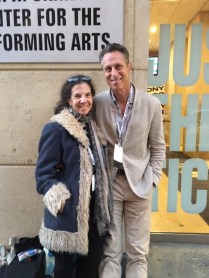
Mark Hyman and me 2019

While waiting to check out my books, I realized he is not the only Mark to have left his mark on me. The others are Dr. Mark Hyman and Marc David. I have not merely figuratively crossed paths with them. I have the pleasure of knowing them both.

I have literally sat in Mark Hyman’s bed–it was a long time ago. Back then, he was my college housemate and friend–a doe-eyed, gentle and sensitive spiritual seeker pursuing Asian Studies. Such interest and the influence of another housemate–a nutrition graduate student-led him to both medical school and the study of Chinese medicine. Today, he is one of the leading voices in the field of alternative medicine. Not only is he a deeply caring physician, but he is also a prolific writer and a leading proponent regarding the creation of a new health care paradigm.

Mark’s practice of medicine involves a whole systems approach described by a model called Functional Medicine, which includes nutrition and lifestyle support. Approaching health from this point of view and really understanding that food is medicine, changes the conversation I have with my clients every day. Presenting health care from this angle is challenging in the climate that defines our practice of medicine. We are programmed to be patients, essentially dependent on a pharmaceutical-based promise of healing. Though it is endemic on all levels, this thinking is especially entrenched in the low-income communities like the one where I serve, because options are not available and the stressors are exacerbated.

Every day I hear the pain and strain of being stuck in this prescribed role. People limp into my office with plastic bags filled with myriad medications. In spite of this, they still ache, they are often depressed, and they feel helpless and confused. But, I see the fire in their eyes and the longing in their souls as they suggest that they do not want to take an additional pill. Acknowledging that, I can remind them that they are capable of being an active participant in their own care and feeding. This is the consciousness shift that is happening through the work of people like Mark.

And then, there is Marc David,  a good friend of Mark Hyman. He is less well-known than the “k” Marks, but his message is phenomenally powerful and equally important. Marc is a nutritional psychologist, deeply learned in the areas of the physiology of eating, metabolism, and digestion. He is the founder of the Institute for the Psychology of Eating. His books, Nourishing Wisdom: A Mind-Body Approach to Nutrition and Well Being and The Slow Down Diet: Eating for Pleasure, Energy and Weight Loss are both revolutionary in their understanding of nutrition.

As most of the cultural chatter focuses on what we eat, Marc explores the more primal questions of who we are as eaters and why and how we eat. He writes that we can no longer separate the science of nutrition from the psychology of eating. I agree. His institute is training professionals to counsel from this perspective and his message is increasingly permeating the field. His ideas are very prescient and worthy to explore. He is a scientist, a Buddhist, a healer, and a wonderful writer–but as I once told him, I think he is mainly channeling his grandmother.

So, as I continue to walk among the eaters of the world, assisting where I can, I am glad to have these three good Mark (c) s beside me. These guys, along with some other wonderfully knowledgeable and visionary people are not only informing my work but are opening new doors to the understanding of human nourishment.

I’d be interested to know which piece of the nutritional puzzle you feel you most need to address, advance or heal your eating or health status. Is it informational, structural, shopping/cooking or emotional/behavioral support?

Thank you for listening, sharing, following and supporting my writing. Please subscribe in the sidebar to receive notice of new posts. Comments and greetings always welcome.

In health, Elyn

IMG_1939

Kripalu’s My Plate 

My Plate Haiku

Food made joyfully

As a gift of time and self

Feeds body and soul. by Anne Marie


morose meals and human bites

Former U.S. First Lady Eleanor Roosevelt, with...

Eleanor Roosevelt Image via Wikipedia

I am pretty certain that McDonald’s is purposely trying to get my goat. They know I have not cared for them for a really long time. It goes way back. Firstly, I never liked that red and yellow color combination. I find it jarring and it reminds me of a bad mix of mustard and ketchup. Then, there was the whole clown thing. As a child, Bozo viscerally upset me. When McDonald’s fashioned Ronald after Bozo it was like a recurring nightmare. I was confronted repeatedly by the image I thought I had successfully avoided by outgrowing children’s programming. I am sensitive that way. On top of this, I think their restaurants smell bad.

I recall in high school coming home after eating at McDonald’s, climbing into my mom’s bed not feeling great, and deciding to become a vegetarian. I can’t swear the two events occurred simultaneously, but I carry a strong association between them.

Then of course, as a whole foods advocate, nutritionist, and mother, there was no way I could find love in my heart for this child-seducing fast-food corporate giant. I did my best to be the David to this Goliath, but the Happy Meal made me lay down my slingshot. By that point, not only were kids enchanted, but the parents were as well, and I felt defeated.

Still, I was shocked recently when driving down a local highway. I came upon a McDonald’s billboard displaying a gargantuan coffee drink, with a Marge Simpson hairdo-sized topping of whip cream styled with a Mark of Zorro chocolate signature. The huge letters said, ” Chocolate Drizzle is a Right, Not a Topping”.

Since they know I don’t watch much television and therefore might miss their commercials–what better way to get in my face than with a billboard. So what if I tell my clients that  McDonald’s will not pay for their medical bills and medications should they develop nutrition-related health problems. Or, that I do use their bathrooms on occasion. This still seems like an overblown, petty and morally bereft response to our personal tiff.

Is this subliminal or just plain out seductive and manipulative advertising? Or is it downright obnoxious? I get that this is just advertising and that companies rely on it to promote their products. I do watch Mad Men–on Netflix. But to be raising chocolate drizzle to the status of a right in a world where many are denied their true ones is indecent. This assumption about simple entitlements overshadows and ignores the sanctity of our real human rights which according to the Universal Declaration of Human Rights refers to matters such as life, liberty, security of person, freedom from servitude, torture and cruel, inhuman or degrading treatment or punishment. They extend to include a standard of living adequate for the health and well-being of the individual and their family, including food, clothing, housing, and medical care, and necessary social services. Drizzle does not make the list.

Am I being too sensitive again? Should I lighten up? From where I sit, there are more important rights to assure than drizzle. Here are some examples of things I see that may make me a tad jaded. One day last week I had five clients. Cumulatively they weighed 1,576 pounds. Individually they weighed 382, 366, 284, 292 and 252 pounds. The 252 pounds belonged to an 11-year-old boy with early signs of diabetes and other distressing diet-related health problems.

One morning this week I saw three clients right in a row. They ranged in age from 35 to 48 and were on 17 prescriptions between them–mainly for high blood pressure, diabetes, high cholesterol, high triglycerides, reflux, and pain–lots of pain. I am tempted to list them. They make for an interesting mix of consonants and vowels. Later, I saw a woman who described a recent McDonald’s meal to me which consisted of 1800 calories.

On a daily basis, I speak with people without kitchen tables, homes, jobs, beds, medical insurance, sufficient medical care–and adequate food. I see kids who can’t go out and play in their neighborhoods and who might not graduate high school.

So, don’t go there with me McDonald’s, asserting that chocolate drizzle is a right. You know that drizzle is not a right but a chemical mixture of corn syrup, dextrose, water, sugar, glycerin, hydrogenated coconut oil, cocoa, food starch-modified, nonfat milk, natural and artificial flavors, salt, gellan gum, disodium phosphate, potassium sorbate, soy lecithin, and artificial flavors. And that it sits atop beverages that contain up to 390 calories and 59 grams or 15 teaspoons of sugar. More importantly, you know that the billions you have to spend on advertising can cover up that bad smell especially when money is tight and food comforts.

When the inequities have been evened out, when health care is guaranteed for all, when the growing of healthy food is more supported by our government and made available and affordable, when rights are not confused with privileges and when corporations are held responsible for their actions–then McDonald’s and I can end our feud and sit and have a conversation. Maybe we can meet at my office.

Eleanor Roosevelt, who worked tirelessly to establish the Universal Declaration of Human Rights wrote, “Where, after all, do universal human rights begin? In small places, close to home–so close and so small that they cannot be soon on any maps of the world. Yet they are the world of the individual person; the neighborhood they live in; the school or college they attend; the factory, farm, or office where they work. Such are the places where every man, woman, and child seeks equal justice, equal opportunity, equal dignity without discrimination. Unless these rights have meaning there, they have little meaning anywhere. Without concerted citizen action to uphold them close to home, we shall look in vain for progress in the larger world.”

Let’s not belittle this beautiful description of what really matters.

Thank you for listening, sharing, following and supporting my writing. Please subscribe in the sidebar to receive notice of new posts. Comments and greetings always welcome.

In health, Elyn


My Plate Haiku

Are we what we eat

Or do we eat what we are

Are they the same thing?  by Julie

haiku for you

eggs of many colors

Different Colored Eggs  Image by woodleywonderworks via Flickr

I just had a new culinary experience. Recently, I was able to escape for the weekend to the beach. After a few hours’ drive with more than a touch of slow-moving traffic, my sister-in-law Eva and I arrived in the lovely coastal town of Newburyport, Massachusetts just in time for dinner.

While stuck in traffic we tried to think about where we would eat, but once there we just decided to see where our feet and stomachs would lead us. We found ourselves in Loretta, a small, cozy restaurant in the center of town with an interesting menu. Actually, each dish we shared presented something unusual and delicious, but it was the grilled romaine salad that surprised and delighted me.

I do live a rather small, parochial life, but I’d be interested to know if anyone else has ever had a grilled romaine salad. Fortunately, we were sharing, because most of a full head of romaine lettuce, each leaf brushed in olive oil and grilled whole, arrived before us, draped in a creamy and chunky blue cheese dressing, and adorned with some pickled beets and cherry tomatoes. The grilling of the lettuce lent a delicate smokiness and crispness to each bite that was wonderful. That salad was deserving of a Haiku, which is what I initially sat down to write about.

As you may recall, in my last post, Dietary Haiku, I put out a request for such. I am so pleased to report, that I received four. Now, that may not sound that impressive but they are each so beautiful, and I want to share them with you in hopes that you will see, as I have, that I think I am onto something. I hope you will now be really inspired to compose your own and to send it my way.

In response to the mundane display of the USDA MyPyramid–really just a triangle if you ask me–and now supposedly, The Plate, guiding our dietary intake, I have decided to place one of these Dietary Haiku on each of my future posts. I think you will agree that they are more inspirational and joyful. Soon then, I imagine that this little idea will spread (and go viral) and we will have created a more meaningful message and conversation about food and eating that started right here.

I was discussing this idea with my daughter and her friend at the dinner table tonight, and they raised some good questions. Jonathan wanted to know if the themes had to be positive or could they be negative–like a 5-7-5 syllable format ending with that is so yukky! I said I would encourage everyone to keep the message affirming. Zena wanted to know how we would market or copyright this idea so that we might get rich because someone else was likely to come along and start promoting Dietary Limericks. I didn’t have an answer to that, but if you do, can you please send it to me in lieu of or in addition to your haiku, limerick or another poetic expression of dietary inspiration. Submissions can be placed in the comment section.

So, here are these beautiful poems in the order I received them, along with one of my own. Thank you to the four of you who got it and shared your little gift with me. I will keep incorporating these and hopefully, this collection will grow. Pl

   Are we what we eat

Or do we eat what we are

     Are they the same thing?     

— Julie

The farmer’s market

Each egg at the dairy stand

A different color

— Enki

Spread peanut butter

On whole grain, sweet, dark brown bread

Raspberry jam-Yum!

— Barbara

Food made joyfully

As a gift of time and self

Feeds body and soul

— Anne Marie

Deep scarlet red beets

Reveal your sweetness to me

Slip out of your skins

                                                                                                — Elyn

Thank you for listening, sharing, following and supporting my writing. Please subscribe in the sidebar to receive notice of new posts. Comments and greetings always welcome.

In health, Elyn

Related Recipe: Grilled Romaine Salad with Blue Cheese

Related Posts: Dietary Haiku, Accepting Haikus

kyuushoku

Lunch in a Japanese primary/elementary school:...

School lunch in Japan Image by Currawong1 via Flickr

Though the menu indicated that today’s lunch was called “Mix It Up Day”, I was not sure what was getting mixed up. To me, it looked like school lunch as usual, except that pizza was not the main entree. Working with the School-Based Health Program, I am usually in one of three of the district’s elementary schools on Fridays which is always Pizza Day unless it is Pizza Bagel Day. But, today was a Wednesday.

I headed into the lunchroom to see what was being rearranged or diverging from the norm. “Good afternoon. What’s for lunch today?”, I politely asked the lunch lady placing the black styrofoam containers on the white styrofoam trays that the children clutched as they moved down the line. “Chicken and cheese”, was the response.

Unable to see the contents hidden beneath the patterned cellophane wrap, I tried another gentle inquiry. With no clearer answer, I realized I’d have to figure it out on my own. On my investigational forays into the school lunchrooms, I’ve learned I must always smile broadly, express benign interest and not ask too many questions.

A few steps down, another lunch lady was in charge of two additional meal components–applesauce and puce green overcooked broccoli mush. Using a metal measuring cup she slopped the oozing applesauce into one of the bare compartments on each of the children’s trays. The broccoli mush, considered an optional rather than a required component, just lay in its big tray, ignored. Reminiscent of poor Oliver’s experience in the orphanage in Dicken’s England, I wondered could there not even be a small effort towards more attractive food preparation and presentation.

Continuing my quest to better understand the school lunch scene, and still needing to discover what that main course consisted of, I moved to stroll among the children who were already seated to eat. I found them contending with a dinner roll, two or three battered half dollar-sized circles–which I think was the chicken, and three battered mozzarella cheese sticks. Only one girl’s tray contained the broccoli mush.

While making my way around and talking with some of these students, I surreptitiously surveyed the number of chocolate v. white milk containers, the contents of the lunches brought from home, what was actually being consumed and the waste filling the garbage cans. Finding the subject matter less than appetizing, I maturely suppressed my prone-to-gagging inner child and focused instead on digesting my observations. I could not discern how this day’s menu was mixed up in any noticeable way from others. Certainly, it was no better.

During my drive home, my attention was grabbed by the news being broadcast about the tragic events unfolding in Japan in the wake of the 9.0 magnitude Fukushima earthquake and resultant tsunami. Suddenly, Mix It Up Day took on a new ironic meaning. I began to think of all the children who would not be having school lunch there on this crazy day or for many days to come.

Listening to the news, I remembered that I’d recently received an online article describing school lunches around the globe. I felt certain that Japan must have been one of the highlighted countries. This country of such rich food culture and ritual could surely challenge the widely held belief that we must serve kids low-quality food because that is what they will eat. I arrived home and found what I was looking for.

School lunch in Japanese is called kyuushoku. The lunches are all prepared in the schools, often by mothers of students who serve in this role on a part-time basis. The meals are eaten in the classroom with the teacher. All parents contribute to the cost of the school lunch program and are invited for lunch at times throughout the year. The children, clad in clean aprons, rotate the job of serving the food and no one can start eating until all have received their share. This is in sharp contrast to the chaotic, cacophonous cafeterias or “cafeteriums”  that define school lunch programs in this country. Recently, I had asked a young girl what she thought about my coming to eat with her in the cafeteria. She astutely replied that I would get a headache.

In Japan, local foods are sourced with regional pride, children grow and harvest some of the vegetables that are used by the school, and everyone receives a printed menu that tells what food groups are provided by the meal. Typically provided foods include rice, rice noodles, miso soup with tofu, grilled fish, seafood stir fry, potato croquettes (korokke), stuffed omelette (omurice), daikon radish, sweet yams, bread, and milk. Forty-five minutes are allotted for lunchtime which is followed by recess. Kyuushoku is a well-planned, healthy, and respectful way of feeding the country’s children.

But now, in that topsy-turvy ravaged part of Japan, lunchtime will really be mixed up for millions of Japanese school children in a way more profound than whatever was intended by today’s menu makers. I pray that their bellies be filled with at least some warm rice or noodles. And, I honor the care and intention that defines how Japan tends to the feeding and nourishment of its young. It would serve us well to do the same.

Any school lunch experiences to share?

Thank you for listening, sharing, following and supporting my writing. Please subscribe in the sidebar to receive notice of new posts. Comments and greetings always welcome.

In health, Elyn

Related Posts: A Shmear Campaign, Pop Smarts, The Importance of Teaching Kids About Nutrition

Updates 2020/Related Resources: Kyushoku Confidential; Unpacking Japan’s Healthy School Lunches; Gohan Society – Japanese School Lunch (watch the video)

Related Resources: Blogger Eats 162 School Lunches In One Year; Healthy Hunger-Free Kids Act 2015

If you are still considering how to donate to relief efforts, please check out the Save the Children website at http://www.savethechildren.org. (inactive link)

IMG_0061 (1)

Japanese My Plate


My Plate Haiku

Did you really think

That you could hide fish in rice?

Oh, the green paste burns.

by Francesco Marciuliano 

from I Could Pee on This and Other Poems by Cats


wings of desire

I have been hiding under the covers since before the Super Bowl game. This was not the weekend for peace-loving nutritionists. Too much head bashing and too many food blitzes for my liking.

Dear Sweet Luna

A few days prior to the game I was at the supermarket. I saw a shopping cart filled with about twelve cartons of frozen pepperoni pizza. I thought it was being used to stock the freezer section, till I saw a guy proceed with it to the check-out line. It vaguely dawned on me that this might be due to the game. I then saw legions of 2-liter soda bottles marching out the door along with armored tanks of beer. Little bags of celery sticks were unwittingly running behind. Little did they know they would soon meet their fate, drenched in fat-laden dip, in mouths that mindlessly devour whatever comes near.

While often feeling like the nutritional equivalent of Florence Nightingale, ready to mend and tend with soothing bowls of oatmeal and blueberries, this is a battlefield I will not administer to. Spectators and players alike are not innocent victims. They participate in this bloody sport of gladiator gore and gluttony of their own volition. The players come to score while the spectators come to gape and gorge.

Being big is an asset in football. However, even that begs a hefty question. How big is big enough? In 1970, only one player in the NFL was over three hundred pounds. Now 532 players or 25% of the league claim that distinction. This excessive mass is detrimental to the players and to their opponents alike. It is well documented that these very large offensive and defensive linemen suffer serious health consequences related to their size and eating behaviors after the end of their careers, and increasingly, while they are still active players. Even in this well-padded professional sports league with all the resources in the world, it is only recently that nutrition is being carefully considered. How do you promote strength and power in these guys without jeopardizing their health, and prevent turning them out to pasture to fend for themselves–often sooner than later.

So, if the guys with the big contracts hardly get the support they need, the shlubs on the couch in the den eating with pure Pavlovian abandon are entirely on their own when it comes reckoning time. Is it just me, or has the ferocity of the Super Bowl Game Glutton Fest actually increased in the past few years? Genteel women– including some of my own friends– now converse about watching the game, what team they are for and what they are serving. We have now been seriously programmed with Big Brother intensity to associate this event with bingeing. The Bowl brimmeth over.

While under the blankets with a flashlight, I read that the day of the game is called “Restaurant Christmas”. An article in my newspaper about local food establishments anticipating the big day described a restaurant that “uses a computer spreadsheet to track orders and strategically positions 15 employees to produce and deliver the restaurant’s maximum capacity: 300 wings and seven pizzas every 15 minutes. They expect to churn out more than 5,000 wings and in excess of 100 pizzas.” I think that means 2,500 chickens and many tomatoes were sacrificed for the game plan just at this one place. Again I ask, can this possibly be?

I don’t mean to sound like a party pooper, though that’s not really a big problem ’cause I didn’t go to any party to poop on–though I did surprisingly actually have two invites. One was from someone who doesn’t really know me and should be glad I didn’t show. However, the whole scene just exaggerates our already extreme daily eating that severely compromises our health. If this was truly a one-day event that would be one thing, but sadly, it isn’t. Or, if our health care system just had to carry the weight of a few shoulder injuries and some bruised egos, but that is not the reality either.

So, like that other February icon, Puxatawney Phil, I must try to venture out from my hole. If I don’t see another major food holiday in sight, maybe, just maybe, I can just predict a salubrious spring. And, Happy Valentine’s Day. Enjoy the Dark Chocolate.

Thank you for listening, sharing, following and supporting my writing. Please subscribe in the sidebar to receive notice of new posts. Comments and greetings always welcome.

In health, Elyn

Related Posts: Peepin’ Out; Spring Cleaning and the NBA Finals; Skinny Boys

(Update 2020: Just in. The Frito-Lay U.S. Snack Index Report for Super Bowl LIV. This is quite a compendium of snacking statistics and financials. Retail sales data shows Super Bowl Sunday is the biggest day of the year for salty snacks, generating approximately $520 million in one day. Historically, Frito-Lay produces approximately 600 million pounds of snacks in the six weeks leading up to the game – nearly 20 percent of its annual snack production – and more than 67 million pounds of snacks the week of Super Bowl. If you’re looking for me, I’ll be back under the covers.)

Thank you for listening, sharing, following and supporting my writing. Please subscribe in the sidebar to receive notice of new posts. Comments and greetings always welcome.

In health, Elyn

Related Recipe: Vegan Keto Buffalo Jackfruit Dip

Are you the 1 in 4?

Some serious news has crossed this nutritionist’s desk. A new study published in Obstetrics and Gynecology and reported by Science Daily shows that 25% of overweight women do not know they are overweight! C’mon. I can see maybe not knowing if you have high blood pressure or an obnoxious personality, but I am pretty sure overweight women are not walking around too delusional.

Image from Pinterest

Of course, once again it is those Black and Hispanic women who seem to be most in the dark about their weight status, along with women who hang with other fat women. But, it could happen to anyone–even you. Do you know your body mass index (BMI)? If not, it is quite possible that you too are a misinformed blob.

This type of media messaging drives me insane. The study involved asking ‘childbearing-aged women’ (oddly, only those aged 18-25) some objective and out-of-context multiple-choice type questions about a very subjective issue. The responses were matched to the (once again) imperfect BMI and the results were interpreted to show that 25% of overweight and obese women didn’t realize they were fat. The study authors conclude from this that this misperception will “lead women to continue to eat poorly, to gain more weight and to eventually develop the complications of obesity”. As opposed to those who are fully aware of their corpulence? If you didn’t deem your body ugly and problematic and its BMI was any higher than a 25–the threshold of gluttony–you clearly have had your head in the ice cream freezer for too long. Tell me, who gets these research dollars? I want some.

The study authors say that they were not surprised by the results based on their belief system that “as the nation’s obesity rate grows, it becomes more socially acceptable to be overweight and the truth becomes obscured.” Those who can no longer see their toes must now be mightily perplexed.

The lead study author says, “people compare themselves to those closest to themselves”. I am not really sure what that means. I presume she is reiterating this other new belief, that if all your friends are fat, and if you are fat, you think that is normal. I thought I was a “normal” weight woman, but, now I’m wondering if maybe I just think I’m “normal” because I spend my days with high-weight people–and can no longer assess my own size.

I work with some real heavyweights. My clients have BMIs in the thirties, forties, and fifties. I realize the privilege and responsibility I have in talking to people about the very intimate topic of weight and body size. Having done this work for many years, I think I have a deep respect for the territory, but on occasion, I too may overstep the boundaries. Sometimes, I am compelled to inform someone that their health may be at risk when it is my conjecture and not their truth.

My days are filled with having very insightful and meaningful conversations with very reality-based individuals–each with their own profound story about eating, diet, and self-care. And all that has influenced these. Most usually, my clients seem to appreciate having an opportunity to safely talk about these sensitive issues. Most are interested in change not because they suddenly realized they were fat, but because something else is impacting their physical or emotional experience. Some have had previous efforts trying to melt away their fat–others, are trying to figure out where to even start.

When they are with me, my clients are very nice, but for all I know, behind my back, they are probably calling me skinny, undernourished, or bony. Perhaps it is time for fat people to reclaim normal and to expand the derogatory language used to describe skinny people. I offer hyperactive, self-absorbed, or neurotic. However, mind you, many are just genetically under-endowed. Overlooked in the dialogue about appropriate weight is that the vigilance, self-scrutinizing. attaining and maintaining required is much more of a privilege associated with socioeconomic status than is acknowledged generally or by the study’s authors.

I would like to advance the Peter Paul Rubens standard of sensual Rubenesque beauty and health. A standard that allows people to feel comfortable in their bodies in the way that much classical art portrays. It’s likely that when we were created in the great creator’s image, a little pudge was part of the package. The correlation between weight and health is not a black-and-white issue as we have been led to believe. Some fat reserves may even be protective.

It should be noted that some of the subjects included in this study were indicated to be postpartum, a particularly complicated, specific, and weight-shifting metabolic period. This mix of non-post-partum and post-partum women, along with other aspects of the study design and its assumptions, makes me leery of its conclusions. Particularly when it also states that “normal weight misperceivers”, or those whose BMI fell within the normal range but perceived that they were overweight, were more likely to engage in unhealthy behaviors including dieting, meal skipping, smoking, and carbohydrate restricting than the overweight subjects.

I am not dismissing that there are serious health issues associated with excessive weight. But, at this point in the game, I would expect a more sophisticated and nuanced understanding of the situation such as that presented by Cara Kulciwki in The Curvature. Based on studies like these, I am just praying that car mechanics don’t start handing out a questionnaire to childbearing-aged women about auto maintenance beliefs and behaviors. When that happens, watch out suburban white women, for we will be royally humiliated. I bet at least 1 in 4 of us mistakenly believes that our tires are properly inflated and that our oil crankcase is full.

Thank you for listening, sharing, following, and supporting my writing. Please subscribe in the sidebar to receive notice of new posts. Comments and greetings are always welcome.

In health, Elyn

Your Pyramid

As a nutrition professional, I would like to share with you some tips on eating well.

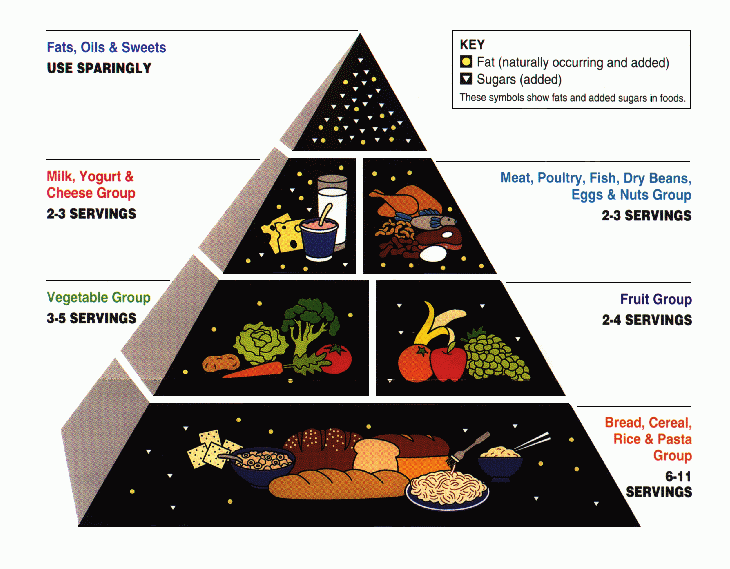
For today, let’s start with a simple tool that is available to all Americans, brought to you by the US Department of Agriculture. You can probably find it right in your own kitchen–check your cereal boxes–the MyPyramid. Yes, that is your pyramid folks. Your tax dollars have paid for it–it would be a shame to see it go to waste. To the untrained eye, it appears like a triangle decorated with multi-colored vertical sections of varying bandwidths– with an alien climbing up some stairs on the side. However, hidden in that simple representation, is the culmination of US Dietary Policy.

The MyPyramid has been personalized just for you. Very obtusely, it suggests moderation, proportionality, variety, activity–and if your version happens to say on the bottom, Steps to a Healthier You–gradual improvement. Boy, you are lucky I am here.

Our government has been trying to figure out how to inform the masses about good nutrition since about 1916. Granted, this is not easy. I imagine those who’ve been assigned the task have resorted to some serious stress eating. From 1956 through 1992, using a minimalist approach, the Four Food Groups, which I grew up on, became the model of nutritional dictate. (This was proceeded by the more comprehensive– and rather rational–Basic 7 model introduced during wartime in 1943–a period of food rationing.) The four defined food groups–chosen to prevent nutrient deficiencies–were fruits and vegetables; meat; dairy; and, grains and breads. Many people still adhere to this model–but having forgotten what those four groups actually were, instead, make up their own. My husband’s preferred groups are ethnic food, ice cream (dairy), popcorn (whole grain), and carbonated beverage.

In the late 1980s, having a few years of nutrition counseling experience under my belt, I took a sabbatical to do some focused research in two distinct areas–both of an anthropological nature. The first included infant and toddler feeding with my son as the subject; and the second involved serving lots of burritos and chimichangas to gringos in a very popular Mexican restaurant. The first was more adorable–though the latter was more lucrative.

When I returned to the field a few years later, I learned that we were soon to be blessed with a long-awaited update of the dietary guidelines–with the experts busily designing what was soon to be ubiquitously known as the Food Guide Pyramid. After years of deliberation and millions of dollars, it was officially released in 1992–smack with 6-11 servings of essentially refined carbohydrates literally forming the base of its recommendations.

Having recognized that the American diet was somehow connected to a plethora of chronic diseases, and using evidence that cultures who ate traditional diets–which included some high fiber, carbohydrate foods like manioc root, taro, and sorghum–were not plagued by heart disease, colon cancer, and diabetes, the experts interpreted this to mean we should increase dietary attention to carbohydrates. (Needless to say, there were many other cultural differences as well.) Fats became increasingly vilified, and giant bagels and bowls full of pasta were elevated to celebrity status.

I was there. I witnessed it all–and I rubbed my forehead in disbelief. You see, I come from a long line of bagel eaters. Don’t get me wrong. Bagels are very good. They contribute to comedy and to cream cheese. However, it is obvious that this is not the foodstuff of those who epitomize physical prowess and longevity. If obesity and chronic disease prevention or lean and mean was what we were seeking, why were we not promoting the Hunza, Masai or Okinawa Diet?

But, so it was. By 1996, just four years after the introduction of the Food Guide Pyramid, the unprecedented increase in obesity, childhood obesity, diabetes, along with some other surprising health concerns was making the headlines. In 2005, after a mere thirteen years in existence, it was to be declared obsolete. President George W. Bush, as part of his Healthier US Initiative, introduced the dumbed-down version of the pyramid, that we are now fortunate to have at our disposal today.

Really, I do not wish to appear so cynical. But, when I look at that colorful triangle, I see what is hidden behind. Not a line drawing but real flesh and blood citizens seriously affected by the lack of a meaningful food policy in this country. I see a populace who was sufficiently seduced and ate what it was fed–regardless of what it may have read in the iterations of these dietary guidelines. Particularly in these most recent decades.

This may seem a moot discussion. It could be argued that few people even pay attention or that the situation will change shortly with the soon to be released 2010 Dietary Guidelines. Many are already aware of the competing interests that influence our health and nutritional policies. However, the reality is that it says a lot that that triangle says so little. And, it still represents the foundation of many dietary organizations’ precepts. I am shocked that the basic understanding of the feeding of human beings is still so conflicted and poorly understood. How could it be so difficult?

If you are holding a cereal box, take a deeper look. If it is a highly processed, artificially colored, multi-sugar sweetened, perversely marketed candy imposter–put down the box, back away and wonder what right the triangle has being on there anyway.

Thank you for listening, sharing, following and supporting my writing. Please subscribe in the sidebar to receive notice of new posts. Comments and greetings always welcome.

In health, Elyn

Update January 2026: The most recent revision of the Dietary Guidelines for Americans and its Food Pyramid have just been released. Take a look. If you are seeing it for the first time at sometime in the future, when things may have changed again, do know things are quite contentious in the here and now.

Also, I don’t know how I have not been aware until now of the brilliant work of food historian, Sarah Wassberg Johnson, and her writings and recorded series on The Food Historian: Food History Blog. She presents some fascinating information that informs how we partially arrived at where we are today, on her talk, When Sugar Was Good For You: The Development of Nutrition Science in America.

Magic Doughnuts–The Nutritionist’s Nemesis

A photo of 12 Original Glazed doughnuts from K...

Image via Wikipedia

It is time to raise my rates. The stakes are higher, the work is harder–Krispy Kreme is coming to town.

Looking back I can see that the signs were there, the portents. A few weeks ago, the lab technicians in the medical office where I work, hid a photo behind a cabinet door. The photo portrayed four very naked women standing in chorus line formation, clad only in sashes emblazoned with the words Krispy Kreme Donuts. The jolly foursome cumulatively weighed about twelve hundred pounds. The lab techs led me to their surreptitious closet and awaited my reaction. Oh, did we guffaw. But then I went back to my desk and stared out the window, contemplating the meaning of my life as a nutritionist.

It was only a matter of time then until my husband, aware of my prurient interest in all things fatty and sugary, sidled up next to me on the couch to announce the upcoming opening of the area’s first Krispy Kreme franchise.

I shouldn’t panic yet. The new store is to be located a good twenty miles from where I practice. Certainly, none of my client base would be able to procure any of these scrumptious confections. But, what was that? Local gas stations will also be carrying them? The story got worse. As my husband read to me from the article in the business section of the newspaper, the words and images were almost surreal.

According to the article, a “typical Krispy Kreme store opening will draw hundreds of customers who will wait several hours to buy hot doughnuts. In South Bend, Indiana, a customer camped outside of the store for seventeen days awaiting a store’s opening.” The statistics are baffling. Get this. Weekly sales for a Krispy Kreme franchise average about $58,000. This is up from $28,000 a mere four years ago. North American Krispy Kreme stores produce five million doughnuts daily. Daily! The little devils are even making their way into wedding receptions. Probably as invited guests-dear friends of the family.

Apparently, business experts credit this boom to “one of the most effective marketing strategies in the history of the restaurant industry.” However, “both franchisers and company officials say the enthusiasm is the result of the quality of their product-it has such a magical quality about it.” Was it the same combination of commerce and magic that had enticed four very large women to stand in their own doughy glory singing the praises of Krispy Kreme?

I could stand no more. I have been rather accustomed to waging a pathetic fight against the big guys and their Madison Avenue associates, but now they were playing with magic and using stainless steel cauldrons. I have not a chance. In the match-up between the company’s ‘Hot Original Glazed’ and me, I have as much pull as a stale biscuit. As if they knew I’d be reading this, they threw one more punch–right to the gut. In response to concerns about the low-carbohydrate trend, a company official is quoted in the article as saying; “even people trying to avoid sugary baked goods will make an exception for a Krispy Kreme.”

The following day I headed back to my office. I dreamed that there would be lines of devotees waiting to see me. That people would now realize that they were being seduced by an evil pudgy ball of dough, a wolf in sheep’s clothing, and would come in droves seeking my aid to protect them. I would be Super Nutritionist. But no one was there. Disheartened, I settled into my desk. I might just as well tell my clients to take two doughnuts and call me in the morning.

I guess I should just be patient. Eventually, the hoopla will have to die down and the magic will have to fade. The masses, those mere mortals, will be sorry then. Even the company officials and franchisers will have had one Krispy Kreme too many, and they will regret it. That is when they will come knocking on my door (or pulling up to my drive-thru window.) But, I don’t have any magic spells to undo the ravages of that enchanted edible. They will just have to work harder to lose that big doughnut they are now carrying around their middles and I will charge them more to do so, for I will have already raised my rates. I may even become the national spokesperson for Hole H.O.G. (Hot Original Glaze) – a doughnut victim compensation program. Well, we’ll see. They haven’t opened yet.

*Source-Sweet Smell of Success, Jeremy Boyer, Albany Times Union, Nov. 30, 2003

Thank you for listening, sharing, following and supporting my writing. Please subscribe in the sidebar to receive notice of new posts. Comments and greetings always welcome.

Related Post: Kicking Butt with Krispy Kreme

In health, Elyn