Archives

muse of the girl

Camouflage is definitely not for me. I prefer pretty patterns and soft silky and satiny fabrics. Give me beautiful bold colors or light pastels. Browns and faded olive are not in my color palette. I may be nicely disguised in a flower garden, but I am an easy target on the battlefield. That may explain why I am fielding a lot of enemy fire in the trenches these days. The obesity war seems to be raging on all fronts.  

It’s been a bad week for news journalism with the News of the World scandal, but a few stories got through from the correspondents. First, came the release of the Robert Wood Johnson Foundation, “F as in Fat”, an annual report on the national state of obesity. Apparently, obesity rates are increasing in sixteen states, but, good news, there were fewer than twenty states with increasing rates. My state of New York, is apparently in better shape than most, with only 23.9% of its denizens classifying as obese. Our good showing can be due to the millions in New York City who don’t have cars, and still walk everywhere and climb stairs even to get in and out of the subways. Maybe an unfair advantage, but, Go, team!

Then, there was a commentary article in the Journal of the American Medical Association. Drs. Lindsey Murtagh and David Ludwig, of the Harvard School of Public Health, proposed that morbidly obese children be removed from their homes and placed in foster care, to control for the harmful behaviors by which they are affected. They gave an exception to cases with genetic causes.

Reading this made me wonder if I should have been removed from my home due to secondary smoke exposure. I suppose the smoking could have been attributed to some genetic parental anxiety and my case would have been dismissed. Just imagine though what would it have been like to live with a normal, straight-haired and non-smoking family? But, maybe those parents would have drunk too much or would not have had the patience for my crazy curls? Didn’t everyone drink and smoke, even in pregnancy, back then? It took a while for people to understand the dangers of cigarettes, and for the tobacco companies to fess up. My folks didn’t mean to hurt me.

Now, most everyone has been eating processed and adulterated food for a long while, but, it has taken until rather recently to catch onto what it is doing to us and few in the industry are fessing up. My kids tell me how all their friends’ kitchens are stocked with big bottles of soda, large bags of chips and huge boxes of fun cereals. I know they have at times wished for foster placement due to this. But, maybe I should warn those families. The jig might be up–well, only if their kids are fat.

Despite this multi-paragraph ramble, the headlines are exactly what I don’t want to talk about. I want to discuss the war that doesn’t get covered, that wages within the many girls and women–of all ages and sizes–who hate their bodies and therefore deny a large part of their selves. Or, who, by not loving themselves, direct a lot of abuse to their bodies in both thought and action. Though they often wish they were invisible, we see them walking around in all types of bodies including those we deem acceptable and those we envy. Persons, whose self-worth has long been determined by the numbers on a scale or by an image in a mirror.

The confusion and dictates about food and eating cause as much, if not more, distress for them, than for those who are large-sized without such negative judgment about their weight. The collective pain and problems here are profound as are those we ascribe to obesity–and the physical consequences can be even more severe or deadly. Here, much potential is lost and much love is denied. I think we all have wandered into and many have lingered in this place where reality is distorted and self-flagellation and deprivation seem deserved.

This is the ignored epidemic. Not many resources are designated here, but I have apparently been assigned to cover this beat. My field notebooks are filled with stories and quotes that are usually too intimate for me to share. But they imply a sense that so many girls and women believe that without perfection they cannot be whole and should not take up much space on this generous planet. It is heartbreaking to witness this.

Having been touched by the lives of so many amazing, intelligent, gorgeous, creative, warm, gentle, caring and funny individuals who have been broken in this battle of self and body, these are some things I wish would receive front-page headlines: Bodies change, contours soften, bellies round, babies fill, bloat happens, hunger informs, weight is not absolute, judgmental words injure, beauty shines, food nourishes, wisdom evolves, body protects, hormones ebb and flow, pleasure is permissible, fat is often just a feeling in one’s head and restriction revolts.

If you are living this, put down the staunch resistance, begin the surrender and trust your inner feminine voice. Please know you are all so beautiful and you possess that which really matters. Take a moment to put your hand on your heart and belly and send love to yourself. Take a deep slow breath and be thankful to your body. Send a healing thought out to other women, because I assure you, you are so not alone. Hold the daughters and ask to be held. Reclaim your place. Change the internal tapes. Know there are many paths to healing available. The world needs everything you have to offer.

Any sharings will be welcomed and respected.

Thank you for listening, sharing, following and supporting my writing. Please subscribe in the sidebar to receive notice of new posts. Comments and greetings always welcome.

In love and health, Elyn

Related Posts: Stopping Traffic, Nourish Thyself Well Day, Dolls with Faith, A Meteorological Change of Plans, Size Me Down

IMG_1294

John Lennon’s My Plate

My Plate Haiku

Deep scarlet red beets

Reveal your sweetness to me

Slip out of your skins.

by Elyn
three good mark(c)s

Mark Bittman’s and my path have crossed at the library once again. In So, What’s the Dilemma?, I wrote about how the food writer, chef, and columnist threw his tome, “How to Cook Everything Vegetarian” in my way, blocking the entire 640-680 non-fiction aisle–just to get my attention. This time he was a little more subtle. He knew I needed something simpler for my new client, a 32-year-old guy who had been a vegetarian since his early teenage years, but despite his recent attainment of fatherhood was still eating like a teenager. His wife had called me frantically seeking help.

This time as I perused the library shelf looking for some inspiration, his similarly titled, How to Cook Everything: Vegetarian Cooking stuck out conspicuously from the other offerings. It was just what I was looking for. Weighing only about eight ounces with a mere 123 pages, I thought it would be the right serving size to present to the residual adolescent.

I was glad to see that Mark had my back. Not only did he help me with my client that day. His more recent work, Food Matters: A Guide to Conscious Eating (2008) and the follow-up companion piece, The Food Matters Cookbook: 500 Revolutionary Recipes for Better Living (2010) has helped to spread my message about personal health and the politics of food to a vast and appreciative audience. Through his books, NY Times column, and television appearances, he is raising awareness about global food issues while providing people with the ability to make a change–that tastes really good–right in their own kitchens. In his own words, he has committed himself for decades to “battling the ascendance of convenient processed food and a general decline in quality”  which has contributed to the big pickle we now find ourselves in.

IMG_2868

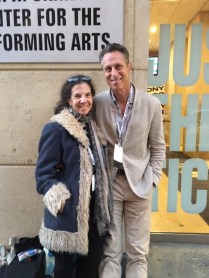
Mark Hyman and me 2019

While waiting to check out my books, I realized he is not the only Mark to have left his mark on me. The others are Dr. Mark Hyman and Marc David. I have not merely figuratively crossed paths with them. I have the pleasure of knowing them both.

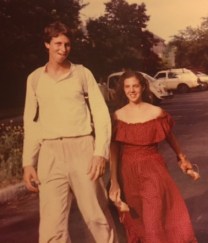
I have literally sat in Mark Hyman’s bed–it was a long time ago. Back then, he was my college housemate and friend–a doe-eyed, gentle and sensitive spiritual seeker pursuing Asian Studies. Such interest and the influence of another housemate–a nutrition graduate student-led him to both medical school and the study of Chinese medicine. Today, he is one of the leading voices in the field of alternative medicine. Not only is he a deeply caring physician, but he is also a prolific writer and a leading proponent regarding the creation of a new health care paradigm.

Mark’s practice of medicine involves a whole systems approach described by a model called Functional Medicine, which includes nutrition and lifestyle support. Approaching health from this point of view and really understanding that food is medicine, changes the conversation I have with my clients every day. Presenting health care from this angle is challenging in the climate that defines our practice of medicine. We are programmed to be patients, essentially dependent on a pharmaceutical-based promise of healing. Though it is endemic on all levels, this thinking is especially entrenched in the low-income communities like the one where I serve, because options are not available and the stressors are exacerbated.

Every day I hear the pain and strain of being stuck in this prescribed role. People limp into my office with plastic bags filled with myriad medications. In spite of this, they still ache, they are often depressed, and they feel helpless and confused. But, I see the fire in their eyes and the longing in their souls as they suggest that they do not want to take an additional pill. Acknowledging that, I can remind them that they are capable of being an active participant in their own care and feeding. This is the consciousness shift that is happening through the work of people like Mark.

And then, there is Marc David,  a good friend of Mark Hyman. He is less well-known than the “k” Marks, but his message is phenomenally powerful and equally important. Marc is a nutritional psychologist, deeply learned in the areas of the physiology of eating, metabolism, and digestion. He is the founder of the Institute for the Psychology of Eating. His books, Nourishing Wisdom: A Mind-Body Approach to Nutrition and Well Being and The Slow Down Diet: Eating for Pleasure, Energy and Weight Loss are both revolutionary in their understanding of nutrition.

As most of the cultural chatter focuses on what we eat, Marc explores the more primal questions of who we are as eaters and why and how we eat. He writes that we can no longer separate the science of nutrition from the psychology of eating. I agree. His institute is training professionals to counsel from this perspective and his message is increasingly permeating the field. His ideas are very prescient and worthy to explore. He is a scientist, a Buddhist, a healer, and a wonderful writer–but as I once told him, I think he is mainly channeling his grandmother.

So, as I continue to walk among the eaters of the world, assisting where I can, I am glad to have these three good Mark (c) s beside me. These guys, along with some other wonderfully knowledgeable and visionary people are not only informing my work but are opening new doors to the understanding of human nourishment.

I’d be interested to know which piece of the nutritional puzzle you feel you most need to address, advance or heal your eating or health status. Is it informational, structural, shopping/cooking or emotional/behavioral support?

Thank you for listening, sharing, following and supporting my writing. Please subscribe in the sidebar to receive notice of new posts. Comments and greetings always welcome.

In health, Elyn

IMG_1939

Kripalu’s My Plate 

My Plate Haiku

Food made joyfully

As a gift of time and self

Feeds body and soul. by Anne Marie


morose meals and human bites

Former U.S. First Lady Eleanor Roosevelt, with...

Eleanor Roosevelt Image via Wikipedia

I am pretty certain that McDonald’s is purposely trying to get my goat. They know I have not cared for them for a really long time. It goes way back. Firstly, I never liked that red and yellow color combination. I find it jarring and it reminds me of a bad mix of mustard and ketchup. Then, there was the whole clown thing. As a child, Bozo viscerally upset me. When McDonald’s fashioned Ronald after Bozo it was like a recurring nightmare. I was confronted repeatedly by the image I thought I had successfully avoided by outgrowing children’s programming. I am sensitive that way. On top of this, I think their restaurants smell bad.

I recall in high school coming home after eating at McDonald’s, climbing into my mom’s bed not feeling great, and deciding to become a vegetarian. I can’t swear the two events occurred simultaneously, but I carry a strong association between them.

Then of course, as a whole foods advocate, nutritionist, and mother, there was no way I could find love in my heart for this child-seducing fast-food corporate giant. I did my best to be the David to this Goliath, but the Happy Meal made me lay down my slingshot. By that point, not only were kids enchanted, but the parents were as well, and I felt defeated.

Still, I was shocked recently when driving down a local highway. I came upon a McDonald’s billboard displaying a gargantuan coffee drink, with a Marge Simpson hairdo-sized topping of whip cream styled with a Mark of Zorro chocolate signature. The huge letters said, ” Chocolate Drizzle is a Right, Not a Topping”.

Since they know I don’t watch much television and therefore might miss their commercials–what better way to get in my face than with a billboard. So what if I tell my clients that  McDonald’s will not pay for their medical bills and medications should they develop nutrition-related health problems. Or, that I do use their bathrooms on occasion. This still seems like an overblown, petty and morally bereft response to our personal tiff.

Is this subliminal or just plain out seductive and manipulative advertising? Or is it downright obnoxious? I get that this is just advertising and that companies rely on it to promote their products. I do watch Mad Men–on Netflix. But to be raising chocolate drizzle to the status of a right in a world where many are denied their true ones is indecent. This assumption about simple entitlements overshadows and ignores the sanctity of our real human rights which according to the Universal Declaration of Human Rights refers to matters such as life, liberty, security of person, freedom from servitude, torture and cruel, inhuman or degrading treatment or punishment. They extend to include a standard of living adequate for the health and well-being of the individual and their family, including food, clothing, housing, and medical care, and necessary social services. Drizzle does not make the list.

Am I being too sensitive again? Should I lighten up? From where I sit, there are more important rights to assure than drizzle. Here are some examples of things I see that may make me a tad jaded. One day last week I had five clients. Cumulatively they weighed 1,576 pounds. Individually they weighed 382, 366, 284, 292 and 252 pounds. The 252 pounds belonged to an 11-year-old boy with early signs of diabetes and other distressing diet-related health problems.

One morning this week I saw three clients right in a row. They ranged in age from 35 to 48 and were on 17 prescriptions between them–mainly for high blood pressure, diabetes, high cholesterol, high triglycerides, reflux, and pain–lots of pain. I am tempted to list them. They make for an interesting mix of consonants and vowels. Later, I saw a woman who described a recent McDonald’s meal to me which consisted of 1800 calories.

On a daily basis, I speak with people without kitchen tables, homes, jobs, beds, medical insurance, sufficient medical care–and adequate food. I see kids who can’t go out and play in their neighborhoods and who might not graduate high school.

So, don’t go there with me McDonald’s, asserting that chocolate drizzle is a right. You know that drizzle is not a right but a chemical mixture of corn syrup, dextrose, water, sugar, glycerin, hydrogenated coconut oil, cocoa, food starch-modified, nonfat milk, natural and artificial flavors, salt, gellan gum, disodium phosphate, potassium sorbate, soy lecithin, and artificial flavors. And that it sits atop beverages that contain up to 390 calories and 59 grams or 15 teaspoons of sugar. More importantly, you know that the billions you have to spend on advertising can cover up that bad smell especially when money is tight and food comforts.

When the inequities have been evened out, when health care is guaranteed for all, when the growing of healthy food is more supported by our government and made available and affordable, when rights are not confused with privileges and when corporations are held responsible for their actions–then McDonald’s and I can end our feud and sit and have a conversation. Maybe we can meet at my office.

Eleanor Roosevelt, who worked tirelessly to establish the Universal Declaration of Human Rights wrote, “Where, after all, do universal human rights begin? In small places, close to home–so close and so small that they cannot be soon on any maps of the world. Yet they are the world of the individual person; the neighborhood they live in; the school or college they attend; the factory, farm, or office where they work. Such are the places where every man, woman, and child seeks equal justice, equal opportunity, equal dignity without discrimination. Unless these rights have meaning there, they have little meaning anywhere. Without concerted citizen action to uphold them close to home, we shall look in vain for progress in the larger world.”

Let’s not belittle this beautiful description of what really matters.

Thank you for listening, sharing, following and supporting my writing. Please subscribe in the sidebar to receive notice of new posts. Comments and greetings always welcome.

In health, Elyn


My Plate Haiku

Are we what we eat

Or do we eat what we are

Are they the same thing?  by Julie

wings of desire

I have been hiding under the covers since before the Super Bowl game. This was not the weekend for peace-loving nutritionists. Too much head bashing and too many food blitzes for my liking.

Dear Sweet Luna

A few days prior to the game I was at the supermarket. I saw a shopping cart filled with about twelve cartons of frozen pepperoni pizza. I thought it was being used to stock the freezer section, till I saw a guy proceed with it to the check-out line. It vaguely dawned on me that this might be due to the game. I then saw legions of 2-liter soda bottles marching out the door along with armored tanks of beer. Little bags of celery sticks were unwittingly running behind. Little did they know they would soon meet their fate, drenched in fat-laden dip, in mouths that mindlessly devour whatever comes near.

While often feeling like the nutritional equivalent of Florence Nightingale, ready to mend and tend with soothing bowls of oatmeal and blueberries, this is a battlefield I will not administer to. Spectators and players alike are not innocent victims. They participate in this bloody sport of gladiator gore and gluttony of their own volition. The players come to score while the spectators come to gape and gorge.

Being big is an asset in football. However, even that begs a hefty question. How big is big enough? In 1970, only one player in the NFL was over three hundred pounds. Now 532 players or 25% of the league claim that distinction. This excessive mass is detrimental to the players and to their opponents alike. It is well documented that these very large offensive and defensive linemen suffer serious health consequences related to their size and eating behaviors after the end of their careers, and increasingly, while they are still active players. Even in this well-padded professional sports league with all the resources in the world, it is only recently that nutrition is being carefully considered. How do you promote strength and power in these guys without jeopardizing their health, and prevent turning them out to pasture to fend for themselves–often sooner than later.

So, if the guys with the big contracts hardly get the support they need, the shlubs on the couch in the den eating with pure Pavlovian abandon are entirely on their own when it comes reckoning time. Is it just me, or has the ferocity of the Super Bowl Game Glutton Fest actually increased in the past few years? Genteel women– including some of my own friends– now converse about watching the game, what team they are for and what they are serving. We have now been seriously programmed with Big Brother intensity to associate this event with bingeing. The Bowl brimmeth over.

While under the blankets with a flashlight, I read that the day of the game is called “Restaurant Christmas”. An article in my newspaper about local food establishments anticipating the big day described a restaurant that “uses a computer spreadsheet to track orders and strategically positions 15 employees to produce and deliver the restaurant’s maximum capacity: 300 wings and seven pizzas every 15 minutes. They expect to churn out more than 5,000 wings and in excess of 100 pizzas.” I think that means 2,500 chickens and many tomatoes were sacrificed for the game plan just at this one place. Again I ask, can this possibly be?

I don’t mean to sound like a party pooper, though that’s not really a big problem ’cause I didn’t go to any party to poop on–though I did surprisingly actually have two invites. One was from someone who doesn’t really know me and should be glad I didn’t show. However, the whole scene just exaggerates our already extreme daily eating that severely compromises our health. If this was truly a one-day event that would be one thing, but sadly, it isn’t. Or, if our health care system just had to carry the weight of a few shoulder injuries and some bruised egos, but that is not the reality either.

So, like that other February icon, Puxatawney Phil, I must try to venture out from my hole. If I don’t see another major food holiday in sight, maybe, just maybe, I can just predict a salubrious spring. And, Happy Valentine’s Day. Enjoy the Dark Chocolate.

Thank you for listening, sharing, following and supporting my writing. Please subscribe in the sidebar to receive notice of new posts. Comments and greetings always welcome.

In health, Elyn

Related Posts: Peepin’ Out; Spring Cleaning and the NBA Finals; Skinny Boys

(Update 2020: Just in. The Frito-Lay U.S. Snack Index Report for Super Bowl LIV. This is quite a compendium of snacking statistics and financials. Retail sales data shows Super Bowl Sunday is the biggest day of the year for salty snacks, generating approximately $520 million in one day. Historically, Frito-Lay produces approximately 600 million pounds of snacks in the six weeks leading up to the game – nearly 20 percent of its annual snack production – and more than 67 million pounds of snacks the week of Super Bowl. If you’re looking for me, I’ll be back under the covers.)

Thank you for listening, sharing, following and supporting my writing. Please subscribe in the sidebar to receive notice of new posts. Comments and greetings always welcome.

In health, Elyn

Related Recipe: Vegan Keto Buffalo Jackfruit Dip

I Speak for the Fat People: first part

I speak for the fat people. Like Dr. Seuss’ Lorax who spoke for the trees, someone must speak for the fat people. Unlike the trees who needed a spokesperson because they had no tongues, you would think that the fat people would be able to speak for themselves. Of course, fat people have tongues. If they did not have that taste bud laden sensory organ, they would not be fat.  Given the current weight of the world, this group should not be particularly hard to hear. However, in the huge public dialogue about weight and obesity, the fat people are merely statistics. There are no real people behind the statistics, and this is where they have lost their voice.  Therefore, they are stripped of any ability to speak with authority on the topic.

I am not a statistic. Though I have had some years where I toed the chubby line, for the most part, I have done my part in tipping the scales toward societal svelteness. Besides my obligation as a citizen to keep the fat numbers down, as a nutritionist, it is my professional responsibility to pull people out of the fat pool and to keep them from falling in at all.

It is no big secret that the medical and nutritional community has not done a great job in their role as bariatric (the science of obesity) lifeguards. I myself do not have a great track record of turning people into mere shadows of their former selves. But, I have spent my career as a nutritionist hearing the stories and struggles of the fat people and observing the ways of food and eating that define this turn of the century. I am a spy in the house of girth.

The fat community does, in fact, have some spokespeople. There are magazines, journals, and websites edited by those (mainly women) who have spent one day too many in the deprived and depraved world of dieting. There are professionals and individuals who are doing incredible and poetic work about re-informing and re-educating on misconceptions about weight and health and respectful self-care. Still, many of these efforts are marginalized or featured in venues that only topic-obsessed people like myself pay attention to. Even Roseanne Barr once said, “It’s OK to be fat. So you’re fat. Just be fat and shut up about it.” For every individual or undertaking that sings the praises of fat, there are thousands of counter-voices screaming the imperative to whip it away.

Therefore, I believe I must use my credentials to speak out. I hope that the fat people can accept me, a thin person–who is often cold and prone to osteoporosis–and an ex-stress and emotional eater to be their voice. Born of thin mother and fat father, I will try to do the cause justice.

Thank you for listening, sharing, following and supporting my writing. Please subscribe in the sidebar to receive notice of new posts. Comments and greetings always welcome.

(to be continued)

In health, Elyn

Related Posts: I Speak for the Fat People: Middle Part and I Speak for the Fat People: Last Part

Related Resources (2010): (Frances M. Berg); Intuitive Eating  (Evelyn Tribole and Elyse Resch); Health at Every Size (Dr. Bacon); Dances with Fat(Ragen Chastain)


culture clash

A new client arrived at my office. She was an Iraqi woman–a refugee of the war in her country. She had made it to my little corner of the planet by some grace and the help of her three adult sons who she was lucky to still have in her embrace. One of her sons was present with her for the appointment and served as our interpreter.

The woman was about my age–mid-fifties. She was referred to me for high cholesterol–which is a usual raison d’etre for getting put on my schedule. Though there are so many things the human heart can suffer from that may affect our health and hardiness, there are only a few we can measure easily and then neatly deem abnormal. Cholesterol and blood pressure levels are of course the most common. One spin of the sphygmomanometer or a few fatty drops in the blood is the determinant of our health risks. The regulation and control of these resultant measurements become the pressing story, while the real matters of the heart get deeply lost in the sauce.

My client with warm shining eyes beaming at me from under her headscarf had been treated for breast cancer a few years ago while still in Iraq and had not had much follow-up care since her odyssey had begun. She had only been in the United States for a few months. She was dressed in full Muslim garb, ensconced in a lot of fabric. Awkwardly, she adjusted her clothing to reveal to me some loosely wrapped gauze lying limply around her upper arm to contain the swelling of lymphedema. The consult contained fragments of conversation as I tried to piece together some semblance of her health history and her saga of survival.A Picture Of One Of The Doors Of Al-Kadhimiya Mosque, It ...

As I was engaged in my own fact-finding mission, and trying to figure out how I could best assist her in the short time I had, she was gesturing toward me while speaking in Arabic. While I was simultaneously trying to stay very present and yet trying to search for contact numbers of local resources, her son was gently interpreting her words for me. She was apparently commenting on my seemingly well-behaved body that has obediently stayed within the confines of acceptable shape and form. She referred to her own, rounder, body with shame and regret.

As her meaning crystallized before me, the tears welled behind my eyes. This beautiful woman inhabited a body that manifested the pain of many inflictions. She had traveled half the globe to find a tiny sanctum of political refuge and safety. While living in the midst of unbelievable violence I am sure she lost a lot more besides her girlish figure. How dare she not tend to her weight and diet like I had while my government had torn her country asunder and bombed it to pieces. I beseeched her not to compare and mumbled my apologies while the irony of our human vanities swept over me.

With this turning of the year, as I pray for peace on earth, I will carry her story with me and wish her the very best.

Thank you for listening, sharing, following and supporting my writing. Please subscribe in the sidebar to receive notice of new posts. Comments and greetings always welcome.

To all of you, A  Happy and Healthy New Year.

Photo Credit: Al-Kadhimiya Mosque  rasoulali/123RH.com

In health, Elyn

Bamia: Stewed Meat with Okra

Okra stew served in a bowl

Iraqi MyPlate by Amina hungrypaprikas.com/okra-stew

My Plate Poem

As we walked away from our grandparents’ houses

Away from the places we knew as children, changes of state and state and state

To stumble across a stony desert, or to brave the deep waters

While food and friends, home, a bed

Even a blanket become just memories.

by Neil (Gaiman)

by george, i think he’s got it!

Thorazine, Seroquel, Paroxetine and Lipitor. It looked like a good case of schizophrenia with a touch of high cholesterol. Unless I am very busy, I usually get a glimpse of my client’s history on the electronic medical record before I call them in. This is usually a good idea.

There is a set of double doors and a short hallway separating my office from the waiting room area where patients wait. As I pushed through the doors, a tall gentleman was anxiously waiting right at the other side, surprising me. James? I ventured. Yes, indeed.  Well, that was touching. Not all my clients are quite so eager to see me.

baked bread on plate near mug with coffee

Photo by Sarah Boudreau on Unsplash

James began excitedly talking before we even made it back to my office. Persons with mental health problems are no strangers on my schedule. Often the powerful medications they are on have high side effect profiles–most of which include weight gain. In addition to this, many in this population cannot work and live on the very limited fixed incomes provided by their disability payments. The capacity to access and prepare good food is pretty low–and coping behaviors like cigarette smoking, coffee drinking, and pastry eating are high.

I admit that sometimes, as I am doing my ritualistic walk from office to waiting room, premature assumptions rotate my eyeballs upward and I internally utter something like, Dear Lord, really? Is my job as a nutritionist not already hard enough? Couldn’t you have made me a psychiatrist or neurosurgeon or something easy like that instead? This was one of those times.

James is 45-years-old. He lives in a studio apartment by himself. His meager kitchen consists of a refrigerator, microwave, and hot plate. He smokes close to a pack of cigarettes a day. And, he is a baker at a local cafe and bakery. So, every morning, James is at the bakery, not only surrounded by but preparing mouth-watering temptations–and an always fresh pot of brewed coffee. Together, that popular combination has been the foundation of his diet for many years. He confides that he loves his Folgers and has 2-3 big cups per day with sugar and powdered creamer.

About three weeks ago, James’ doctor informed him that his cholesterol levels were high and prescribed the usual statin Lipitor. Of course, that scenario is exceedingly common.  Most people are generally just told to take the medication; some are given lip service on eating a low-fat diet; and a few who may be fortunate to have a doctor who knows of a nutritionist a few doors down, are told, “Go see the nutritionist”.

James says he doesn’t want to have health problems like this and that he has already made some changes. He’s not really sure if what he is doing is right though, and he’d like some input. He proceeds to tell me that instead of just having coffee and a sweet in the morning, he is now eating a bowl of instant oatmeal at home; leaving the pastries alone and waits till late morning when the head cook prepares for him a bowl of her well-regarded freshly made soup. Also, he has stopped going to McDonald’s; has cut down his coffee intake and is drinking more water. And, when he wants to snack at night he is having some peanuts. Impressively, he is trying some new vegetables which he admits is hard for him. Almost apologetically, he explains he never ate any of that kind of stuff when he was growing up.

I am praising, affirming and singing hallelujah. Then, he says that with his next paycheck he is planning on buying a steamer and a countertop grill. He imagines that he has room for those and they wouldn’t be that expensive. He asks if I think that is a good idea.  Suddenly, he is the Eliza Doolittle to me, Professor Higgins, and though I haven’t done anything, I could not be more proud.

By these simple changes, James has already cut his consumption of dangerous refined sugars and carbohydrates,  increased soluble fibers, decreased trans fats and improved his hydration status. When I weigh him he is already down three pounds. This pleases him. But, most incredibly, he says that he already feels a little better– not just physically, but mentally as well. Yes. This is a very profound statement for someone who has been medicated for most of his adult life. James has gleaned what most have never considered–the relationship between nutrition and emotional and behavioral health.  As we finish, he acknowledges that he is not ready to address his smoking, but he is really thinking about it. Though there are changes I will still recommend–and some things that I will not be able to change–James is on his way.

This story is typical of instances I am privileged to encounter on most days and which really keep me going– people like James, who despite very difficult circumstances, find some way to respond to an inner impulse to find a better way. As often as I may wish for easier work, I do look upward and say thanks for some incredible inspiration and beautiful encounters in the name of health. Now that wasn’t so hard, was it?

Thank you for listening, sharing, following and supporting my writing. Please subscribe in the sidebar to receive notice of new posts. Comments and greetings always welcome.

In health, Elyn

the importance of teaching kids about nutrition

She comes flying into the room and perches herself on the chair facing me. Three minutes ago she had been minding her business sitting in class, unaware that she was one of the anointed ones. Due to her high body mass index (BMI) she was selected to come to chat with me, the visiting nutritionist.  eat-547511_640

Fearless, she presents herself ready for the challenge–with no idea what it may be. I introduce myself and tell her that I am a nutritionist. I ask her if she knows what a nutritionist is. Tentatively she says, “Someone who talks about being healthy?” I praise her response, refine it by adding the food part and tell her that most nine-year-old children don’t know what a nutritionist is. She clarifies that she is almost ten.

Now that we understand the context of our being together, I offer her a carrot. She scrunches up her nose like a rabbit. “No way”, she says. I ask when was the last time she had tried one. Apparently, it was not since she was a little kid and that was a long, long time ago. When I beg a favor and ask if she would try one for me, the terms include placing the garbage can in close proximity. Fair enough. I knew that the carrots I had brought were not the sweetest. However, the girl I had sat with just prior had enjoyed them well enough, so I ventured a try with my new guest.

One bite, one chew and into the garbage it went. “Ewww! It tastes like it came out of the ground!” In educator-fashion, I ask, “Do you know where carrots come from?” “From out of the ground,” she says, in educator-fashion, having proudly proved her point.

OK, moving onward. We discuss what she has eaten today. She is now well into our game and ready to play. For school breakfast–only an institutional plastic cup of juice. There were bagels too, but she hadn’t been hungry. For lunch–a piece of pizza–the every Friday and frequent random day of the month menu item. She only had a few bites though and mainly ate the little cup of cubed pears along with chocolate milk.

Then, as if she had been born and raised in this cramped little space we are sharing, she reaches down to the computer printer that is positioned behind her, deftly removes a piece of paper, takes a colored marker from the case I have on the desk and proceeds to draw me the piece of pizza. She indicates where she took half-mooned bites from around the edges and includes the carton of milk and pears in the picture as well.

I ask her about hunger and how and where she knows she is hungry. With a touch of condescension, she tells me she just has an instinct about when she is hungry. OK, I concede. Whatever the game, I seem to be losing.

She continues her diatribe that though she likes fruits, she does not like vegetables except for corn and lettuce. But, she eats ketchup, and as if daring me, says ketchup is made from tomatoes, so it is a vegetable. It is subtle, but I mutter some consent. She is obviously right as was Ronald Reagan on this issue. I am not about to argue– she is in full control by now. “Peas?”, I meekly ask. “Gross, like little eyeballs.” I had set myself up for that one.

And so it goes. What does she like? The usual culprits she admits–hot dogs, pizza, chicken nuggets, french fries, Hi-C and Kool-Aid. She drinks low-fat milk because her mom gets it on the WIC program for her younger sister. Her mom has diabetes–so she knows that food matters. I begin to ask her, that given our talk would she be interested in trying something new for herself and, before I can even finish the sentence, she says, no she will not try a new vegetable. At this point, I inform her she is killing me. “How did you know this is exactly what I was going to ask?” “I just knew.” I have now officially been schooled.

Finishing up, she says, “Can we meet next week?” Obviously, she thinks I need some serious remedial work. I tell her I won’t be back until next month, to which she sweetly replies that we can meet then. In closing, she adds that she will try to eat less of her unhealthy choices.

Though I am already completely won over, she is not done. She signs the pizza picture for me and offers it over as a truce. She wants me to see how well she writes her name and informs me that she reads above grade level. I thank her deeply, tell her she is a very amazing kid, and we agree that we both had fun.

On a growth chart, this young girl will plot out in the 98th percentile of BMI for her age. Her school will forward her measurements to the state health department and she will be counted as an obese kid. In body, she is, as my mother would have said, a little pudgy. In being, she is lively and lovely and in full possession of her priceless childhood innocence and instincts.

What my conversation with her and others teaches me, is that this area of nutrition education requires a large degree of humility. The story is not only about the weights and measures which is the current focus. And, while I don’t mean to dismiss nutrition education, what our children really need is nutrition provision. We don’t expect children to childproof their own homes–why should we be asking them to childproof their own bodies?  

Our children deserve the birthright of both health and being valued for all that they are. Attention to good quality food in the world inhabited by our kids is what is required. I wish I could submit to the state an algorithmic index similar to that which assigns one’s BMI, but that would instead measure a child’s confidence, grace, and sense of self-worth–a self-esteem index (SEI). This girl’s SEI would be very high–but it might not be for long. I hope I did not cause any damage that day and that instead, it was more of an educational experience. Maybe it is true that teaching kids about nutrition is really important. I do seem to learn something every time.

Thank you for listening, sharing, following and supporting my writing. Please subscribe in the sidebar to receive notice of new posts. Comments and greetings always welcome.

In health, Elyn


meditation v. medication

Once upon a time, like this past Monday, I was walking down the hall of the Health Center where I work. Passing a closed exam room, I heard the doctor who was inside with a patient say, “Here’s a meditation for you.” Ah, meditation. Instantaneously, I felt my spine lengthen, my breath deepen, and my third eye got a nice little buzz.

But wait. Which of the Young Living Essential Oils that I frequently use had I just inhaled? Was it the oil blend Hope or Dreamcatcher? I must have been hoping or dreaming. By the time my foot that was in the back had overstepped the other one and placed itself in front on the cold, hard and very clean commercial tile, I realized she hadn’t said meditation. She said medication. Of course, silly of me. Where did I think I was?  cafegratitude

I must digress for a moment. The floors in the Health Center are incredibly shiny. Every day, they are cleaned in Zen-like fashion by a woman named Pam. After dancing with the waxing machine, she traces every seam with a long stick with a tennis ball attached to the end, and then with tiny little tools, she meticulously erases every scuff mark with the hands of a surgeon. The place glistens.

Perhaps my momentary delusion was fueled by the fact that the night before I saw this amazing film called, May I Be Frank. It is the true tale of transformation on the physical, emotional and spiritual planes of an overweight, lonely, ill, middle-aged ex-addict named Frank, living in San Francisco. His soul yearning unexpectedly leads him into a raw food restaurant named Cafe Gratitude and the story begins. Through the use of whole foods, affirmations, holistic health modalities, and the receiving of love, true and profound healing ensues. In the film, there is a scene where he goes to a massage therapist. The massage unleashes a deep emotional release in Frank that simultaneously relieves his chronic back pain. I noticed that on the table in the massage room was a collection of Young Living Oils that I am sure were used. I tell you, these oils are powerful.

How many times a day is the word medication used in the Health Center? I even say it about eleven times — and  I am mainly talking about green beans and sardines. Venturing a guess–seven hundred and nine times. No, I don’t think I am exaggerating. If anything, I am underestimating. There is a lot of medication going down.

Imagine if we could subliminally say meditation instead of medication this many times. What meditation are you taking? I am going to prescribe you some meditation. What’s that? You are calling for a refill on your meditation? Which one? You can pick it up at the sanctuary–along with your wheatgrass. That would simply and certainly alter the medical paradigm.

We would do well to consider our health facilities more so like holy temples with acolytes arriving for sustenance and to promote meditation as a veritable ally in the healing of ills. Though the practice of integrative medicine is growing in acceptance and availability–my yearning is to see it accessible and as a model of care in high-risk communities. I encourage everyone to take a look at the film, May I Be Frank. You will be inspired by being witness to possibility. Pam’s devotion to her task has prepared the sacred ground. When the time comes, may we be ready.

Thank you for listening, sharing, following and supporting my writing. Please subscribe in the sidebar to receive notice of new posts. Comments and greetings always welcome.

In health, Elyn

she weighs how much?

I present this as a Zen Koan. A Koan is a paradoxical question, the meaning of which cannot be understood by rational thinking. It derives from the Japanese words “ko” for public and “an” for ‘matter for thought’. This is clearly a public matter for thought in the current dialogue on childhood obesity. How do we best serve a seven-year-old girl whose high weight highly challenges notions of normal growth patterns?

pond-3046592_1280

Image by Debi Brady

This girl is not a nameless, theoretical child. Tanazia is an amazing girl who I know. She has keen inquisitive abilities, deep empathy for others, and sophisticated insight for someone so young. She is deeply connected to her family, respects her elders, and helps care for her three-year-old brother and emotionally reactive two-year-old foster-sister who she shares a room with. She excitedly tells me that when she grows up she would like to do something to help others. When her grandmother mentions the Peace Corps, she responds that there are people right here in her own community who are in need.

Tanazia—who is just one of many children who are accumulating weight in an inconceivable short amount of time–is in a relatively good situation. She now lives with a set of very caring grandparents who love her dearly. She has a stable roof overhead, and there is a modicum of food security. While some family members are overweight, her grandmother, who had gastric bypass surgery a few years ago, is generally food-savvy and keeps a relatively healthy home. Plus, she has a back yard–one large enough and safe enough to play in—a rare commodity in this part of the city.

Despite this, she has already had to armor her body with layers of body fat against many emotional wounds. She was born to a 15-year-old mother who has since had two more babies and is now pregnant again. Her father has died, and she was at an early age exposed to and a victim of domestic violence. Her grandmother has chronic health problems. And, she herself, has asthma–another player in the childhood obesity conundrum. Her mom has supervised custody and gets to see her daughter every other Saturday for just a few hours. Equipped with few ways to show her love, during their time together she usually takes Tanazia out to eat somewhere. It’s usually Chinese food or pizza with soda and candy.

This sweet child has already endured the taunts of kids. Going to school-squeezed into her charter school uniform skirt—is something she is already leery of by second grade. Though her grandma does give her breakfast at home and provides her with lunches to bring to school, controlling the intake at school is hard to do. Unfortunately, the meals provided by the school lunch programs do not meet nutritional recommendations and are a sad source of the low-quality foods and excessive fats, sugars and calories that are contributing to the problem. Turning down a free meal or two in a day would be hard for anyone to do, especially for those to whom the secure availability of food is not a given.

Declining the morsels of joy to be found in the cheap junk foods that easily find their way into all the cracks and crevices of our lives–cupcakes, bags of chips, Rice Krispie treats, fruit punch– is nearly impossible for those with easy and happy lives let alone for those who excessively use food as an easy and legal pursuit to push down painful life experiences.

And, although Tanazia has a backyard, the physical activity levels of young girls who live in vulnerable neighborhoods are amongst the most limited. Add in the cold winters in this part of the country and the possibility of expending calories diminishes even more.

Despite these challenges, this beautiful child tries hard to do what I—her nutritionist—have recommended. She drinks mainly water, she listens to her belly to see if it is really hungry—a task most adults find hard to do– and has only a small piece of cake at birthday parties and church functions.

My heart breaks at having to impose such harsh restrictions on such a young life. I know restriction breeds hunger. I know parental strategies require fortitude, patience, non-judgment, and structure. I don’t have many options nor enough solutions to fight all the forces that prey upon this innocent child and countless others like her. Current anti-obesity initiatives come far too late and offer little. Cute and catchy names of new programs belie the gravity of the situation and chew at my cynical side—the part of me who knows too many stories of real children’s lives. Societal weight stigmatization adds to the burden. I pray for this young girl to grow up healthy and whole, equipped with all she needs to be a powerful adult. Hopefully, size alone will not get in her way.

Thank you for listening, sharing, following and supporting my writing. Please subscribe in the sidebar to receive notice of new posts. Comments and greetings always welcome.

In health, Elyn