Archives

lose 14 pounds in three years

The Red Dress The Red Dress Image via Wikipedia

It is always a blessed day when one is seeing Miss Henry. Miss Henry usually comes to see me early in the morning, so she is often already in the waiting room when I arrive at work. Sometimes, she is sitting alone with a book, but more commonly, she is engaged with someone nearby who she may or may not know. Many people in the community know Miss Henry. For those who don’t, it will only be a matter of time until they do.

Miss Henry should be staying at home writing her fascinating life story, but it is hard to keep that woman in one place. For someone reliant on a walker due to a  very bad knee and whose abdominal girth way exceeds her height, you might imagine that getting around would be difficult. However, when one has many kind words to say and good deeds to do, staying at home is not an option.

I have been working with Miss Henry for three years and she has lost fourteen pounds. That is about 4.6 pounds per year or .09 lbs per week! I am very proud of her and she is tickled pink too. I know what you are thinking–these are not very impressive results and that this is not headline-making news. Pounding down the pounds are the hallmarks of success in this business and the goal of effective nutritional counseling.

However, if you sat where I sit every day, you might see a different picture. When we focus only on the numbers we miss a lot of important subtleties and positive changes that occur in the process of optimizing our health. To ignore these is a serious disservice to both the individual and the model of care.

Miss Henry is 65-years-old. She was born and raised in the south as one of ten children and has raised children and grandchildren of her own. She has been responsible for the care and feeding of more people than most of us can even fathom. She still babysits, walks someone’s dog, tends to her partner, serves her church, cooks for others and takes a bus a few times a week to go visit her 91-year-old mother. She is black, and also Cherokee, Irish, and Jewish. Besides the bum knee, she has high blood pressure; and she has survived breast cancer. When I first met her she weighed about 300 pounds and used her shopping cart as a walker.

Through the time I have spent with her, she could have easily given up, and I could have too. Just for the record, in case you haven’t noticed, weight loss does not happen or sustain itself easily for most people–and some circumstances make it extremely difficult. It takes a lot of momentum and the attainment of a certain critical mass to move mountains so to speak, no matter what someone’s size.

Miss Henry knows food. She loves cooking it, sharing it, and shopping for it. For someone without a car, she always amazes me how she gets around for the best deals. Three supermarkets, Walmart, the Asian market, and the food coop are all within her domain. Oh, and she loves talking about it. For three years we have talked a lot about food. Even if I have not seen her for months, she will come in and tell me what she made for dinner yesterday or what she is planning for the next day. We have discussed eating more of some things, less of others and ways to support cleansing and elimination.

Miss Henry has had much to consider over the course of these three years including why she chose to overeat for much of her life. She has come to realize that she can care for herself as she has always cared for others. She asked for some support from her spiritual community, began to see the possibility of herself in a smaller body, focused on a red dress she so wished to fit into–and she watched Dr. Oz. Again and again, she slipped back into eating habits that she had hoped were behind her. Eventually, her excuses for overeating and her hunger began to decrease. She is now choosing to eat mainly vegetables two days of the week. Most powerful for me to observe was when she decided she no longer needed to say yes every time someone asked her to cook for a family, church or holiday event.

At first, she began walking the hallway outside her apartment and then joined an exercise program offered in her building. She started using some step machine that she had, and soon she was walking all over the city. Her frequent aches and pains began to lessen, her body became less puffy, her fat stores began to shift making her clothes fit more loosely, her blood pressure decreased and amazingly she began to rely on her walker less and less. If I had not been inquiring about these changes, and if we had not honored these transformations, the stubborn scale would have proved too discouraging.

When Ms. Henry next sees her doctor, the slightly lower number of pounds will hopefully give some modest proof of her efforts. However, for me, the important measurement that is often overlooked is how someone feels physically and mentally. I find that encouraging healthy practices is more beneficial than focusing on weight loss. Though by no means the biggest loser, this week, as Ms. Henry fit more comfortably in the chair in my office, she joyfully described just feeling lighter and having more energy. She is still the same beautiful and amazing woman but her face is glowing a little brighter.

Miss Henry always ends our visits with two exhortations. She says, Miss Elyn, whatever you do, don’t get fat. And, Miss Elyn, you have a blessed week. Bless you, too, Miss Henry.

How fine do you think the line is between health and weight?

Thank you for listening, sharing, following and supporting my writing. Please subscribe in the sidebar to receive notice of new posts. Comments and greetings always welcome.

In health, Elyn
My Plate Plate

My Plate Haiku

Hearts are not

Just reserved for romance

Every living thing is in love. by Kat

the amazing mr. s.

organic Heirloom tomatoes at Slow Food Nation'...

heirloom tomatoes at slow food nation’s garden

I had a visit this week from my friend, Mr. S.

I first met Mr. S. three years ago, when he was 85-years-old. So, he is now 88. Like clockwork, he comes to see me every six months, as close to the exact date as possible. He gets signed onto my schedule as a patient, comes to my office and sits in the chair, and hands me his glucometer to show me his blood sugar readings–which are always normal. That is about as far as I can fairly say his patient status extends. For the rest of our encounter, he serves in the role of my inspiration.

Mr. S. is a lifetime military man who served in three wars. Yes, three wars. He was born before the Great Depression. He has had colon cancer, some heart irregularities, and a touch of diabetes. He has a handful of doctors he sees religiously. He is by all usual accounting, old. But, when I go out to the waiting room to call him, he is always sitting there in a nicely pressed, often comical T-shirt, stylin’ sneakers and with his MP3 headphones in his ears. He is muscular and fit and he truly looks like a kid. He still works part-time, walks almost everywhere, and has a profoundly full and secure memory bank.

Six months ago, when I last saw him, his appointment was on a day we had a really big snowstorm. Instead of driving to work, I took the commuter bus. I had to trudge, in Dr. Zhivago-like fashion, down streets that plows and shovels could not yet tend to and that cars and buses could not negotiate. I came in the back door of the building, frosted with ice and quite bedraggled. As I turned on my computer, I realized Mr. S. was there waiting for me. Apologetically, and still dripping and bothered, I went to receive him. There he was–serene and bone dry, as if he had come in from an alternate climate and mindset zone–like Key West.

Though he is the consummate gentleman, and will not let me hold the door for him, he hails me by my last name, as if we are old war buddies. Each visit plays out essentially the same. He bemoans the physical impairment he witnesses around him due to collective ill-health, he is shocked by the corpulence of young people and he is disturbed by how poorly most are eating. He always asks me if I know who invented those little motorized scooters that assist those who are mobility impaired. He considers them a serious hindrance to most who rely on them. I reply that I don’t know.

He maintains that most folks hear, but they refuse to listen. Whereas I tend to see the current health crisis as being due to a combination of societal failures, he is mainly about personal responsibility. He god blesses me frequently, confounded that I have the patience to do what I do–repeatedly trying to knock sense into people, as he says. He is a philosopher and a sage, and though I do infer that he has a few skeletons in his own closet, he awakes each day committed to being the best that he can be.

He buys good old regular food, he cooks it and he enjoys it. We chat about what he has recently prepared. Beans and veggies are usually in the mix and he loves fresh local tomatoes. I have on three different occasions had Mr. S. accompany me to little talks I have given, as my daily quest is to try to inspire health. When I introduce him, I ask the audience to guess how old he is. The oldest guess so far has been 71. When we reveal his true age, the crowd goes crazy.

Now, it could be said that Mr. S. has just been blessed by a good set of genes or that he is just lucky. He has had not only one, but three big opportunities to have been blown to pieces and yet, here he is, still intact both mentally and physically. He obviously has some good collection of the factors that we seem to understand as longevity promoting.

However, before our sessions come to an end, he always reminds me of one more thing. Mr. S. has a Mrs. S. She is frail with some dementia. Above all else, he says, it is his job to be healthy in order that he may take care of her. If he wasn’t able to be there for her, who would?

Although I have heard it before, I am always a sucker for this part of the story. It seems that we are not wired fully for self-preservation as self-destructive behaviors are too easily inclined. This is especially true for men who don’t seem to take as good care of themselves as women do. What Mr. S. understands is that love is a necessary ingredient in the big gestalt of health.

He is also not too far off in his perception that my work entails a high degree of trying to knock sense into people. However, rather than using a sledgehammer approach, I too try to offer and prescribe as high a dose of Vitamin L(ove) as I can. Perhaps, it is really all we need.

Do you have a Mr. S. who inspires your life?

Thank you for listening, sharing, following and supporting my writing. Please subscribe in the sidebar to receive notice of new posts. Comments and greetings always welcome.

In health, Elyn

My Plate Plate

My Plate Haiku

Love is a deeper season

Than reason

My sweet one. by e.e. (cummings)


Update February 4, 2013: Two weeks ago, Mr. S came to see me. He is still ticking and kicking butt. Today he celebrates his 90th birthday. We discussed vegetable juicing. He was about to purchase a juicer–actually two, one for him and one for his daughter. The rest of the story is still the same.

skinny boys

Skinny boys.  Now there is a group that could use some love. Skinny boys usually, though not always, start out as skinny little kids and stay that way into their teens and young adulthood. You see them everywhere. In spite of this obesity epidemic, these poor boys far outnumber the fat kids everyone is clamoring about, but still, they get no attention.

It was not too long ago that skinny boys had their pants buckled up under their armpits for the protection of their private parts or they were required to wear corny suspenders. Nowadays, it is quite common for their pants to fall below the level of their BVDs even with the use of securing devices like belts and drawstrings–so they are often walking around with their undies showing. How embarrassing. If they do have a belt, they have to force a homemade hole into the leather or hemp, whatever, and the non-buckle end goes wrapping around them like a snake, in order to fit.  

Then, their ribs stick out something terrible. Even nicely developed abdominal six-packs cannot cover up those ribs. Ouch. It must be hard for them to sleep–their bones jabbing into even soft forgiving mattresses. When they walk down the street, even strangers like Italian and Jewish grandmothers, are apt to want to take them home and feed them. What is up? Are their parents not feeding them?

Despite these emotional and physical challenges, there are no programs, whatsoever, designed to help them. There is no foundation for the Prevention of Adolescent Scrawniness, nor a Let”s Chill! initiative coming from the White House. Teachers, mothers, and fathers everywhere need assistance in just getting these kids to sit still. Instead, they are flying off concrete ramps on skateboards, incessantly shooting basketballs, playing guitars and drums with manic enthusiasm, and turning everyday household items into objects d’sport. TVs, video games and writing angst-ridden poetry are the only way to get these kids to stay in one place for any decent amount of time.

One might assume that these skinny boys, when they do eat, are eating carrot sticks and turkey rolled in lettuce leaves. How else could they be so skinny? But, what’s that? They are eating sugar and junk food just like those fat kids? How can that be?

A few months ago, I saw two teen-aged skinny boys walking. One of them carried a two-liter bottle of Mountain Dew, the other a big box of Cap’n Crunch cereal. I say carried, but it was more like they were cradling these products like a young child might cuddle their favorite stuffed animal. As there had been rumors circulating wildly that the Cap’n might be retiring from the high seas as well as from supermarket shelves, their procured box might have generated even additional testosterone excitement and the desperate attachment for the two.

And, just the other day, as I was doing my usual investigative journalism in the local supermarket, I came upon two young, lanky, twenty-somethings crouched down in the cereal aisle, doing some serious nutrition label and ingredient reading. I was touched. After serious deliberation, they stood up and strode confidently away–a box of Frosted Flakes in hand.

Liquid, syrupy, intense, colored sugar, seems to be the lifeblood of skinny boys as coffee is to adults. As many rational grown-ups swear that they cannot survive without their daily Joe, keeping the skinny boys from their sugar would be akin to blood-letting. How else would they thrive? With their powerful internal engines burning high and hot enough to power a jet plane, what else could better serve as jet fuel?

So, that is where skinny boys are at a serious disadvantage in this whole weight war. We direct a societal finger-wagging at fat kids and their parents, preaching of the pain and woe that awaits them should they continue their wanton eating behaviors–but no one has given these skinny kids even a glimpse of what could just as easily be in store for them–that even their propelled metabolisms could be headed for a serious nosedive.

Because, when those adolescent male hormones finally begin to mellow out, even the best of the metabolically privileged, can find themselves in trouble. Tushies sink deeper into the couch in front of the TV, remote glued to hand; the zillion hours of organized sport become a thing of the past once that diploma is received and such play at best becomes an occasional weekend past time; all the pints of beer downed in solidarity or solitude accumulate in the expanding bladder of the belly and a gut begins to cover those once nicely sculpted abs; and the stress and worry of the real world turn acquired food from active fuel into evil, disease-producing stored fat. Excessive sugar intake is detrimental to everyone, and, I have never seen Mt. Dew, do a body good. A pair of true skinny genes or a life pursuit that includes significant physical activity or hard labor are required to stave off the accumulation of pounds in this current climate.

Whereas only 12.7 percent of 15-24-year-old males are obese as defined by Body Mass Index, (BMI), 22.2 percent of 25-34-year-olds fit that classification. That could be a pretty big shock for the unsuspecting ten percent who suddenly find themselves in the holes at the other end of their belts. Their husky elementary school classmates, once the brunt of jokes, have been way better prepared for their impending corpulence and may, in fact, get the last laugh.

Essentially, we need to provide all our children with the template of the basics of a healthy lifestyle and to have a society that ensures fundamental support so they can take better care of themselves throughout their lives.

So be kind to the thinnest amongst us. They have a hard road ahead of them. Chances are, you were once a skinny boy too. The next time you see a skinny boy, hold the judgment, give them a big hug and a prayer for a healthy life–but remember to be gentle, for they are pretty fragile creatures.

Thank you for listening, sharing, following and supporting my writing. Please subscribe in the sidebar to receive notice of new posts. Comments and greetings always welcome.

In health, Elyn

My Plate Plate

My Plate Haiku

Smooth peanut butter

Spread on a peeled banana

Snack time perfection. by Gretchen


still feeding things

One snowy, frigid day this past winter, in Feeding ThingsI wrote about how the birds at my bird feeder were complaining about the milo, millet, cracked seed with oil sunflower seed food that I had given them, squawking that they only liked plain oil sunflower seed. Ingrates, I called them. Who were they to turn up their beaks at my offering in those difficult days when food was scarce?  

Still, I relented. I donned my boots and gloves, precariously positioned the ladder and refilled the feeder with only the plain oil sunflower seed. I should have insisted that they at least try it, which is what you must do with young children who are refusing their vegetables, but instead I chose to view them as lovely guests and extended my hospitality without arguing.

Recently though, the bag of the plain oil sunflower seed was running low, so I decided to blend the milo mix in, kind of like disguising vegetables in sauces for those picky types. For the first few days, the feeder sat sadly unattended. It seemed that my fine feathered friends were not amused by my ruse. Now, however, the temperature was hovering near 100 degrees. Even the mere thought of lugging the ladder back out in the heat was too draining, so I ignored the situation.

A few days later, I did see a bird or two come by, but they did not linger. Imagine then my surprise when the next day, I returned home to find the feeder entirely empty. I thought maybe a non-discriminating crow had discovered and devoured the contents or that some other fluke-like occurrence explained the disappearance of the food–so I took the effort to refill the feeder with my carefully proportioned blend once again. Sure enough, this time I saw the birds actively feeding, and the food was once more quickly gone.

In avian fashion, I puffed out my breast and congratulated myself on my nutritional success–even if it was just for the birds. Unfortunately, my contentment at establishing peace and harmony in the eating world was to be short-lived.

Before my own feathers had even neatly realigned themselves, I came out onto the porch to find teal niblets of plastic scattered all about. A squirrel had managed to eat its way through the bin that I keep the bird feed in and had feasted with abandon. Scoundrel. This was not the first time I have been one-upped by the squirrel squad. In the past, they have actually chewed their way through my screens, entered into my house and unearthed stashes of chocolate.

While I was still contemplating the mess on the porch, Chico, the cat, was meowing fiercely. He was displeased with my decision to only offer him wet food in the evening.   Without even leaving home, I was reminded again of the perplexities and complexities of species feeding. What awaited me when I next headed out into the world of humans would only add to the story.

Over the course of the next few days, I had a few experiences that deepened my ponderings. Firstly, I came face to lips with a caffeinated water marketed locally called element. Apparently, its 50 mg of caffeine per 17 oz bottle–equivalent to a Coca Cola–sets one aloft, focused and refined at any time of day without sugars and chemicals. It is not the first caffeinated water on the market, but the newest; and the latest that has me contemplating the consequences of its extending reach. Though I am sensitive to caffeine and thus avoid it, I did take a few sips. Given its propensity for flight, I thought it might be relevant to my work in bird nutrition.

I then had a mind-blowing moment in a nearby new frozen yogurt establishment. I had observed that this place was frequently “spilling onto to the sidewalk” mobbed and sane people I knew were screaming its praises. With out-of-town guests in tow, I ventured in to meet my newest nutritional nemesis.

This was not your grandpa’s frozen yogurt shoppe. With its electric pink walls, I felt like I was in a bar scene from Star Wars. The aliens around me all seemed to think it was quite ordinary to find lightly sweetened tapioca pearls floating in their shaken Bubble Tea with royal creations named Purple Oreo, Yellow Cupcake, Marshmallow Puff, and Chocolate Stout.  Likewise, they seemed confident, sensuously dispensing their own yogurt and slathering it with a myriad of toppings, some of which I had never seen before–such as little roe-like jelly balls filled with various flavors which pop in one’s mouth. Here, the seduction of food had been elevated to an even higher level. It was jaw-dropping, or should I say jaw-filling, to say the least–and not cheap.

Bubbled up, I stumbled back to the mothership. There, in a cramped coffee shop, on the inaugural day of World Breastfeeding Week, I watched a woman struggle to fit some contraption around her shoulders so that she could nurse her baby. Nothing seems straightforward or simple anymore–even the feeding of our young.

So, as I observed in Feeding Things, this is complicated stuff. I can’t even guess what the food world will look like by the time that little nursing baby comes of age or even starts school. Will the challenges for eaters become easier or more difficult? Will we be assisted in working better with our inherited biology or led further away? What do you think?

But, what about the newt, Everest, you ask? He’s still working his way through the same little containers of flakes and pellets.

Thank you for listening, sharing, following and supporting my writing. Please subscribe in the sidebar to receive notice of new posts. Comments and greetings always welcome.

In health, Elyn

IMG_3279 (1)

Squirrel My Plate

My Plate Haiku

Blueberry bushes

Three children with empty pails

Pluck, pluck, crunch.  Exhale.

By Michael

muse of the girl

Camouflage is definitely not for me. I prefer pretty patterns and soft silky and satiny fabrics. Give me beautiful bold colors or light pastels. Browns and faded olive are not in my color palette. I may be nicely disguised in a flower garden, but I am an easy target on the battlefield. That may explain why I am fielding a lot of enemy fire in the trenches these days. The obesity war seems to be raging on all fronts.  

It’s been a bad week for news journalism with the News of the World scandal, but a few stories got through from the correspondents. First, came the release of the Robert Wood Johnson Foundation, “F as in Fat”, an annual report on the national state of obesity. Apparently, obesity rates are increasing in sixteen states, but, good news, there were fewer than twenty states with increasing rates. My state of New York, is apparently in better shape than most, with only 23.9% of its denizens classifying as obese. Our good showing can be due to the millions in New York City who don’t have cars, and still walk everywhere and climb stairs even to get in and out of the subways. Maybe an unfair advantage, but, Go, team!

Then, there was a commentary article in the Journal of the American Medical Association. Drs. Lindsey Murtagh and David Ludwig, of the Harvard School of Public Health, proposed that morbidly obese children be removed from their homes and placed in foster care, to control for the harmful behaviors by which they are affected. They gave an exception to cases with genetic causes.

Reading this made me wonder if I should have been removed from my home due to secondary smoke exposure. I suppose the smoking could have been attributed to some genetic parental anxiety and my case would have been dismissed. Just imagine though what would it have been like to live with a normal, straight-haired and non-smoking family? But, maybe those parents would have drunk too much or would not have had the patience for my crazy curls? Didn’t everyone drink and smoke, even in pregnancy, back then? It took a while for people to understand the dangers of cigarettes, and for the tobacco companies to fess up. My folks didn’t mean to hurt me.

Now, most everyone has been eating processed and adulterated food for a long while, but, it has taken until rather recently to catch onto what it is doing to us and few in the industry are fessing up. My kids tell me how all their friends’ kitchens are stocked with big bottles of soda, large bags of chips and huge boxes of fun cereals. I know they have at times wished for foster placement due to this. But, maybe I should warn those families. The jig might be up–well, only if their kids are fat.

Despite this multi-paragraph ramble, the headlines are exactly what I don’t want to talk about. I want to discuss the war that doesn’t get covered, that wages within the many girls and women–of all ages and sizes–who hate their bodies and therefore deny a large part of their selves. Or, who, by not loving themselves, direct a lot of abuse to their bodies in both thought and action. Though they often wish they were invisible, we see them walking around in all types of bodies including those we deem acceptable and those we envy. Persons, whose self-worth has long been determined by the numbers on a scale or by an image in a mirror.

The confusion and dictates about food and eating cause as much, if not more, distress for them, than for those who are large-sized without such negative judgment about their weight. The collective pain and problems here are profound as are those we ascribe to obesity–and the physical consequences can be even more severe or deadly. Here, much potential is lost and much love is denied. I think we all have wandered into and many have lingered in this place where reality is distorted and self-flagellation and deprivation seem deserved.

This is the ignored epidemic. Not many resources are designated here, but I have apparently been assigned to cover this beat. My field notebooks are filled with stories and quotes that are usually too intimate for me to share. But they imply a sense that so many girls and women believe that without perfection they cannot be whole and should not take up much space on this generous planet. It is heartbreaking to witness this.

Having been touched by the lives of so many amazing, intelligent, gorgeous, creative, warm, gentle, caring and funny individuals who have been broken in this battle of self and body, these are some things I wish would receive front-page headlines: Bodies change, contours soften, bellies round, babies fill, bloat happens, hunger informs, weight is not absolute, judgmental words injure, beauty shines, food nourishes, wisdom evolves, body protects, hormones ebb and flow, pleasure is permissible, fat is often just a feeling in one’s head and restriction revolts.

If you are living this, put down the staunch resistance, begin the surrender and trust your inner feminine voice. Please know you are all so beautiful and you possess that which really matters. Take a moment to put your hand on your heart and belly and send love to yourself. Take a deep slow breath and be thankful to your body. Send a healing thought out to other women, because I assure you, you are so not alone. Hold the daughters and ask to be held. Reclaim your place. Change the internal tapes. Know there are many paths to healing available. The world needs everything you have to offer.

Any sharings will be welcomed and respected.

Thank you for listening, sharing, following and supporting my writing. Please subscribe in the sidebar to receive notice of new posts. Comments and greetings always welcome.

In love and health, Elyn

Related Posts: Stopping Traffic, Nourish Thyself Well Day, Dolls with Faith, A Meteorological Change of Plans, Size Me Down

IMG_1294

John Lennon’s My Plate

My Plate Haiku

Deep scarlet red beets

Reveal your sweetness to me

Slip out of your skins.

by Elyn

three good mark(c)s

Mark Bittman’s and my path have crossed at the library once again. In So, What’s the Dilemma?, I wrote about how the food writer, chef, and columnist threw his tome, “How to Cook Everything Vegetarian” in my way, blocking the entire 640-680 non-fiction aisle–just to get my attention. This time he was a little more subtle. He knew I needed something simpler for my new client, a 32-year-old guy who had been a vegetarian since his early teenage years, but despite his recent attainment of fatherhood was still eating like a teenager. His wife had called me frantically seeking help.

This time as I perused the library shelf looking for some inspiration, his similarly titled, How to Cook Everything: Vegetarian Cooking stuck out conspicuously from the other offerings. It was just what I was looking for. Weighing only about eight ounces with a mere 123 pages, I thought it would be the right serving size to present to the residual adolescent.

I was glad to see that Mark had my back. Not only did he help me with my client that day. His more recent work, Food Matters: A Guide to Conscious Eating (2008) and the follow-up companion piece, The Food Matters Cookbook: 500 Revolutionary Recipes for Better Living (2010) has helped to spread my message about personal health and the politics of food to a vast and appreciative audience. Through his books, NY Times column, and television appearances, he is raising awareness about global food issues while providing people with the ability to make a change–that tastes really good–right in their own kitchens. In his own words, he has committed himself for decades to “battling the ascendance of convenient processed food and a general decline in quality”  which has contributed to the big pickle we now find ourselves in.

IMG_2868

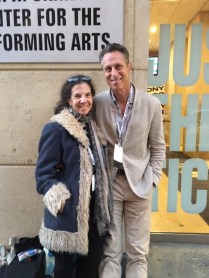
Mark Hyman and me 2019

While waiting to check out my books, I realized he is not the only Mark to have left his mark on me. The others are Dr. Mark Hyman and Marc David. I have not merely figuratively crossed paths with them. I have the pleasure of knowing them both.

I have literally sat in Mark Hyman’s bed–it was a long time ago. Back then, he was my college housemate and friend–a doe-eyed, gentle and sensitive spiritual seeker pursuing Asian Studies. Such interest and the influence of another housemate–a nutrition graduate student-led him to both medical school and the study of Chinese medicine. Today, he is one of the leading voices in the field of alternative medicine. Not only is he a deeply caring physician, but he is also a prolific writer and a leading proponent regarding the creation of a new health care paradigm.

Mark’s practice of medicine involves a whole systems approach described by a model called Functional Medicine, which includes nutrition and lifestyle support. Approaching health from this point of view and really understanding that food is medicine, changes the conversation I have with my clients every day. Presenting health care from this angle is challenging in the climate that defines our practice of medicine. We are programmed to be patients, essentially dependent on a pharmaceutical-based promise of healing. Though it is endemic on all levels, this thinking is especially entrenched in the low-income communities like the one where I serve, because options are not available and the stressors are exacerbated.

Every day I hear the pain and strain of being stuck in this prescribed role. People limp into my office with plastic bags filled with myriad medications. In spite of this, they still ache, they are often depressed, and they feel helpless and confused. But, I see the fire in their eyes and the longing in their souls as they suggest that they do not want to take an additional pill. Acknowledging that, I can remind them that they are capable of being an active participant in their own care and feeding. This is the consciousness shift that is happening through the work of people like Mark.

And then, there is Marc David,  a good friend of Mark Hyman. He is less well-known than the “k” Marks, but his message is phenomenally powerful and equally important. Marc is a nutritional psychologist, deeply learned in the areas of the physiology of eating, metabolism, and digestion. He is the founder of the Institute for the Psychology of Eating. His books, Nourishing Wisdom: A Mind-Body Approach to Nutrition and Well Being and The Slow Down Diet: Eating for Pleasure, Energy and Weight Loss are both revolutionary in their understanding of nutrition.

As most of the cultural chatter focuses on what we eat, Marc explores the more primal questions of who we are as eaters and why and how we eat. He writes that we can no longer separate the science of nutrition from the psychology of eating. I agree. His institute is training professionals to counsel from this perspective and his message is increasingly permeating the field. His ideas are very prescient and worthy to explore. He is a scientist, a Buddhist, a healer, and a wonderful writer–but as I once told him, I think he is mainly channeling his grandmother.

So, as I continue to walk among the eaters of the world, assisting where I can, I am glad to have these three good Mark (c) s beside me. These guys, along with some other wonderfully knowledgeable and visionary people are not only informing my work but are opening new doors to the understanding of human nourishment.

I’d be interested to know which piece of the nutritional puzzle you feel you most need to address, advance or heal your eating or health status. Is it informational, structural, shopping/cooking or emotional/behavioral support?

Thank you for listening, sharing, following and supporting my writing. Please subscribe in the sidebar to receive notice of new posts. Comments and greetings always welcome.

In health, Elyn

IMG_1939

Kripalu’s My Plate 

My Plate Haiku

Food made joyfully

As a gift of time and self

Feeds body and soul. by Anne Marie


forks on the road

I am just back from a motoring vacation with my college roommate Julie, down through the Shenandoah, Blue Ridge and Smoky Mountains with extra stops in Asheville and Chapel Hill, North Carolina. As a sign of a good vacation, I successfully left my work responsibilities and chronic nutritional thoughts behind. I mainly needed to be concerned about not feeding the bears in exchange for them not feeding upon me. We were blessed with an unfettered and peaceful journey. Our path was not heavily trodden while we were there, and seeing relatively few people I did not have to stop and consider how and what they were all eating. Personally, I was being nourished with a lot of fresh air, incredibly beautiful scenery and the contents of our coolers–plus the loving offerings of our hosts along the way.    

Often when I am trying to be “off duty”, like a NYC taxi cab, someone or something stops me and commands or demands my food or feeding attention. Like recently, when I went to volunteer at an early morning shift during the fund drive of my local public radio station. I had been positioned at my phone station for no more than seven minutes, when the lovely octogenarian volunteer seated to my right, leaned over to inform me that there was an obesity problem in this country. As evidence of this, he pointed out to me a large-bodied woman seated across the room. I would ordinarily still be asleep, but here I was explaining kindly that you cannot superimpose a societal condition or criticism upon an individual. One must be careful to not make assumptions about another’s corporeal experience. Thankfully, I did not have to reveal my identity as a heavily dilemma-ed nutritionist. He understood my point and graciously thanked me for this broader and more sympathetic understanding.

But, on this trip, I avoided such common encounters. If I had ventured out a little differently in search of southern hospitality I probably would have had some interesting observations and conversations. Under different circumstances I would have been open to considering the trip more of an anthropological study in regard to cuisine and culture, but not this time. The only incursion into my personal space was when omnipresent McDonald’s found me once again like I described in Morose Meals and Human Bites–even far from home. This time they taunted me with a billboard of gargantuan iced drinks in bright colors with the words “Global Chilling”. I swallowed my disgust, feigned benign disinterest and sped by.

Food-wise, one of the main intentions of my trip was to visit Asheville, North Carolina. About twenty years ago, in an issue of  Vegetarian Times, I read an article describing the city as one of the top vegetarian-oriented places in the country. Against a backdrop of the mountains and art deco architecture, the photos of this beautiful city enchanted me. Though the food culture in this country has changed radically since that time, and natural food and vegetarian options are available in many, even unexpected locations, I still considered Asheville a sort of mecca that I needed to make a pilgrimage to.

Though my time in Asheville was very short, I walked its grounds, smelled its aromas, and ate of its bounty. I even gave my leftovers to a street kid who asked me if I had any food to offer as I walked by clutching the compostable to-go container. I was really reluctant because it was the best tofu enchilada with mole and black beans that I had ever had. After a quick internal struggle, my vegetarian heart fluttered and I gave that baby over. As promised, the city was overflowing with quinoa, tempeh, seitan, shiitake mushrooms, jicama, and locally-sourced herbal blends.

It had been recommended to me to eat at a restaurant called the Laughing Seed Cafe. Some details of time, place and meeting a friend shifted my loci a few blocks over which resulted in us eating at a relatively new restaurant called Boca, which was wonderfully delicious. But later, I did pass by the Laughing Seed, which describes itself as ‘Revolutionary Vegetarian’ and got a copy of its Take-Out Menu.

Now, back home, I am curled up on my couch with the menu. Each of its many offerings sings to my soul as does the small print explanation of its name. Apparently, legend has it, that the Indonesian Laughing Seed plant was sacred to the people of the Spice Islands. When eaten, the people were intoxicated with laughter and were able to speak with the gods. This wondrous food satisfied the appetite, creating a sense of fullness and well-being which lasted for many days.

We did not enter a highway rest stop with its fast-food offerings until the very end of our trip just after we crossed back into the Empire State. After being accosted by the blasting of the hand dryers in the bathroom, I stood amidst the throngs waiting in line at the various concessions. Back in my jurisdiction, I was apparently back on duty. I watched the people rush by with their coffee drinks, fries, candies, and hamburgers. I don’t really go back to work till tomorrow, so I will leave this just as an observation.

Thank you for listening, sharing, following and supporting my writing. Please subscribe in the sidebar to receive notice of new posts. Comments and greetings always welcome.

In health, Elyn

IMG_2126

Amy’s My Plate Tree Cookie

My Plate Haiku

Smooth peanut butter

Spread on a peeled banana

Snack time perfection. by Gretchen


morose meals and human bites

Former U.S. First Lady Eleanor Roosevelt, with...

Eleanor Roosevelt Image via Wikipedia

I am pretty certain that McDonald’s is purposely trying to get my goat. They know I have not cared for them for a really long time. It goes way back. Firstly, I never liked that red and yellow color combination. I find it jarring and it reminds me of a bad mix of mustard and ketchup. Then, there was the whole clown thing. As a child, Bozo viscerally upset me. When McDonald’s fashioned Ronald after Bozo it was like a recurring nightmare. I was confronted repeatedly by the image I thought I had successfully avoided by outgrowing children’s programming. I am sensitive that way. On top of this, I think their restaurants smell bad.

I recall in high school coming home after eating at McDonald’s, climbing into my mom’s bed not feeling great, and deciding to become a vegetarian. I can’t swear the two events occurred simultaneously, but I carry a strong association between them.

Then of course, as a whole foods advocate, nutritionist, and mother, there was no way I could find love in my heart for this child-seducing fast-food corporate giant. I did my best to be the David to this Goliath, but the Happy Meal made me lay down my slingshot. By that point, not only were kids enchanted, but the parents were as well, and I felt defeated.

Still, I was shocked recently when driving down a local highway. I came upon a McDonald’s billboard displaying a gargantuan coffee drink, with a Marge Simpson hairdo-sized topping of whip cream styled with a Mark of Zorro chocolate signature. The huge letters said, ” Chocolate Drizzle is a Right, Not a Topping”.

Since they know I don’t watch much television and therefore might miss their commercials–what better way to get in my face than with a billboard. So what if I tell my clients that  McDonald’s will not pay for their medical bills and medications should they develop nutrition-related health problems. Or, that I do use their bathrooms on occasion. This still seems like an overblown, petty and morally bereft response to our personal tiff.

Is this subliminal or just plain out seductive and manipulative advertising? Or is it downright obnoxious? I get that this is just advertising and that companies rely on it to promote their products. I do watch Mad Men–on Netflix. But to be raising chocolate drizzle to the status of a right in a world where many are denied their true ones is indecent. This assumption about simple entitlements overshadows and ignores the sanctity of our real human rights which according to the Universal Declaration of Human Rights refers to matters such as life, liberty, security of person, freedom from servitude, torture and cruel, inhuman or degrading treatment or punishment. They extend to include a standard of living adequate for the health and well-being of the individual and their family, including food, clothing, housing, and medical care, and necessary social services. Drizzle does not make the list.

Am I being too sensitive again? Should I lighten up? From where I sit, there are more important rights to assure than drizzle. Here are some examples of things I see that may make me a tad jaded. One day last week I had five clients. Cumulatively they weighed 1,576 pounds. Individually they weighed 382, 366, 284, 292 and 252 pounds. The 252 pounds belonged to an 11-year-old boy with early signs of diabetes and other distressing diet-related health problems.

One morning this week I saw three clients right in a row. They ranged in age from 35 to 48 and were on 17 prescriptions between them–mainly for high blood pressure, diabetes, high cholesterol, high triglycerides, reflux, and pain–lots of pain. I am tempted to list them. They make for an interesting mix of consonants and vowels. Later, I saw a woman who described a recent McDonald’s meal to me which consisted of 1800 calories.

On a daily basis, I speak with people without kitchen tables, homes, jobs, beds, medical insurance, sufficient medical care–and adequate food. I see kids who can’t go out and play in their neighborhoods and who might not graduate high school.

So, don’t go there with me McDonald’s, asserting that chocolate drizzle is a right. You know that drizzle is not a right but a chemical mixture of corn syrup, dextrose, water, sugar, glycerin, hydrogenated coconut oil, cocoa, food starch-modified, nonfat milk, natural and artificial flavors, salt, gellan gum, disodium phosphate, potassium sorbate, soy lecithin, and artificial flavors. And that it sits atop beverages that contain up to 390 calories and 59 grams or 15 teaspoons of sugar. More importantly, you know that the billions you have to spend on advertising can cover up that bad smell especially when money is tight and food comforts.

When the inequities have been evened out, when health care is guaranteed for all, when the growing of healthy food is more supported by our government and made available and affordable, when rights are not confused with privileges and when corporations are held responsible for their actions–then McDonald’s and I can end our feud and sit and have a conversation. Maybe we can meet at my office.

Eleanor Roosevelt, who worked tirelessly to establish the Universal Declaration of Human Rights wrote, “Where, after all, do universal human rights begin? In small places, close to home–so close and so small that they cannot be soon on any maps of the world. Yet they are the world of the individual person; the neighborhood they live in; the school or college they attend; the factory, farm, or office where they work. Such are the places where every man, woman, and child seeks equal justice, equal opportunity, equal dignity without discrimination. Unless these rights have meaning there, they have little meaning anywhere. Without concerted citizen action to uphold them close to home, we shall look in vain for progress in the larger world.”

Let’s not belittle this beautiful description of what really matters.

Thank you for listening, sharing, following and supporting my writing. Please subscribe in the sidebar to receive notice of new posts. Comments and greetings always welcome.

In health, Elyn


My Plate Haiku

Are we what we eat

Or do we eat what we are

Are they the same thing?  by Julie

haiku for you

eggs of many colors

Different Colored Eggs  Image by woodleywonderworks via Flickr

I just had a new culinary experience. Recently, I was able to escape for the weekend to the beach. After a few hours’ drive with more than a touch of slow-moving traffic, my sister-in-law Eva and I arrived in the lovely coastal town of Newburyport, Massachusetts just in time for dinner.

While stuck in traffic we tried to think about where we would eat, but once there we just decided to see where our feet and stomachs would lead us. We found ourselves in Loretta, a small, cozy restaurant in the center of town with an interesting menu. Actually, each dish we shared presented something unusual and delicious, but it was the grilled romaine salad that surprised and delighted me.

I do live a rather small, parochial life, but I’d be interested to know if anyone else has ever had a grilled romaine salad. Fortunately, we were sharing, because most of a full head of romaine lettuce, each leaf brushed in olive oil and grilled whole, arrived before us, draped in a creamy and chunky blue cheese dressing, and adorned with some pickled beets and cherry tomatoes. The grilling of the lettuce lent a delicate smokiness and crispness to each bite that was wonderful. That salad was deserving of a Haiku, which is what I initially sat down to write about.

As you may recall, in my last post, Dietary Haiku, I put out a request for such. I am so pleased to report, that I received four. Now, that may not sound that impressive but they are each so beautiful, and I want to share them with you in hopes that you will see, as I have, that I think I am onto something. I hope you will now be really inspired to compose your own and to send it my way.

In response to the mundane display of the USDA MyPyramid–really just a triangle if you ask me–and now supposedly, The Plate, guiding our dietary intake, I have decided to place one of these Dietary Haiku on each of my future posts. I think you will agree that they are more inspirational and joyful. Soon then, I imagine that this little idea will spread (and go viral) and we will have created a more meaningful message and conversation about food and eating that started right here.

I was discussing this idea with my daughter and her friend at the dinner table tonight, and they raised some good questions. Jonathan wanted to know if the themes had to be positive or could they be negative–like a 5-7-5 syllable format ending with that is so yukky! I said I would encourage everyone to keep the message affirming. Zena wanted to know how we would market or copyright this idea so that we might get rich because someone else was likely to come along and start promoting Dietary Limericks. I didn’t have an answer to that, but if you do, can you please send it to me in lieu of or in addition to your haiku, limerick or another poetic expression of dietary inspiration. Submissions can be placed in the comment section.

So, here are these beautiful poems in the order I received them, along with one of my own. Thank you to the four of you who got it and shared your little gift with me. I will keep incorporating these and hopefully, this collection will grow. Pl

   Are we what we eat

Or do we eat what we are

     Are they the same thing?     

— Julie

The farmer’s market

Each egg at the dairy stand

A different color

— Enki

Spread peanut butter

On whole grain, sweet, dark brown bread

Raspberry jam-Yum!

— Barbara

Food made joyfully

As a gift of time and self

Feeds body and soul

— Anne Marie

Deep scarlet red beets

Reveal your sweetness to me

Slip out of your skins

                                                                                                — Elyn

Thank you for listening, sharing, following and supporting my writing. Please subscribe in the sidebar to receive notice of new posts. Comments and greetings always welcome.

In health, Elyn

Related Recipe: Grilled Romaine Salad with Blue Cheese

Related Posts: Dietary Haiku, Accepting Haikus

Dietary Haiku

japanese maple

Japanese Bonsai Plant      Image by cskk via Flickr

Here are a few things that happened in my nutritional life this past week. First, I had a client come into my office bummed out about being fat. She sat down and immediately pointed to different parts of her body that she deemed fat. Of utmost disgust were her arms and her big belly. They definitely had to go. She quieted a little as she said she didn’t mind being big in the thighs and butt, and she thinks her hubby actually likes her like that. I asked about her eating habits. A number of issues presented, including the fact that her husband is incarcerated.

I asked how she felt about me making some suggestions. Without skipping a beat, she replied that she would think it was none of my business and I should leave her alone. Despite her distress, she was not ready for a change–a common human experience. Most often I find some traction, but I did not try too hard in this instance and gave her space. (She did eventually come back and see me again.)

Next, my very own brother, in a comment on my recent post, Diet for a Small Caterpillar informed me that only a small percentage of people actually care about nutrition. I wanted to protest, but he is my big brother and he does seem to know about a lot of things.

And, then, the very next day, the United States Government, without giving me very much notice, obliterated the Food Pyramid and issued the newest expression of the most up to date dietary guidelines–the USDA MyPlate.

Briefly, here is my initial response to the MyPlate. Though I appreciate the challenge and consider it an improvement, its teaching concept has been around for a while now, so I am surprised it is being touted as something unique and innovative. While hailed for its message to eat more fruits and vegetables, I think that is also old news. It is overly simplistic as our national food icon.

It does not really relate to how people eat breakfast and lunch and is not relevant to how many even eat dinner. It does not align with most cultural cuisines and supposes a basic meat and potatoes dietary structure. My dinner plate rarely resembles it. It evades many deeper nutritional questions about protein, dairy, fats, and digestion. Disconcertingly, right under the plate, it says, “Balancing Calories: Enjoy your food but eat less.” This makes a broad assumption about all eaters and ignores the serious issues of those who may need to eat more for various reasons.

Essentially, this model has convinced me that it is time to abandon such efforts. If what my brother says is true, that few people even care; or as my client suggests, that not everyone wants to hear it, why do we keep trying to promote this short shelf life, stale message with such a stagnant image? Maybe it is time to try something new to spread meaningful dietary practice.

I sometimes enjoy a line of iced teas from a Japanese company called Ito En. On their bottles, they offer a nice little haiku. Haiku is a Japanese form of provocative poetry that provides a sense of sudden enlightenment simply, intensely and directly. The bottle I now hold says: ten heron heads blow as pampas grass in the morning fog. Lovely, even though it doesn’t stick to the 5–7–5 traditional haiku structure. Maybe because the tea is distributed in Brooklyn or because it is a form that is flexible. Gazing at this bottle, I am inspired to suggest that we should develop Haikus with various themes to promote nutritional messages with greater nuance. Or, perhaps it would be more American to create some jingles. This could employ many creative artists, and I am sure their output would be funnier or more beautiful than anything produced by our governmental agencies. Michael Pollan’s missive, Eat Food, Not Too Much, Mostly Plants, could be turned into a catchy dance number.

Just as I was about to declare the week a washout, one other thing happened. On Friday, I was at one of the three schools where I work with the School-Based Health Program. It was my last visit before summer vacation. I prepared a little healthy snack for the kids I had met with during the year and called them down individually to say good-bye. The message I try to instill in these young children is that they each have an amazing and wonderful body. They are all smart enough to choose to care for their bodies in various ways and can make many decisions for themselves about what and how they choose to eat.

In this closing session, I asked these adorable nine to thirteen-year-olds, what have they been paying attention to based on things we had previously talked about. Without much explanation, they each understood this vague question and all had at least a small answer. Some had big impressive answers. My dimming faith was ignited once again. So, maybe this is the relevant dietary inquiry–What are we paying attention to? There is a lot to choose from in this crazy, nutty, nutrition world.

What message would inspire you or what do you think we need to hear? Is the truth of the matter that our governments’ policies are incongruent with an appropriate dietary promotion or our personal experience as eaters? What are you paying attention to?

Please allow yourself a creative moment to pen your own dietary haiku, jingle or other poetic expression and send it along in a comment. Let’s see what emerges.

Thank you for listening, sharing, following and supporting my writing. Please subscribe in the sidebar to receive notice of new posts. Comments and greetings always welcome.

In health, Elyn

Related Posts: Your Pyramid; Diet for a Small Caterpillar; Haiku for You; Accepting Haikus

My Plate Haiku

Eat Food. Not Too Much. Mostly Plants. by Michael (Pollan)