Archives

touched by the tempted temperament

Last week, I wrote about The Tempted Temperament. Just days later, I had a related experience I just want to share.

A sweet, 8-year-old girl came to see me along with her mom. She was a beautiful child with long, dark black hair and piercing eyes that carried the wisdom of her ancients. She was rather quiet. And, yes. She was overweight and has already endured bullying by other children.

IMG_3309

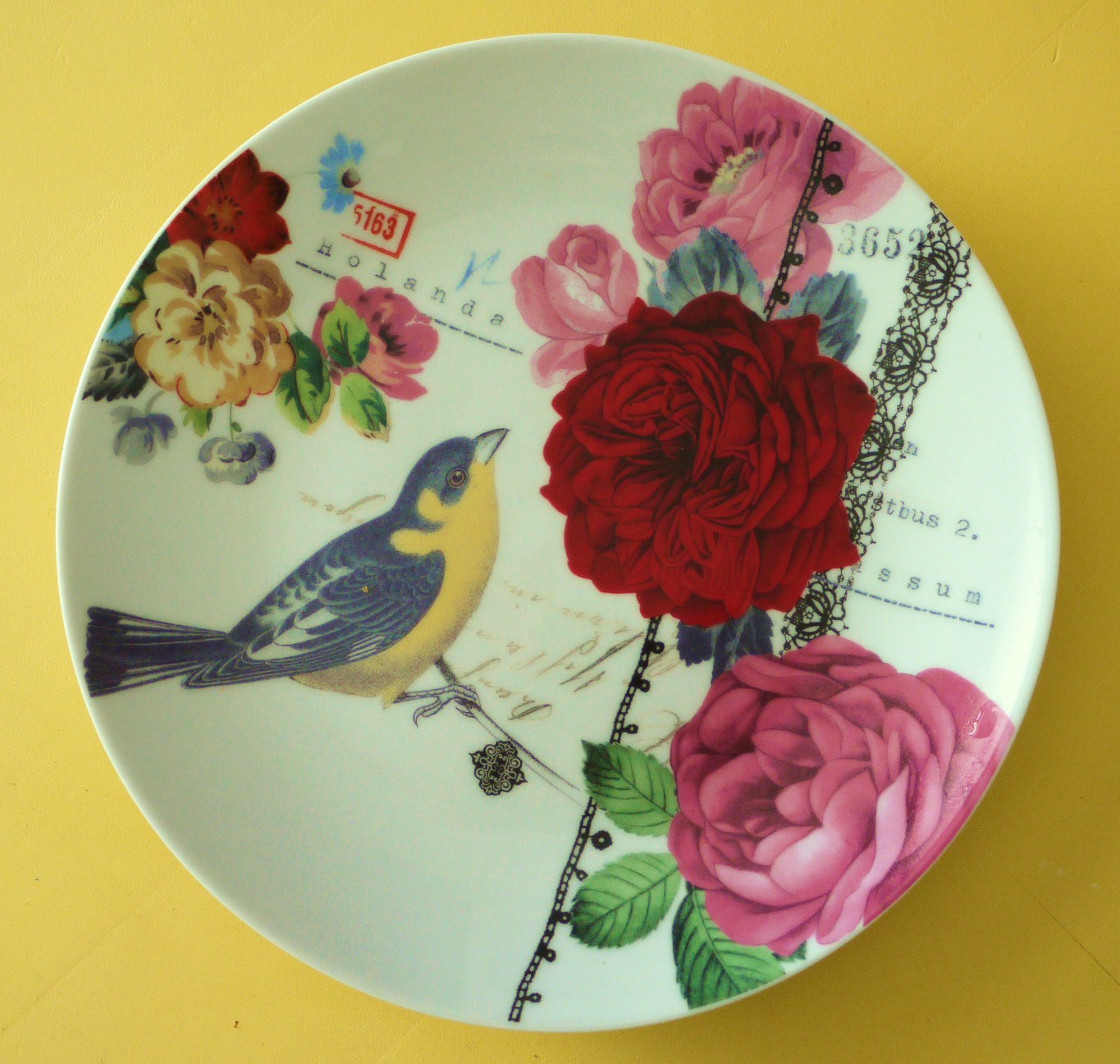
Healthy Eating Art

The mom, a tall, slender woman told me part of her child’s story. They have just returned back in the area after living for a year near San Antonio, Texas. I did not get a lot of the family’s history during this consult, partly due to the fact that not all can be disclosed in front of a child, but it was not difficult to glean that there were problems.

I learned that this child is the youngest of four children. Her oldest sister who is nineteen has a more full-bodied figure. The mom, is a loving parent and provides generally well-prepared foods and has nicely established boundaries on fast food and the watching of television. The child has no health problems. I did not, as I would write in my progress note, assess any significant dietary indiscretions.

The mom’s concern is that her daughter is not inclined to want to go out and play much and resists her mom’s offers to go exercise with her. They live in a cramped house in a difficult neighborhood.

This is not an environment for the outdoor spontaneous combustion of calories that should be the birthright of all our children. I learned that the girl enjoys eating and adores musicals, swimming and doing artwork. I knew I was in the company of a pleasant phlegmatic.

Together we discussed community resources, walking to school, school lunches and simple options for play. We addressed the preservation of her self-esteem which her mom already had a good handle on. I then looked into the deep eyes of this dear girl, deciding what to offer her that would be respectful of who she is. As always, and as I hope I am conveying in my stories, there is a deep responsibility in this task of balancing the societal scales, to honor the individual and the circumstances of their lives. And, I usually only have a few minutes to do so.

I glanced around the meager library, medicine cabinet and market basket that metaphorically describes my office. Though I wished I had something richer, I handed her a calendar book that comes with two types of stickers. One sticker is of a fun pair of sneakers, the other of a fork, knife, and spoon in a happy face kind of configuration. It’s designed to encourage a child to keep note of their healthy choices, hopefully in a fun way. Kids generally like it because they tend to love stickers.

The child’s face lit up. After having been rather reserved throughout the meeting, she perked up and said, “I know what I can do with this.” I asked her what that was. She replied, that instead of using the stickers if she ate healthy food or played something, she would draw a picture of that instead. I breathed a sigh of relief. The world will be a more beautiful place graced by the gifts of this young artist.

Thank you for listening, sharing, following and supporting my writing. Please subscribe in the sidebar to receive notice of new posts. Comments and greetings always welcome.

Also, big news this week. I am now on Twitter at http://www.twitter.com/lifeseedsnutrit. You can follow my little bird there and share my stories.

In health, Elyn

My Plate Haiku

Peach baskets brimming

Raspberries ripe on the bush

Apples soon to come.
by Crystal

the tempted temperament

Original Winnie the Pooh stuffed toys. Clockwi...

The Adorable Four Temperaments Image via Wikipedia

Chances are you know a child like Sam. Sam, was a classmate of my daughter since kindergarten and I have watched him grow up. He is a sweet-natured kid. When he was young he was a really big boy with hands like mitts.  His eyes used to almost pop out of his head with excitement when food was presented.  Once, when my husband brought brownies to my daughter’s class in celebration of her birthday, Sam sized him up quickly and befriended him immediately. While waiting, he sidled up to my husband and whispered, “We better eat those brownies soon before they go raw.” The well-being of those brownies was of his utmost concern.

We know that there are two types of people–those who live to eat and those who eat to live. This attribute in individuals is one of those things we seem to just be born with. It is not necessarily defined by genetics or the environment. It is not inherently good or bad.

Amidst the fray about childhood obesity, there is an urgent need to uncover the causes and to implement solutions. External factors such as fast food, school lunches, excessive TV and computer use are the usual culprits, and of course, they are a part of the problem. However, missing from the dialogue is any mention of children’s natural dispositions. Though the external forces must be addressed, in overlooking or disregarding the nature of the individual child and the powerful relationship with the act and art of eating, we lose an opportunity to be sensitive to children with particular natures. Considering this piece may reveal some approaches to care and serve to remove the element of blame or human weakness from the child, as well as the parent.

Hippocrates and the ancient Greeks spoke of the four temperaments. The temperaments described different formative forces that human beings possess that give rise to different soul types. The model of the temperaments as a tool for understanding human nature was popular until the end of the Elizabethan Age. It has been the inspiration for many artistic endeavors and in the 1920s, philosopher Rudolf Steiner integrated it into his work on childhood development where today it remains an active piece of the Waldorf School Movement, which he developed.

The four defined temperaments are choleric, sanguine, melancholic and phlegmatic. In brief, they can be defined as such: the choleric is strong-willed; the sanguine is light, wispy and perhaps flighty with many curiosities; the melancholic is sensitive, suffering, and self-conscious; and the phlegmatic is dreamy and slow in movement. The characters that inhabit A.A. Milne’s Hundred Acre Wood can serve as archetypes of the different temperaments. Tigger is choleric; Piglet is sanguine; Eeyore is melancholic; while Pooh is quintessentially phlegmatic.

In young children, one can easily see distinct aspects of the temperaments and a predominant constitution–though most healthy kids do exhibit some sanguine tendencies. The temperaments can manifest in all aspects of our beings. When it comes to a deeply passionate relationship with food, it is here that Sam and the phlegmatics reign. They live to eat, and accordingly, tend to have soft, round bodies and are most prone to becoming overweight. Remember Pooh’s sheer love of honey and how that devotion caused him to become stuck in the doorway of Rabbit’s house. Dear Pooh.

As most parents can attest, children’s natures become evident almost from birth. In the early years, one can often tell the phlegmatic children by body type along with behaviors. Phlegmatic infants are most likely roly-poly and slow and steady feeders. They are happy to lie in the crib cooing, playing with their hands and feet. With the introduction of solid food, they euphorically greet the oncoming spoon and are not easily distracted from eating. Phlegmatic children may take to walking and talking later than their peers and are generally easy-going.

With the attainment of verbal skills, these children frequently say “I’m hungry.” Though most healthy young children are often hungry due to high growth demands, the phlegmatic’s request for food seems to come less from actual physical hunger and more from a desire to be eating and digesting. This seemingly constant refrain of “I’m hungry” becomes one of the greatest challenges to the parents of a phlegmatic child, especially if the parents do not share that temperamental tendency themselves.

How does one respond to this repetitive declaration of hunger and cry for food? How does a parent distinguish between true physical hunger and emotional or digestive hunger? Does non-physical hunger lack validity and deserve to be ignored or denied?  How many times can a mother just look her cherubic child in the face and say no?  Phlegmatic children are quite endearing and can easily work their way into our hearts in Pooh-like fashion. Over restriction or overindulgence in feeding are both understandable reactions.

In being sensitive to the innate natures of our children at an early stage, we can adopt some feeding practices to better assist them in a healthy unfolding to adulthood. Phlegmatic children can be best served by being mindful of their enjoyment of eating but by providing them satisfaction with foods that are as healthy and naturally sweetened as possible. If no serious emotional issues seem present, then the parent sees to the careful provision of a varied diet at scheduled times and the child sees to their appetite. As the child gets older, helping them to find interests and activities, including physical pursuits that fit their temperament is important. If extreme weight issues can be avoided, the growing child will not be distracted by these matters and can then focus on the development of his or her natural abilities.

It is tempting to believe that we will one day whip all the children into proper shape by successful programming. It is also a commonly held belief that the overweight child is destined to a life of obesity. However, there may be more to be gained and less damage to be done from working with our children’s tendencies than fighting against them. I have observed many round kids morph into lean adolescents through a combination of factors including their genetic blueprint, hormonal changes and their own conscious ability to choose how to feed themselves. Sam is now sixteen. He is a high-level competitive rower. I think he might now be described as highly buff.  He recently told me, that once he discovered what he was interested in he found a way of eating that served his purpose.

The gifts of the phlegmatics are many. They are compassionate, serene, steady individuals capable of faithful and abiding love. They often possess natural musical and artistic abilities, and in the final analysis are the true geniuses–the slow, steady and thoughtful thinkers of our times. By viewing such children through this more compassionate lens we can tend to their care more appropriately and be inspired to feed them well with good intentions.

Were you a Tigger or a Pooh?

Thank you for listening, sharing, following and supporting my writing. Please subscribe in the sidebar to receive notice of new posts. Comments and greetings always welcome.

In health, Elyn

IMG_3096

Avocado’s My Plate Plate

My Plate Haiku

Pick your own today

Happy kids in wide-brimmed hats

Sweet summertime fruit.

by Anna

the amazing mr. s.

organic Heirloom tomatoes at Slow Food Nation'...

heirloom tomatoes at slow food nation’s garden

I had a visit this week from my friend, Mr. S.

I first met Mr. S. three years ago, when he was 85-years-old. So, he is now 88. Like clockwork, he comes to see me every six months, as close to the exact date as possible. He gets signed onto my schedule as a patient, comes to my office and sits in the chair, and hands me his glucometer to show me his blood sugar readings–which are always normal. That is about as far as I can fairly say his patient status extends. For the rest of our encounter, he serves in the role of my inspiration.

Mr. S. is a lifetime military man who served in three wars. Yes, three wars. He was born before the Great Depression. He has had colon cancer, some heart irregularities, and a touch of diabetes. He has a handful of doctors he sees religiously. He is by all usual accounting, old. But, when I go out to the waiting room to call him, he is always sitting there in a nicely pressed, often comical T-shirt, stylin’ sneakers and with his MP3 headphones in his ears. He is muscular and fit and he truly looks like a kid. He still works part-time, walks almost everywhere, and has a profoundly full and secure memory bank.

Six months ago, when I last saw him, his appointment was on a day we had a really big snowstorm. Instead of driving to work, I took the commuter bus. I had to trudge, in Dr. Zhivago-like fashion, down streets that plows and shovels could not yet tend to and that cars and buses could not negotiate. I came in the back door of the building, frosted with ice and quite bedraggled. As I turned on my computer, I realized Mr. S. was there waiting for me. Apologetically, and still dripping and bothered, I went to receive him. There he was–serene and bone dry, as if he had come in from an alternate climate and mindset zone–like Key West.

Though he is the consummate gentleman, and will not let me hold the door for him, he hails me by my last name, as if we are old war buddies. Each visit plays out essentially the same. He bemoans the physical impairment he witnesses around him due to collective ill-health, he is shocked by the corpulence of young people and he is disturbed by how poorly most are eating. He always asks me if I know who invented those little motorized scooters that assist those who are mobility impaired. He considers them a serious hindrance to most who rely on them. I reply that I don’t know.

He maintains that most folks hear, but they refuse to listen. Whereas I tend to see the current health crisis as being due to a combination of societal failures, he is mainly about personal responsibility. He god blesses me frequently, confounded that I have the patience to do what I do–repeatedly trying to knock sense into people, as he says. He is a philosopher and a sage, and though I do infer that he has a few skeletons in his own closet, he awakes each day committed to being the best that he can be.

He buys good old regular food, he cooks it and he enjoys it. We chat about what he has recently prepared. Beans and veggies are usually in the mix and he loves fresh local tomatoes. I have on three different occasions had Mr. S. accompany me to little talks I have given, as my daily quest is to try to inspire health. When I introduce him, I ask the audience to guess how old he is. The oldest guess so far has been 71. When we reveal his true age, the crowd goes crazy.

Now, it could be said that Mr. S. has just been blessed by a good set of genes or that he is just lucky. He has had not only one, but three big opportunities to have been blown to pieces and yet, here he is, still intact both mentally and physically. He obviously has some good collection of the factors that we seem to understand as longevity promoting.

However, before our sessions come to an end, he always reminds me of one more thing. Mr. S. has a Mrs. S. She is frail with some dementia. Above all else, he says, it is his job to be healthy in order that he may take care of her. If he wasn’t able to be there for her, who would?

Although I have heard it before, I am always a sucker for this part of the story. It seems that we are not wired fully for self-preservation as self-destructive behaviors are too easily inclined. This is especially true for men who don’t seem to take as good care of themselves as women do. What Mr. S. understands is that love is a necessary ingredient in the big gestalt of health.

He is also not too far off in his perception that my work entails a high degree of trying to knock sense into people. However, rather than using a sledgehammer approach, I too try to offer and prescribe as high a dose of Vitamin L(ove) as I can. Perhaps, it is really all we need.

Do you have a Mr. S. who inspires your life?

Thank you for listening, sharing, following and supporting my writing. Please subscribe in the sidebar to receive notice of new posts. Comments and greetings always welcome.

In health, Elyn

My Plate Plate

My Plate Haiku

Love is a deeper season

Than reason

My sweet one. by e.e. (cummings)


Update February 4, 2013: Two weeks ago, Mr. S came to see me. He is still ticking and kicking butt. Today he celebrates his 90th birthday. We discussed vegetable juicing. He was about to purchase a juicer–actually two, one for him and one for his daughter. The rest of the story is still the same.

skinny boys

Skinny boys.  Now there is a group that could use some love. Skinny boys usually, though not always, start out as skinny little kids and stay that way into their teens and young adulthood. You see them everywhere. In spite of this obesity epidemic, these poor boys far outnumber the fat kids everyone is clamoring about, but still, they get no attention.

It was not too long ago that skinny boys had their pants buckled up under their armpits for the protection of their private parts or they were required to wear corny suspenders. Nowadays, it is quite common for their pants to fall below the level of their BVDs even with the use of securing devices like belts and drawstrings–so they are often walking around with their undies showing. How embarrassing. If they do have a belt, they have to force a homemade hole into the leather or hemp, whatever, and the non-buckle end goes wrapping around them like a snake, in order to fit.  

Then, their ribs stick out something terrible. Even nicely developed abdominal six-packs cannot cover up those ribs. Ouch. It must be hard for them to sleep–their bones jabbing into even soft forgiving mattresses. When they walk down the street, even strangers like Italian and Jewish grandmothers, are apt to want to take them home and feed them. What is up? Are their parents not feeding them?

Despite these emotional and physical challenges, there are no programs, whatsoever, designed to help them. There is no foundation for the Prevention of Adolescent Scrawniness, nor a Let”s Chill! initiative coming from the White House. Teachers, mothers, and fathers everywhere need assistance in just getting these kids to sit still. Instead, they are flying off concrete ramps on skateboards, incessantly shooting basketballs, playing guitars and drums with manic enthusiasm, and turning everyday household items into objects d’sport. TVs, video games and writing angst-ridden poetry are the only way to get these kids to stay in one place for any decent amount of time.

One might assume that these skinny boys, when they do eat, are eating carrot sticks and turkey rolled in lettuce leaves. How else could they be so skinny? But, what’s that? They are eating sugar and junk food just like those fat kids? How can that be?

A few months ago, I saw two teen-aged skinny boys walking. One of them carried a two-liter bottle of Mountain Dew, the other a big box of Cap’n Crunch cereal. I say carried, but it was more like they were cradling these products like a young child might cuddle their favorite stuffed animal. As there had been rumors circulating wildly that the Cap’n might be retiring from the high seas as well as from supermarket shelves, their procured box might have generated even additional testosterone excitement and the desperate attachment for the two.

And, just the other day, as I was doing my usual investigative journalism in the local supermarket, I came upon two young, lanky, twenty-somethings crouched down in the cereal aisle, doing some serious nutrition label and ingredient reading. I was touched. After serious deliberation, they stood up and strode confidently away–a box of Frosted Flakes in hand.

Liquid, syrupy, intense, colored sugar, seems to be the lifeblood of skinny boys as coffee is to adults. As many rational grown-ups swear that they cannot survive without their daily Joe, keeping the skinny boys from their sugar would be akin to blood-letting. How else would they thrive? With their powerful internal engines burning high and hot enough to power a jet plane, what else could better serve as jet fuel?

So, that is where skinny boys are at a serious disadvantage in this whole weight war. We direct a societal finger-wagging at fat kids and their parents, preaching of the pain and woe that awaits them should they continue their wanton eating behaviors–but no one has given these skinny kids even a glimpse of what could just as easily be in store for them–that even their propelled metabolisms could be headed for a serious nosedive.

Because, when those adolescent male hormones finally begin to mellow out, even the best of the metabolically privileged, can find themselves in trouble. Tushies sink deeper into the couch in front of the TV, remote glued to hand; the zillion hours of organized sport become a thing of the past once that diploma is received and such play at best becomes an occasional weekend past time; all the pints of beer downed in solidarity or solitude accumulate in the expanding bladder of the belly and a gut begins to cover those once nicely sculpted abs; and the stress and worry of the real world turn acquired food from active fuel into evil, disease-producing stored fat. Excessive sugar intake is detrimental to everyone, and, I have never seen Mt. Dew, do a body good. A pair of true skinny genes or a life pursuit that includes significant physical activity or hard labor are required to stave off the accumulation of pounds in this current climate.

Whereas only 12.7 percent of 15-24-year-old males are obese as defined by Body Mass Index, (BMI), 22.2 percent of 25-34-year-olds fit that classification. That could be a pretty big shock for the unsuspecting ten percent who suddenly find themselves in the holes at the other end of their belts. Their husky elementary school classmates, once the brunt of jokes, have been way better prepared for their impending corpulence and may, in fact, get the last laugh.

Essentially, we need to provide all our children with the template of the basics of a healthy lifestyle and to have a society that ensures fundamental support so they can take better care of themselves throughout their lives.

So be kind to the thinnest amongst us. They have a hard road ahead of them. Chances are, you were once a skinny boy too. The next time you see a skinny boy, hold the judgment, give them a big hug and a prayer for a healthy life–but remember to be gentle, for they are pretty fragile creatures.

Thank you for listening, sharing, following and supporting my writing. Please subscribe in the sidebar to receive notice of new posts. Comments and greetings always welcome.

In health, Elyn

My Plate Plate

My Plate Haiku

Smooth peanut butter

Spread on a peeled banana

Snack time perfection. by Gretchen


still feeding things

One snowy, frigid day this past winter, in Feeding ThingsI wrote about how the birds at my bird feeder were complaining about the milo, millet, cracked seed with oil sunflower seed food that I had given them, squawking that they only liked plain oil sunflower seed. Ingrates, I called them. Who were they to turn up their beaks at my offering in those difficult days when food was scarce?  

Still, I relented. I donned my boots and gloves, precariously positioned the ladder and refilled the feeder with only the plain oil sunflower seed. I should have insisted that they at least try it, which is what you must do with young children who are refusing their vegetables, but instead I chose to view them as lovely guests and extended my hospitality without arguing.

Recently though, the bag of the plain oil sunflower seed was running low, so I decided to blend the milo mix in, kind of like disguising vegetables in sauces for those picky types. For the first few days, the feeder sat sadly unattended. It seemed that my fine feathered friends were not amused by my ruse. Now, however, the temperature was hovering near 100 degrees. Even the mere thought of lugging the ladder back out in the heat was too draining, so I ignored the situation.

A few days later, I did see a bird or two come by, but they did not linger. Imagine then my surprise when the next day, I returned home to find the feeder entirely empty. I thought maybe a non-discriminating crow had discovered and devoured the contents or that some other fluke-like occurrence explained the disappearance of the food–so I took the effort to refill the feeder with my carefully proportioned blend once again. Sure enough, this time I saw the birds actively feeding, and the food was once more quickly gone.

In avian fashion, I puffed out my breast and congratulated myself on my nutritional success–even if it was just for the birds. Unfortunately, my contentment at establishing peace and harmony in the eating world was to be short-lived.

Before my own feathers had even neatly realigned themselves, I came out onto the porch to find teal niblets of plastic scattered all about. A squirrel had managed to eat its way through the bin that I keep the bird feed in and had feasted with abandon. Scoundrel. This was not the first time I have been one-upped by the squirrel squad. In the past, they have actually chewed their way through my screens, entered into my house and unearthed stashes of chocolate.

While I was still contemplating the mess on the porch, Chico, the cat, was meowing fiercely. He was displeased with my decision to only offer him wet food in the evening.   Without even leaving home, I was reminded again of the perplexities and complexities of species feeding. What awaited me when I next headed out into the world of humans would only add to the story.

Over the course of the next few days, I had a few experiences that deepened my ponderings. Firstly, I came face to lips with a caffeinated water marketed locally called element. Apparently, its 50 mg of caffeine per 17 oz bottle–equivalent to a Coca Cola–sets one aloft, focused and refined at any time of day without sugars and chemicals. It is not the first caffeinated water on the market, but the newest; and the latest that has me contemplating the consequences of its extending reach. Though I am sensitive to caffeine and thus avoid it, I did take a few sips. Given its propensity for flight, I thought it might be relevant to my work in bird nutrition.

I then had a mind-blowing moment in a nearby new frozen yogurt establishment. I had observed that this place was frequently “spilling onto to the sidewalk” mobbed and sane people I knew were screaming its praises. With out-of-town guests in tow, I ventured in to meet my newest nutritional nemesis.

This was not your grandpa’s frozen yogurt shoppe. With its electric pink walls, I felt like I was in a bar scene from Star Wars. The aliens around me all seemed to think it was quite ordinary to find lightly sweetened tapioca pearls floating in their shaken Bubble Tea with royal creations named Purple Oreo, Yellow Cupcake, Marshmallow Puff, and Chocolate Stout.  Likewise, they seemed confident, sensuously dispensing their own yogurt and slathering it with a myriad of toppings, some of which I had never seen before–such as little roe-like jelly balls filled with various flavors which pop in one’s mouth. Here, the seduction of food had been elevated to an even higher level. It was jaw-dropping, or should I say jaw-filling, to say the least–and not cheap.

Bubbled up, I stumbled back to the mothership. There, in a cramped coffee shop, on the inaugural day of World Breastfeeding Week, I watched a woman struggle to fit some contraption around her shoulders so that she could nurse her baby. Nothing seems straightforward or simple anymore–even the feeding of our young.

So, as I observed in Feeding Things, this is complicated stuff. I can’t even guess what the food world will look like by the time that little nursing baby comes of age or even starts school. Will the challenges for eaters become easier or more difficult? Will we be assisted in working better with our inherited biology or led further away? What do you think?

But, what about the newt, Everest, you ask? He’s still working his way through the same little containers of flakes and pellets.

Thank you for listening, sharing, following and supporting my writing. Please subscribe in the sidebar to receive notice of new posts. Comments and greetings always welcome.

In health, Elyn

IMG_3279 (1)

Squirrel My Plate

My Plate Haiku

Blueberry bushes

Three children with empty pails

Pluck, pluck, crunch.  Exhale.

By Michael

forks on the road

I am just back from a motoring vacation with my college roommate Julie, down through the Shenandoah, Blue Ridge and Smoky Mountains with extra stops in Asheville and Chapel Hill, North Carolina. As a sign of a good vacation, I successfully left my work responsibilities and chronic nutritional thoughts behind. I mainly needed to be concerned about not feeding the bears in exchange for them not feeding upon me. We were blessed with an unfettered and peaceful journey. Our path was not heavily trodden while we were there, and seeing relatively few people I did not have to stop and consider how and what they were all eating. Personally, I was being nourished with a lot of fresh air, incredibly beautiful scenery and the contents of our coolers–plus the loving offerings of our hosts along the way.    

Often when I am trying to be “off duty”, like a NYC taxi cab, someone or something stops me and commands or demands my food or feeding attention. Like recently, when I went to volunteer at an early morning shift during the fund drive of my local public radio station. I had been positioned at my phone station for no more than seven minutes, when the lovely octogenarian volunteer seated to my right, leaned over to inform me that there was an obesity problem in this country. As evidence of this, he pointed out to me a large-bodied woman seated across the room. I would ordinarily still be asleep, but here I was explaining kindly that you cannot superimpose a societal condition or criticism upon an individual. One must be careful to not make assumptions about another’s corporeal experience. Thankfully, I did not have to reveal my identity as a heavily dilemma-ed nutritionist. He understood my point and graciously thanked me for this broader and more sympathetic understanding.

But, on this trip, I avoided such common encounters. If I had ventured out a little differently in search of southern hospitality I probably would have had some interesting observations and conversations. Under different circumstances I would have been open to considering the trip more of an anthropological study in regard to cuisine and culture, but not this time. The only incursion into my personal space was when omnipresent McDonald’s found me once again like I described in Morose Meals and Human Bites–even far from home. This time they taunted me with a billboard of gargantuan iced drinks in bright colors with the words “Global Chilling”. I swallowed my disgust, feigned benign disinterest and sped by.

Food-wise, one of the main intentions of my trip was to visit Asheville, North Carolina. About twenty years ago, in an issue of  Vegetarian Times, I read an article describing the city as one of the top vegetarian-oriented places in the country. Against a backdrop of the mountains and art deco architecture, the photos of this beautiful city enchanted me. Though the food culture in this country has changed radically since that time, and natural food and vegetarian options are available in many, even unexpected locations, I still considered Asheville a sort of mecca that I needed to make a pilgrimage to.

Though my time in Asheville was very short, I walked its grounds, smelled its aromas, and ate of its bounty. I even gave my leftovers to a street kid who asked me if I had any food to offer as I walked by clutching the compostable to-go container. I was really reluctant because it was the best tofu enchilada with mole and black beans that I had ever had. After a quick internal struggle, my vegetarian heart fluttered and I gave that baby over. As promised, the city was overflowing with quinoa, tempeh, seitan, shiitake mushrooms, jicama, and locally-sourced herbal blends.

It had been recommended to me to eat at a restaurant called the Laughing Seed Cafe. Some details of time, place and meeting a friend shifted my loci a few blocks over which resulted in us eating at a relatively new restaurant called Boca, which was wonderfully delicious. But later, I did pass by the Laughing Seed, which describes itself as ‘Revolutionary Vegetarian’ and got a copy of its Take-Out Menu.

Now, back home, I am curled up on my couch with the menu. Each of its many offerings sings to my soul as does the small print explanation of its name. Apparently, legend has it, that the Indonesian Laughing Seed plant was sacred to the people of the Spice Islands. When eaten, the people were intoxicated with laughter and were able to speak with the gods. This wondrous food satisfied the appetite, creating a sense of fullness and well-being which lasted for many days.

We did not enter a highway rest stop with its fast-food offerings until the very end of our trip just after we crossed back into the Empire State. After being accosted by the blasting of the hand dryers in the bathroom, I stood amidst the throngs waiting in line at the various concessions. Back in my jurisdiction, I was apparently back on duty. I watched the people rush by with their coffee drinks, fries, candies, and hamburgers. I don’t really go back to work till tomorrow, so I will leave this just as an observation.

Thank you for listening, sharing, following and supporting my writing. Please subscribe in the sidebar to receive notice of new posts. Comments and greetings always welcome.

In health, Elyn

IMG_2126

Amy’s My Plate Tree Cookie

My Plate Haiku

Smooth peanut butter

Spread on a peeled banana

Snack time perfection. by Gretchen


diet for a small caterpillar

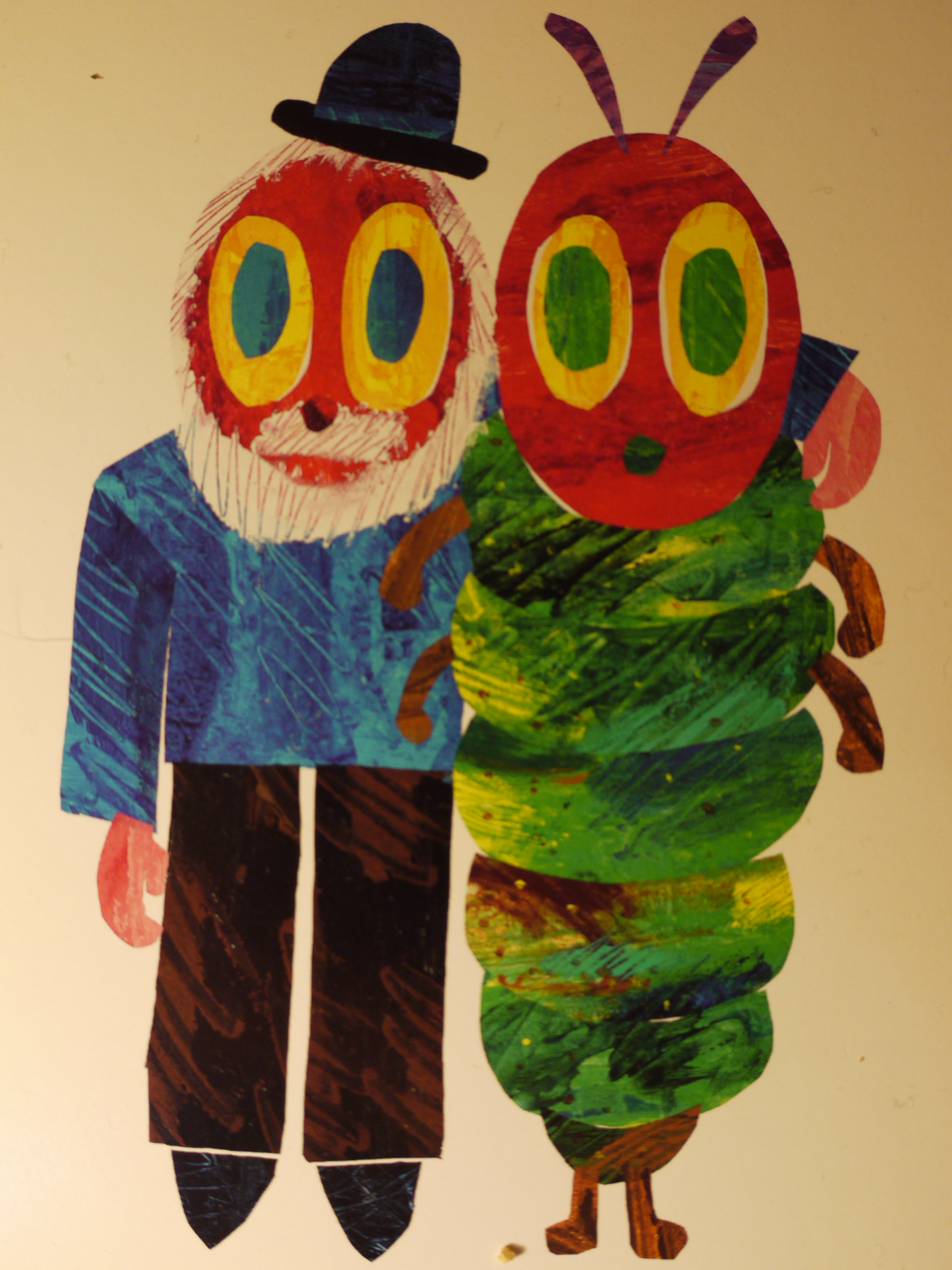
Eric Carle and his Caterpillar by Eric Carle

What reading materials are on my bedside table? I am honored you asked. Right now, I have the catalog for the Omega Institute for Holistic Studies and The Very Hungry Caterpillar by Eric Carle–the story of one caterpillar’s journey to butterflyhood. Though they both relate to personal development, their shared placement is causing me a moral dilemma. You see, I am rereading The Very Hungry Caterpillar because 17,000 copies have been distributed to pediatricians across the country. This is a joint campaign of the American Academy of Pediatrics, the Penguin Young Readers Group and the Alliance for a Healthier Generation.

The cynic in me is ready to rant on this initiative, but with a photo of Thich Nhat Hanh looking at me from the back cover of the catalog, and Omega’s plethora of courses with titles like Embodying Conscious Femininity, Gravity, and Grace and Freeing Ourselves from Negative Patterns oozing out from the inside pages, I am trying to temper my response.

My higher self is saying if you don’t have anything nice to say, don’t say anything at all, offer only constructive criticism, and asking, are you a compassionate, empowering new-tritionist or just a curmudgeonly old one? Well, I will try to open myself up and see what emerges.

Positively, let me say I love children’s literature and its illustration. Not too long ago I spent a wonderful day at The Eric Carle Museum of Picture Book Art in Amherst, Massachusetts. To see the originals of Mr. Carle’s tissue paper art was wonderful. The colors and intricacies of his pictures are even more amazing than they appear in his books. I am grateful that he has created a space to exhibit the collections of the many incredible artists in this genre.

Also, I respect the myriad efforts of the Alliance for a Healthier Generation. A collaboration between the American Heart Association and the William J. Clinton Foundation, its mission is to reduce the prevalence of childhood obesity and to empower kids to make healthy lifestyle choices. Their projects, which include the Healthy Schools Program, are far-reaching, community-based, and creative and colorful in their own way. I use their great materials in my work.

So, what’s my issue with this sweet little book-sharing promotion which is intended to encourage pediatricians to talk with their patients to help families learn about healthy eating habits? To be frank, I am on my thirty-fourth reading of this fourteen-page cardboard book and I am not convinced of its purpose or efficacy for teaching healthy eating.

For those of you who may not know the story, briefly, a caterpillar hatches out of an egg. It is hungry, and through its first five days of life, it eats a hole through increasing amounts of different fruits (one on Monday, two on Tuesday, etc.) but is still not satiated. Then, ignoring the numerical sequence, on its sixth day, it eats a hole through a slice of watermelon–along with eight human-produced high-fat, high-sodium, and high-sugar foodstuffs including salami, sausage, a lollipop, chocolate cake and cherry pie. And, it gets a stomach ache. On the seventh day, a Sunday, it eats through one nice green leaf and feels better. On my most recent reading, I suddenly see this as a religious allegory about sin, redemption, and resurrection, because right after that, all fattened up, he builds a cocoon, stays there for two weeks and emerges as a beautiful butterfly.

Regarding caterpillar growth and nutrition, here is what I know. The caterpillar increases its body mass several thousand times in a matter of weeks and each species has mainly one, and on occasion a few, host plants from which it must eat to survive. Predominantly, they eat only leaves–like from the milkweed family, but a few species can eat flowers and aphids. Analyzing the very hungry caterpillar’s eating behaviors, it has responded to his hunger and high growth needs in a manner similar to that of many teenage boys; problematically, it has partaken in eating foods not optimum for its own species and a lot of them. The messaging here between fruits and junk food along with hunger, satiety and body size is a bit confusing.

The promotional materials for this campaign instruct the parent to teach their child that the fruits are fruits; talk about how fruits are good for the body; discuss how overeating causes stomachaches; expound upon the concept of “sometimes” foods; instruct how green leaves are good for the body, and reinforce that it is important to eat healthy foods so that one can grow up healthy and active like a butterfly. My, that is a heavy load for one little book–let alone one small child.

Maybe I have forgotten a bit about early childhood development, but I think I read this book to my kids when they were about eighteen months old. Certainly, prior to the stage where we were discussing abstract concepts like hunger and health. Even prior to the stage where they might imaginatively embrace the idea that they would grow up and turn into a butterfly. There are many wonderful age-appropriate stories about food, gardening, nature, eating, etc. for young children, and though I am fine with metaphor, I don’t think this is what Mr. Carle had in mind. Now I must worry about children going out and plucking hemlock leaves for a little nibble.

I am glad to report that kids seem to know about and do eat their fruits, though vegetable education still needs a little more work–even for adults. I hope that we do not need to be spoon-feeding parents on such basic concepts; and, additionally, that pediatricians are opening to engaging parents on more specialized and sophisticated aspects of feeding our young than these simplistic measures. They are in a strong position to influence policy, to really support breastfeeding measures, to evaluate infant and early childhood feeding practices and to instruct on the principles of childhood nutrition and appropriate activity.

Might I respectfully suggest providing parents with a copy of Ellyn Satter’s Parent and Child Division of Feeding Responsibilitiesa clear and concise document that addresses the foundations of family eating. And, symbolically, a retreat at the Omega Institute. Their Omega Food Works Dining Hall consciously serves 300,000 vegetarian meals a year using local and organic ingredients. One delicious, nutritious meal like the ones offered there, can speak louder than a thousand words.

Thank you for listening, sharing, following and supporting my writing. Please subscribe in the sidebar to receive notice of new posts. Comments and greetings always welcome.

In health, Elyn

Update May 2021: Acknowledging the passing this week of Eric Carle. In this Eric Carle Commemorative Video, the artist discusses his own thoughts on the meaning of the story and why it captivates the attention of young children. Thank you, Mr. Carle, for opening children’s eyes to the beautiful world of color, art, nature and storytelling. 

Also, for reflections and support for parents regarding children’s health, weight concerns, and the impacts of the Covid-19 Pandemic, please look at the offerings of JoAnn Stevelos at her blog, Children at the Table, and her transformative program, Worthy!: Helping Your Child Be Their Healthiest Weight focused on a foundation of children and parents feeling loved, hopeful and safe. 
 

wait wait michael pollan

American science journalist and author Michael... Michael Pollan Image via Wikipedia

Oh, dear Michael Pollan. You got schooled–and on National Public Radio no less. I am so sorry. You must realize that nutritionists and comedians are not a good mix–even if you are really just a journalist. You should have known better. I hope you will be more careful the next time.

Here’s where I was when this public humiliation happened. In my kitchen concentrating fiercely on grout. Yes, grout. For the past few months, I have been held hostage by a kitchen renovation project. My release was imminent, but not until I finished grouting the backsplash tile. My contractor guy left me home alone equipped with a grout float, a grout sponge, a bucket and a milk carton-like container of powder with indecipherable directions.

Normally, my husband, Pete, provides me a task and temperament appropriate playlist of music before I undertake such projects–but not then. I just turned the radio on to find the weekly broadcast of the NPR game show Wait Wait Don’t Tell Me. I hear it occasionally, but I am not a regular listener. Just as I was trying to decide if I could really grout and listen to an inane game show at the same time, they announced the guest of the day–food and food economics guru, proponent of the sustainable food movement, and my blog name inspirationeven though he won’t admit that we are from the same once big potato farm–Michael Pollan. I now had no choice but to turn up the radio and begin mixing the grout powder with water.

The host touted Pollan’s accomplishments, listed The Omnivore’s Dilemma as one of his landmark works and asked him to describe some of the basic tenets of his nutritional philosophy. That is where the pounding began by none other than Paula Poundstone. Ouch. It pains me to recall the situation.

All serious-like, Pollan started out by saying we need to distinguish between food and edible food-like substances. Right off, Ms. Poundstone managed to get her mouth in. She announced to Mr. Pollan, that Ring Dings are one of her reasons for living. Were they not considered food? She informed him that they only have three ingredients–devil’s food cake, a creamy filling, and a rich chocolate outer coating. Pollan pathetically informed her that the creamy filling is not real cream. She retorted that it is C-R-E-M-E-Y and asked him, “What the hell’s the matter with you?”

Pollan stammered and began to comfort her that it is ok to have such a treat once in a while. She interrupted to remind him that she said they constituted a role in her reason for living and asked if he was suggesting that she save it for one day a year. Meekly, he said that he would not want to deprive her of that. This “Battle in Berkeley” as the show was called, taped in Pollan’s adopted hometown, was now calling for my attention at the risk of hardening my grout mixture. Poundstone, now ready to fully devour her prey, attacked with, “You may know a lot about food, but you don’t know the first thing about living, buddy.”

The host intercepted, trying to save his guest, and asked Pollan another question. This led Pollan to tell a little story about shopping at ‘The Berkeley Bowl’. The local crowd went crazy at the mention of this Berkeley food oasis. For the wider radio audience, he had to describe the large grocery store as full of all sorts of wonderful produce, grass raised beef, etc. He jabbed at Poundstone, that the store would be like her idea of hell, but the comment fell flat and got no response. The indignity finally ended only after Pollan was made to answer three questions about electronic Japanese Supertoilets. Forget the backsplash. At this, I felt the sclerosis of my own inner being.

This may have all been in the name of fun and games, but to us real nutritional professionals, this is the substance of what we do. The Paula Poundstones of the world are who fill the cracks and crevices of the story behind the dogma–though most are not nearly as funny. Right now, I am considering using a photo of Ring Dings as the graphic for my post. But, I know that mere visual suggestions of such foods can cue unhealthy feeding behaviors. I’d prefer not to feed into that so to speak. But, I will be torn. I am sure they will be more colorful and enticing than any stock photo I may find of Mr. Pollan.

If Ms. Poundstone was my client, we might explore such issues as food addiction, what role food is playing in her life, comfort eating, insulin resistance, effects of sugar, menopausal weight gain, food sensitivities, the seduction of chocolate and motivation for dietary change. Inside, I’d be grappling with the question of what do I know about living and the sacrifice of putting down the beloved Ring Ding and stepping away.

These are the things I muse about daily. The crossroads of food, health, the environment, and pleasure. I am an adherent to the pathways that Mr. Pollan promotes as essential for increased sustainability and to rescue our birthright of health. I am grateful for how his writings have advanced this work. However, I hope he has gleaned that it is one thing to write about this stuff, another to work it in the wild. Throughout my career, I have often joked that after a long day at the office, I am grateful to go out to the parking lot and find that there is still air in my tires. That I have not pissed off the Ms. Poundstones in my role as the messenger and that I have still maintained my sense of humor in this work.

Well, by now, the renovation is done. Fortunately, I have now added grouting and caulking to my resume. By my professional assessment, I think there will always be work to do in the proverbial kitchen.

Thank you for listening, sharing, following and supporting my writing. Please subscribe in the sidebar to receive notice of new posts. Comments and greetings always welcome.

In health, Elyn

The closest I come to comedians is that I keep an article about Drew Carey’s transformational weight loss on the bulletin board in my office. With that, I can trust that he can be solely a source of inspiration rather than nervous perspiration.

Related Post: Holistic, Intuitive Eating, Community-Based Nutritionist Seeking Michael Pollan

My Plate Haiku

Drink tea and nourish life.  With the first sip joy.

With the second, satisfaction.

With the third, danish.

by Jewish Grandpa

a shmear campaign

I really wish I didn’t have to write about this. Other more pressing issues in my brain are asking to be brought forward. However, it was another day in the schools for me, and checking out the cafeteria scene has become one of my pastimes. Here is what I stumbled upon today that I just can’t readily dismiss.

As usual, I approached the lunch line as the little kiddies were lining up, trays in hand.  The black styrofoam mystery boxes stood in formation on the big metal trays coming out of the warmers. I approached the lunch ladies with my pseudo-smile and asked–So what’s for lunch today? The response was, it is not lunch, it is brunch. I was a little taken aback. I admit it was one of the earlier lunch periods, but a quick glance at my surroundings confirmed that this was not Sunday morning at The Four Seasons.

I backed off and decided to see what the kids could tell me. I positioned myself near the little machine where they punch in their assigned lunch number, and then grab their chocolate milk container from the insulated fabric cooler. Really, Jamie Oliver, the cooler carried fifty containers of chocolate milk and two of white, plain, unflavored milk. (I am never sure what is the politically correct name for that milk. )

Image result for bagel-fuls

Bagel-fuls

I asked the kids what’s for lunch. As the meal was still hidden under its patterned plastic wrap, they too were still pretty clueless. All I could see was that there was something wrapped in cellophane with writing on it under the plastic wrap. I soon learned that brunch consisted of two turkey sausages lying on the bottom, appearing quite naked or a tad underdressed if you ask me, a hash brown square, and on top a squished Bagel-ful. Do you have the full picture–or are you stumped because like me you have no idea what a Bagel-ful is?

A Bagel-ful? I did not make this up. Subsequent investigation revealed that apparently Kraft has been marketing this for a few years now and I think you can actually buy these in stores. If you don’t know what a Bagel-ful is, it is a processed rectangular dough product injected with Philadelphia Cream Cheese.

Blasphemy! Is there not some standard of identity for a bagel? Is not a bagel by definition a boiled heavenly dough formed into a circle thereby having a hole in the middle blessed by some senior rabbi and ordained by God? Is a claim of propriety by a food manufacturer not something akin to idol worship? And, isn’t there some omniscient understanding that we should not be serving such meshuggah to children in our schools? How is this for product placement Morgan Spurlock? Is this an example of cost containment in our school lunch programs? Not to mention that the Bagel-ful got heated up in plastic?

Pondering the composition of this meal, I wandered the lunchroom. I think the kids are on to me. Some may be a little suspicious but very deep down I think they know I have their best interests at heart–so they are usually pretty friendly and quite adorable when I stop to chat with them about what they are eating. Today, a kid who chose a turkey sandwich instead of a hot meal asked me to help him to free the sandwich from its plastic bag. It was a good thing I was there. The tie thingy was the kind you can’t undo and you just have to brutally tear the plastic from its tight grip.

My market research showed that a number of kids thought the Bagel-fuls were nasty and did not eat them. However, other kids then asked those kids if they could have it instead. Oh well. The good news is the apples looked good and seemed to get a 100% approval rating. I wonder who made them.

Thank you for listening, sharing, following and supporting my writing. Please subscribe in the sidebar to receive notice of new posts. Comments and greetings always welcome.

In health, Elyn

Moving Day

As I leaned over to pick up the box on the chair, the already strained cardboard gave out and the books that it contained went tumbling all over the floor. So, there I was on my knees scrambling to pick up the books while my guests waited awkwardly in the cramped doorway looking down at me.

The day before, I moved into a temporary office in the basement of the Health Center, as my regular office was about to undergo renovation. It was now the first thing in the morning, my new office was still in serious disarray, and my computer told me that my first client had arrived. Though I do usually try to get a glimpse of some history before going out to greet my clients, I did not then have a chance to do so.

I climbed the stairs which brought me face to face with the people in the waiting area and called my client. Two women stood up and followed me back down to my office. I quickly learned that one of them–my client–was developmentally disabled, and the other was her case manager from the group home where she lived. Arriving back at my new space, I realized I needed to empty a chair so that they would both have a place to sit–and that was when the box of books broke.

I stood back up, welcomed them, tried to glean some history from the medical record as well as the case manager–but never fully regained traction. Frances was a thirty-year-old woman with bright eyes, nice teeth, high tight little pigtails, and a child-like demeanor.  And yes, she was plump.

Right off, she scanned my office with radar-like precision and asked me if I had any cookbooks. The case manager’s eyes widened in surprise. I asked her if she ever had the opportunity to cook. She said no, but that she really wished she did and still thought it would be nice to have a cookbook. I asked her what she would like to cook. She replied cakes, sausage and, macaroni and cheese. Always willing to oblige, I did manage to find a copy of a cookbook I sometimes give out that makes healthy revisions of common comfort food recipes. I read out the names of the listed recipes with enthusiasm. Her mood quickly deflated. Devil’s Food Cake or any other such confection was not mentioned. Still, she agreed to take the cookbook anyway–and said thank you.

I then saw she was a diabetic and was told that her blood sugar was tested two times a day. Frances and her case manager described some rather high blood sugar results, especially in the morning. I learned that she ate meals prepared at the group house, at the day program that she attended, and out at local food establishments. Seeking and procuring food was a frequent activity and overeating a common occurrence. I asked if she knew that being a diabetic meant that she would have to be mindful of eating sweets. Plaintively, she said yes. She went on to explain that when people tell her to not eat sugar she gets very angry. She informed me that she has an anger problem that she is working on, but this type of control provokes her.

She went on. Her father always gave her sweets when she was young, that’s just how she was raised and that’s why she likes sweets. Eating makes her happy. Yes, sometimes her stomach hurts if she overeats, but that doesn’t feel as bad as the emptiness she experiences when she can’t eat what she wants.

It was my turn to be deflated–the dilemma hit me smack in the face–once again. I was in the presence of a truth sayer. I just wanted to hug her and tell her yeah, it’s ok–lots of people are really angry at being told they can’t have their cake. Marie Antoinette might actually be a popular figure in this current milieu.

The next visit with Frances was not fraught with technical difficulties, but the story grew. When I asked the casual question, “How are you?”, she responded that actually today she was feeling rather sad. And, she added, she didn’t really like the cookbook I gave her. Ah, it was the early reminder I needed that I was with someone who did not cover thoughts or emotions. Being with someone like that brings a stark frankness to each moment. It heightened the consciousness that I was possibly apt to be benignly disingenuous or perhaps condescending.

This time she quickly eyeballed a colorful booklet sticking out on my desk that shows how many calories and grams of measurable nutritional components are in various fast- foods. I barely remembered it was there. We explored her eating, and I heard what I already knew, that her breakfasts–as is true for many, including those who are institutionalized in some capacity–consist of lots of pancakes with syrup, sugary cereals, bagels, and fried meats. It is a lot like a breakfast buffet at a hotel but on a daily basis.  She eats what is served and is aware that she eats even more of the tastier offerings. And, it is then, without prompting or apology, she says, “And I binge, because I realize I can’t just eat normally like other people can which makes me feel bad–and this is how I respond.”

Many people spend lots of time and money in therapy to arrive at that awareness. Frances understands the crux of the struggle about food. Food gladly serves in the moment to push down all the pain and sadness that is too hard to feel. Despite her clarity, I am not sure how to give her the options, resources, and resilience that she requires.

Despite my subterranean quarters, I look upward as I often do in this work, and ask for guidance. Dear Lord, do not make me show her how many grams of fat in a Big Mac. Must I utter nutritional pabulum or make her eat Bran Flakes? What have you got up there in the way of holy alternative sweeteners? How about a dose of Big Love? Amen. As always, seeking thoughts, reflections, and hugs.

Thank you for listening, sharing, following and supporting my writing. Please subscribe in the sidebar to receive notice of new posts. Comments and greetings always welcome.

In health, Elyn