Archives

The Google Drool

The Google Drool. This is the reaction we may have upon learning about the employee perks at companies like Google, Facebook, and other big startup or tech companies. We may find spit running down our chins when hearing about such things as barista-staffed coffee bars, top-level chef-prepared fare at various campus restaurants, snack bars arranged to foster healthy choices–not to mention arcade games, bowling, and ping-pong rooms, mid-day yoga and fitness classes, shower rooms with provided towels, lava lamp decor, and even the ability to bring one’s dog to work!                                                       Orange, Office, Fruit, Juicy, Food, Ripe

Tucked behind the big and small amenities that these large and hip companies are able to provide is a strong employer commitment to employee well- being. Clearly, these business-savvy entrepreneurs have recognized the value of recruiting and having happy and healthy workers–and while floating in the tech bubble–have taken time to figure out what promotes such benefit.

For those of us living outside the Google Universe, we may consider ourselves lucky just to have a coffee maker, a vending machine, and maybe a water dispenser; and are giddy when someone brings in a box of donuts to start the day. That’s OK we say. We’ll trudge into work daily loaded down with our necessary sustenance carried in various totes, or use our precious lunch breaks–which we are not paid for–to frantically run out for a sandwich or slice of pizza. We’ll rush to the gym before or after work, if at all, and stuff that soggy or soaked towel back in our bag. We’ll come to work sick because we don’t have sufficient–if any–health care benefits or sick days.

While it may be unrealistic to presume that every business, workplace or employer could even provide a modicum of the level of benefits and types of environments like the Google-type giants, it can still be an important exercise to step back and consider what changes could be implemented in one’s specific setting to enhance the well-being of those who work there–dedicating a big chunk of both their lifetime and energy on another’s behalf.

With the serious state of health care in our nation, and the associated high costs of health insurance premiums burdening both the business sector and individuals, governmental and private entities are trying to find solutions to the problems associated with an increasingly unhealthy populace. While we sit and wait for that to happen, what are some ways employment sites can, on their own, support the health and well-being of the hard-working masses with some small homeopathic doses of supportive care?

If you are responsible for or can affect workplace environments, here are a few little ideas that may just spark the imagination of possibility. They are intended to be relatively easy and hopefully cost permitting. However, each is certainly not applicable or realistic for all settings, in which case, consider them a starting point for what may be for yours.

The Food Culture: The bane of our society. While we seem to understand that what and how we eat really matters, we continuously create apologies for ignoring this, and the workplace is no exception. Foods offered in workplace settings are classically “happy foods”–those which compromise health but which feed the mentality of rewarding everyone for the drudgery at hand. The assumption is that we need these sugary and junk food enticements. But, what if we thought about workplace food as replenishment–and maybe even increased productivity–rather than reward?

  • Beyond the coffee machine, offer a station with a variety of healing teas, good quality water (perhaps an infused water dispenser), a bowl of seasonal fruit or a vegetable platter when possible.
  • Institute Healthy Vending and Healthy Meetings practices. These can send a powerful message to employees, clients and business partners alike.
  • Investigate being a drop-off site for a local Community Supported Agriculture (CSA) program, where local produce boxes are delivered to participants on a weekly basis.
  • Establish relationships with health food vendors and establishments. Hire them to cater any workplace events and see if they can offer an employee discount in return.
  • Model healthy eating behaviors to inspire others.

The Physical Environment: Take a walk around the physical space and look and listen. Well-being can be depleted by a flickering fluorescent bulb, a slamming door, or a moldy carpet. And, it can be enhanced by simple attention.

  • Check to ensure that where possible, the walls are nicely painted, there is nice artwork, and the flooring is comfortable and clean.
  • Soften the internal environment with good lighting, some plants, and relaxing sounds. Consider diffusing essential oils. Create some room to provide employees with a quiet area, and make sure you can accommodate nursing moms with a private lactation area–this is the law in many states.
  • Enhance any outdoor areas so employees can take a walk, do some stretching, take breaks or even do their work.
  • Install a bike rack, a ping-pong table, provide a few pieces of fitness equipment and some yoga mats, and display signage encouraging stair climbing and other health-promoting activities.
  • Make sure that No Smoking policies are strictly enforced and restricted areas are fiercely protected.

The Work Day: Here is where it can get fun to elevate the workday to something a little more special for everyone.

  • Create a “quiet hour” encouraging work in silence to mitigate background noise and foster creative thinking.
  • Create a “movement time” encouraging walking or stretching. Promote a “tag” system where a five-minute movement activity, such as a lap around the building is passed from one employee to the next. There can be “playtime” as well.
  • Review human resources policies. Can any “rules” be re-visited to ensure they promote caring for all rather than preventing abuse by a few? Can flexible leave time replace specified allocations? Are there ways to promote stress reduction simply by reducing punitive leaning policies or by making up your own nice ones?
  • Take advantage of the array of healing arts practitioners and health educators in your community. Create a monthly wellness schedule bringing in various specialists for some mini-sessions. These specialists might be glad to provide discounted pricing to your employees. Reward dedicated (and lousy) employees with a healing art or healthy food gift certificate.
  • Offer in-house chair massages. Many local massage schools have students eager to practice their skills for free.

Essentially, once you begin to look at the workplace as an environment for health, the possibilities are many. Become your own Google when it comes to employee perks. Even a small investment might yield some large or unexpected returns. The bottom line: let your employees know that your business is committed to health promotion because you care about them.

I would love to hear your ideas. What workplace health perks have you provided or received? What do you wish for?  Can you bring your dog to work? Please leave me a comment. Oh, and Happy Mother’s Day. Here’s to a kinder and gentler world.

Thank you for listening, sharing, following and supporting my writing. Please subscribe in the sidebar to receive notice of new posts. Comments and greetings always welcome.

In health, Elyn

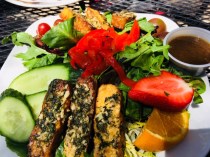
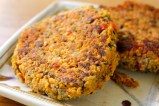
Related Recipe: Chickpea Quinoa Burgers  by Hench Herbivore
quinoa cake

Hench’s My Plate

My Plate Haiku

Chickpea Quinoa Cakes

Served at two local restaurants

How ubiquitous.

by Elyn


Instanutrition

I scurried around the kitchen. There was dinner to be made. I peeled, chopped, sauteed and simmered. I sweated as the hot summer air mingled with the heat from the stove. I held an icy glass of water against my cheek. I ran the compost out back. I let the cat out. I let the cat in.

IMG_0904

Lifeseedlings Posting

My daughter sat calm and cool at the table. She asked me a few questions. She danced her fingers around a little. She called me over to look at some things. Way sooner than the time it took for the meal to be ready and without barely moving a muscle, she created a new portal into the universe for me–by opening an Instagram account for The Nutritionist’s Dilemma. She turned the first MyPlate Haikus into little lovely portraits. She chose nice hashtags and linked this to that. She set the table. She let the cat out.

I am excited about my new Instagram account. There, I hope to highlight the little morsels of collective poetic wisdom that illuminate the experiences of self-nourishment that many have contributed to my blog along with other pearls that I have gathered along the way. The concept is to cobble together a creative and meaningful expression of how feeding ourselves may look and feel. It is a conceptual revisioning of the dietary constructs of the USDA MyPlate model of nutrition. (These messages can also be seen at the bottom of the blog’s sidebar.)

New My Plate Haikus or any other poetic expressions and My Plate Plates are always welcome and will be necessary for me to hold my space in this new environment. For general instructions and examples, please see Accepting Haikus. We will see how this goes. It could be fun.

I’d also like to highlight some of the ongoing work of Michelle Obama to brighten the futures of the nation’s children through nutrition and health initiatives. For the past four years, the First Lady has sponsored a rather competitive Children’s Healthy Lunchtime Challenge Cooking Contest. Winners are chosen from each state and U.S. Territory and are treated to a Kids’ “State Dinner’ at the White House. This year’s event was held a few weeks ago and (spoiler alert) included a surprise guest. The impressive recipes of these culinary kids are also compiled in the Epicurious Healthy Lunchtime Challenge Cookbook. Maybe a child you know can participate.

The Kids’ State Dinner gathering also provided a platform for the First Lady to announce her new anti-big food advertising campaign, FNV Prepare to Be Marketed To which employs the efforts of celebrities and famous athletes to redirect their messaging power toward healthy eating. Coincidentally, this is what I wrote about in my last post, Spring Cleaning, and the NBA Finals.

I am off to start following Michelle on Instagram. And who knows, maybe she might follow me. And you can follow me on Instagram @lifeseedlings, and on Twitter @lifeseedsnutrit.

Thank you for listening, sharing, following and supporting my writing. Please subscribe in the sidebar to receive notice of new posts. Comments and greetings always welcome.

In health, Elyn

(Update 2017: Jason Brown of First Fruits Farm was the highest-paid Center in NFL history, but he walked away from a 35 million dollar contract with the St. Louis Rams to grow food for others.)

(Update 2020: Today, as I reviewed this post, the world learned of the tragic loss of basketball legend Kobe Bryant. To honor his spirit, his fatherhood, how he inspired others, his dietary consciousness, and how he used his celebrity, it is quite apt that I just found this article Kobe wrote for Michelle Obama’s Let’s Move blog on Five Healthy Habits.)

20150614_173007 (1)


My Plate Haiku

Did you really think

That you could hide fish in rice?

Oh, the green paste burns! by Francesco\

by A Cat

(from I Could Pee on This and other poems by cats collected by Francesco Marciuliano)

where has all the produce gone?

Perhaps it is due to the recent one year anniversary of the passing of Pete Seeger that has this title coming to mind–but this is something I have been thinking about for a while.

I have had a few experiences lately, where a brilliant idea of mine that I have kept gestating in some corner of my mind, waiting for just the right labor to bring forth, is birthed by someone else–and I read about it somewhere. I hate when that happens, especially as brilliance is not my forte and such ideas are few and far between. And, so now I must act quickly to share–and thus take credit–for these rare flashes of genius. 

As you may know, I have been swimming around in this primordial soup for many years–somewhat akin to, um, yes, let me see, ah yes, the great Soviet biologist Alexander Oparin–father of the primordial soup theory–seeking answers to some of life’s most pressing questions. While Mr. Oparin had been searching for the origin of life on Earth, I am anxious to find a solution to this little problem of sanely feeding the carbon-ignited populace of whom he divined the spark.

I was already concocting my own brilliant idea when a friend sent me this article, Can America Learn to Love Misshapen Veggies? by Elizabeth Segran. It is about the vision of Doug Rauch–the former president of Trader Joe’s– to create markets for oft misshapen produce and other food that might otherwise be headed prematurely and unnecessarily into the waste stream. Having seen the high degree of such waste and the exorbitant cost of such a loss while hunger is rampant in our country, he is experimenting with opening grocery stores that would sell such abandoned produce at low-cost in high-need neighborhoods. He seems to know a thing or two about the grocery business, and I am glad to learn of his concern and his efforts. Maybe he’ll like my idea–it is along the same lines.

You see, kind of like Sisyphus, I am among those dedicated to rolling a giant Hubbard squash up to the top of a mountain, only to have it roll back down again–ceaselessly repeating the effort. Sisyphus’ fate “as much through his passions as through his torture”–is similar to the plight of the modern-day nutritionist. “Eat your vegetables!”, we implore. “Three cups a day!” “Eat all the colors of the rainbow!” We beg, we cajole, we try to be cute. We strive mightily to bring the veggies to the people, but we can’t make them eat. (Horses, on the other hand, accept them rather well.) Undaunted, like Sisyphus, we perforce keep trying.

Albert Camus, in The Myth of Sisyphus, states that the gods had condemned Sisyphus to his labor, reasoning that there is no more dreadful punishment than futile and hopeless labor. But, he continues, “If one believes Homer, Sisyphus was the wisest and most prudent of mortals.” Ah! My personal interpretation of the text provides some vindication for our insanity.

Vegetables can be daunting to buy, prepare and cook. They can be expensive. When they go bad they look quite sad. Certain vegetables require strong muscles, a good set of sharp knives, and a certain finesse to commandeer properly. As a food group they are complex and complicated, and many times a relationship with them must be carefully nurtured. Some challenge the taste buds with a propensity to be bitter or earthy. Plus, they often carry baggage from our collective childhoods.

But, they are so gooooood! And, rich in vitamins, minerals, fiber, Omega-3s, enzymes and phytonutrients to help our hearts, bones, skin, hydration, and mood–they are good for us! The benefits of a plant-rich diet are well established, and with so many different types, including what I might like to think of as a starter kit vegetables for the disinclined, there are plenty for all to enjoy and benefit from–in spite of early experiences. But, with so many real and perceived obstacles, to the chagrin of Mr. Rauch and myself–many march needlessly to their unconsumed demise, after much time, love, care, and commitment were dedicated to their growth by hard-working farmers. Some, just because they do not meet the standard definition of beauty.

So, my basic idea is this: In an effort funded and supported by health care collaborations, corporate and/or governmental subsidies–grocery stores, and other appropriate establishments should create space for the preparation of freshly made, nutrient-blessed vegetable-based juice–oh, and yes, soup–for sale to the public at an affordable cost. Incentives for purchase by SNAP (Supplemental Nutrition Assistance Program formerly known as food stamps) recipients could be implemented, similar to those being offered at Farmer’s Markets. These products can be available year-round in frequented food environments.

Vegetable juices and soups (made with well-prepared broths that can also utilize other ingredients that might otherwise be wasted–such as meat bones) are perhaps the simplest health-promoting and disease-preventing foods available. Increasing the exposure to and ease of access and consumption of these may be a powerful antidote to the scourges of our chronic health ills. Call me naive, but my experience informs me that many appreciate the taste of health–particularly when health has become an elusive concept. Returning health to our food establishments is mildly becoming a not so foreign idea. In my nearby city, a local health insurer and the YMCA have partnered with a food chain–and health classes and services are offered right in the grocery store. And golly, our supermarkets often house pharmacies–so, why not grandma’s penicillin?

The benefits of my little “Primordial Soup and Juice Program” include opportunities to expand vegetable education, improve the visibility of nutrition specialists, eliminate barriers to vegetable purchasing and intake, and affirm the age-old wisdom of food as medicine. Plus, it can contribute to the reduction of food waste and spare the feelings of those poor misshapen vegetables. What well-intentioned juice or soup maker would not warmly welcome them? Right, Mr. Rauch?

Oh, and Pete, Where has all the produce gone? Thirty-one percent of it into the waste stream, everyone. When will we ever learn? When will we ever learn? New verse: Assimilated well into our cells, everyone. Any thoughts to help embellish this vision?

Thank you for listening, sharing, following and supporting my writing. Please subscribe in the sidebar to receive notice of new posts. Comments and greetings always welcome.

In health, Elyn 

Update March 8, 2015. Just elaborating by suggesting that this idea can be implemented in our schools as well as in all of our subsidized food programs serving both young children and adults in group care facilities

IMG_1298

Mock Turtle’s  My Plate Plate

My Plate Poem

Beautiful soup so rich and green

Waiting in a hot tureen

Who for such dainties would not stoop

Soup of the evening beautiful soup. by The Mock Turtle


a winning goal

I would feel a little remiss were I to not make mention this year of World Breastfeeding Week (WBW). In previous years I have always made a point to do so. But, it is late. I should already be in bed. Besides, I have to get to work early tomorrow in order to partake in a webinar that is celebrating the week and its important mission. So, I will be brief. wbw2014-logo-hd

Perhaps after tomorrow’s webinar, I will have something more inspiring or informational to offer with a larger perspective. Tonight, I sit quietly with only my personal experience–the one that reminds me that twenty-six years ago at this very time I was deeply in labor, nestled in my midwife’s quiet birthing room in the foothills of the Catskill Mountains. On the other side of midnight, in the dark of night of the day of my own birthday, my son would make his way into the world. Our breastfeeding relationship would begin immediately thereafter.

But, during that time, the practice of breastfeeding on a larger global scale was diminishing with serious consequences for maternal and child health, with societal and environmental implications as well. In 1981, the World Health Assembly adopted the International Code of the Marketing of Breastmilk Substitutes, to remediate the malnutrition suffered by infants and young children due to the inappropriate marketing of commercial formula. And, then in 1990, exactly two years after my own bond was formed in connection with the dying art of breastfeeding, the Innocenti Declaration was signed by government policymakers, WHO, UNICEF and other organizations to protect, promote and support breastfeeding. It designated the first week of August as World Breastfeeding Week.

Twenty-four years later, though there have been significant gains made in reversing the declining trend, there is still work to be done. There are also newer nutritional impacts of breastfeeding being investigated as we begin to better understand the myriad functions of the gut microbiome.

This year’s WBW slogan is Breastfeeding: A Winning Goal for Life. I suppose it relates to this year’s Football World Cup. Could that be? That’s a little funny to me because my son has been a soccer player and is a devoted fan of the sport. Though no longer on the field much, he is hoping to be working in the field of professional soccer someday. May I also parenthetically add, that throughout and since the World Cup games, I’ve noticed that I have had an almost daily blog reader from Brazil–so apparently not everyone in the country was focused on the sport. A special hello to that reader(s).

The objectives of WBW 2014 are strongly linked to the Millennium Development Goals (MDGs), set by governments and the United Nations to fight poverty and promote healthy and sustainable development in a comprehensive way by 2015. A description of how breastfeeding is linked to the MDGs can be found here. The connections are quite profound.

I am interested to see what I will learn in the course of tomorrow’s session. I will let you know if there is anything particularly interesting. In the meantime, please take a moment if you will and have a look at these powerful photos. They will say much more than my usual thousand words.

Thank you for listening, sharing, following and supporting my writing. Please subscribe in the sidebar to receive notice of new posts. Comments and greetings always welcome.

In health, Elyn

P.S. The webinar session was yesterday. It was sponsored by the SUNY School of Public Health and entitled, International Code of Marketing of Breastmilk Substitutes and Promoting and Supporting Exclusive Breastfeeding. I applaud the school’s long term commitment to this topic and recommend the session highly. I believe it will be available soon for viewing online. Dr. Ruth Lawrence, an international breastfeeding authority, and author of Breastfeeding: A Guide for the Medical Profession, whose pioneering work and advocacy for breastfeeding dates back to the 1950s, is on the panel.

The webinar described some examples of successful applications as well as egregious violations of the International Code of Marketing, and also shared some exciting outcomes in regard to increasing initiation and exclusivity of breastfeeding in some NYC hospitals and in the Vermont WIC Program due to some dedicated efforts. It also discussed commerciogenic malnutritionin this context, referring to the marketing of breastmilk substitutes and its impacts on babies, but I may ponder some wider implications as well.

Thank you for listening, sharing, following and supporting my writing. Please subscribe in the sidebar to receive notice of new posts. Comments and greetings always welcome.

In health, Elyn

Related Posts: Blessed Feeding; To She Who Loves Us Before She Meets Us; Breastfeeding Redux; Oh Mother

Today’s My Plate is the beautiful watermelon cake prepared for me by my office “birthday angel”.

Related Recipe: Watermelon Fruit Cake 

photo (3)

Cathy’s My Plate


My Plate Haiku

Hearts are not just reserved for romance

Every living thing

Is in love.

by Kat

serenity now

In my last post, Peepin’ Out, I described my encounter with some test bags of Doritos Jacked. Since then, I realized that the incident was still bothering me. I am reluctant to write anything more about it because I do not wish to bring any attention to the product. Neither do I wish to linger in its wake. I am sensitive to being in the proximity of things that have bad energy.

I also worry that I drone on too much regarding matters related to junk food. There are so many more interesting things to focus on and write about in this big world of food and eating to which I devote my attention. Should I not be promoting positive messaging and discussing new and wonderful ways to nourish the body and soul? Can’t I just be perky and progressive? I find and follow so many adorable and inspiring blogs. It seems, however, that I have been assigned to the night shift, enlisted to cover the underbelly of the nutritional world. My beat is often in the neighborhoods of the most vulnerable. So, forgive me this further investigation of the matter.

a summer day at uncle bob's A serene summer day at Uncle Bob’s

My mission is to help the masses achieve both physical harmony and emotional bliss as it relates to what we put in our mouths. Teach people to eat right states my job description. Restore the order of things. Ensure that each generation attains a longer lifespan than the previous one. Put back “adult-onset” into the description of Type 2 Diabetes. Decrease health care expenditures on lifestyle-related chronic diseases and save our economy. Oh, and make us all be sleek and slim.

OK, I say as I don my kale green robe and lemony yellow gloves as part of my requisite super nutritionist uniform. How hard can it be? Humankind has achieved many miraculous things. Solutions to myriad problems have been creatively achieved. Hearing and sight have been restored, outer space has been explored, cars will soon no longer require drivers. All I have to do is make people eat more fruits and vegetables. Onward. And then, damn, I am brought to my knees by my arch-nemesis–a bag of chips.

Throughout the past few weeks, I have been swimming in the usual news–efforts by some members of Congress to roll back the Healthy, Hunger-Free Kids Act which set higher standards for school lunches, increases in global obesity, the recent opening of the film Fed Up, and gun violence. Amid these stories, I realized I had not gotten over the chip thing.

Initially, I had presumed that the promotion of those test bags was being carried out only in the convenience store where I was–another strategic plan just to annoy me. It then dawned on me that maybe it was actually part of a larger effort and perhaps there was something more I could learn about it. A quick search led me to an online discussion of these new test flavors. Apparently, Frito-Lay/PepsiCo charges customers to help them develop new sensory-stimulating ingredient formulations. I also learned that this jacked variety already existed. Yikes. It was already too late then to intervene with a large-scale letter-writing campaign. The chips were already jacked.

What did jacked even mean? None of the definitions I have found seemed really applicable to snack food. Is it market speak for GMO corn laden with MSG, seven artificial colors, and 140 calories per six chips? Does it refer to the bigger, bolder, and thicker attributes that the angry-looking packaging boasts? Are regular Doritos tiny, meek and scrawny by comparison? I really have no clue about the answers to any of those questions, but I am certain we have been jacked enough–and certainly hijacked when it comes to feeding the citizenry health-sustaining food.

Recently, Olivier de Schutter, the United Nations’ Special Rapporteur (cool title), submitted his final report to the UN Human Rights Council on the right to food. Mark Bittman summarized the report which “analyzes a food crisis that is international and systemic. It maintains that the will of the citizens and countries of the world can be powerful tools in making a new food system, one that is smart and sustainable and fair and describes that all over the world food systems are being rebuilt from the bottom up. And, it argues for statutory regulation on the marketing of food products.”

It is worth a look at the company link above to see the extreme global reach of these ill-devised products that find their way into the mouths of babes. An article in the recent issue of periodiCALS (the magazine of Cornell University’s College of Agriculture and Life Sciences) discussed current efforts in India to address malnutrition and growth stunting (which affects an estimated 341 million children worldwide). A researcher described the work being done in an extremely remote village that cannot be reached by land transport for three months a year during the rainy season. There, where such problems are endemic, young children are observed buying shining packets of cheese puffs and potato chips. The infiltration of this junk into this far corner of the world is noted. I am not shocked, though I am disturbed.

What motivates the continued development and insidious promotion of these adulterated and manipulated foodstuffs? When do their makers say, enough already? Let’s lay down our guns and claim our pyrrhic victory for the damage has been done and enough money made at the expense of others. I believe it is time to act upon de Schutter’s assessment that, “Many of us have arrived at the conviction that junk food and sugary drinks are like tobacco and deserve to be treated in the same way.”

There are so many wonderful people promoting incredible efforts to nourish the earth and its inhabitants in a kind and gentle manner, intelligently and respectfully. Their work is beginning to make a difference. No jacking required. I hope to highlight some of the amazing, loving and creative initiatives that have come to my attention in some upcoming posts. I am humbled by and grateful for what they are doing. They are making my job easier.

Well, thanks for letting me get this off my chest. Let’s welcome summer,  its bounty and those who grace us with its goodness.

Thank you for listening, sharing, following and supporting my writing. Please subscribe in the sidebar to receive notice of new posts. Comments and greetings always welcome.

In health, Elyn 

P.S.  Your My Plate Photo or Haiku can be right here when you send them to me!

IMG_1527

My (Jacked) Plate

My Plate Haiku

Pick your own today,

Happy kids in wide-brimmed hats,

Sweet summertime fruit.

by Nan


Sid Caesar Salad

It happened again–my finding a nutrition-related story (or it finding me) where I least expected it. This time it was not “not a laughing matter”–but actually rather amusing.

Always appreciative of those who have made the world a funnier place, the recent passing of comedian Sid Caesar led Pete to look for some footage of this icon of American humor. I sat nearby as he clicked here and there on his computer. He immediately started laughing, listening to the “double talk” for which Caesar was particularly famous.

Image result for sid caesar health food restaurant

Sid Caesar and Imogene Coca Health Food Restaurant

Soon I was giggling with him. A few minutes later, he told me to come to look at what he just found. I leaned over as he played a sketch for me from Caesar’s long-running TV show, Your Show of Shows, called Health Food Restaurant. This piece dates to the early 1950s. Caesar and Imogene Coca play a married couple out to dinner at a fancy New York City restaurant. Yet instead of the steak, sausage, snails and hot tamales that Caesar craves, here at the Vitality Health Food Kitchen where Coca has taken him, there is only Pala Paka plant blossoms; the Vitamin B1 B2 B3 C D and H Dinner for Two; homogenized bone meal and wheat germ with a side of cructose; and spaghutti, made from a cabbage extract and a cauliflower derivative. Caesar of course mocks, whines, pleads and gags his way through the menu as described by the waiter, played by Carl Reiner–who you may recall, I once met. But, impressed by the youthfulness and vitality of the other diners, and in an earnest attempt to appease his wife, he forgoes his personal desires and literally digs into the dinner salad served with a set of gardening tools for silverware.

Although “health food” and “plant-based” proponents and movements have probably been around since our Paleo beginnings, there was just something very surprising about seeing this sketch which was made during a period after which we seemed to have left vegetables behind on rural farms and before the Back to Nature movements of the 1970s. It was a time maybe of boiled potatoes and blanched green beans at best which also coincided with the peak years for deaths from heart disease. As this interesting history details, it was also a  time marked by an increase in the use of hydrogenated fats and vegetable oils and the advent of pasteurized milk.

I am not sure we can pinpoint the nadir of the American diet. Though the 1950s can be critiqued for its focus on meat and dairy along with the increased use of processed foods, plasticized fats, and high smoking rates, things seem to have gotten a whole lot worse since then. I don’t think we have hit bottom but there are some signs we are beginning to emerge from the Dark Ages.

Perhaps I am just being a little naive. Just as we don’t believe that people in the “old days” ever had sex, maybe I can’t imagine the nature of health food consciousness before my own time and the dietary context in which it existed. Though the use of refined sugar is presented as a modern-day scourge, its grip took hold long ago. A brief look into biographical information about health and fitness guru Jack LaLanne who was born in 1914–ages ago–interestingly states that he described himself as a sugarholic and junk food addict as a young boy with associated behavioral problems. His early education about natural foods changed the course of his life. Of course, attention to the attainment of physical, emotional and spiritual health has coursed through human history, the admonishment of gluttony is a big theme in the Bible, and there have always been grandmas telling us to eat our vegetables.

Nonetheless, Health Food Restaurant seems quite anachronistic for its day–at least six years before Jack LaLanne’s pioneering fitness show began airing nationally in 1959. Although it was just a spoof, it seemed rather prescient addressing current anti-aging and food toxicity issues. One of the dishes is mentioned to be good for the ankles. The edema of the lower extremities is a common symptom of poor heart, kidney or liver function. Interestingly, Sid Caesar who seriously battled alcohol addiction and depression eventually became a devoted natural food and fitness adherent to which he credited his healing–and maybe his longevity, being 91 at the time of his passing.

The sketch touched on a few things that I think about. It reveals the intensity of our food attachments and belief systems and even their influence on relationships. Though we usually reference money, sex and religion as divisive issues, food, and eating habits probably belong somewhere on that list.

Additionally, it looks at the center of a society’s dietary culture at any given time and how far out is its fringe. How and why did the standard American diet evolve and deteriorate in such a relatively short period of time compared to other cultures? What was sacred and what was sacrilege as we shifted from rabbit stew and acorns to beef and potatoes, to chicken nuggets and french fries? Nature, economics, politics, biology, capitalism, and science all drove this complicated national trajectory. For all that was good and bad, it seems that we did not slow down and smell the Pala Paka blossoms and those that did were either ignored or derided. It is interesting now to see how the tide is turning as we confront current health and environmental crises. It is those who were on the fringe who may be forging our new direction.

Mockery is an innate behavior with evolutionary purposes that makes us defensively joke before we proceed. Some from the tribe must be brave enough to venture out while the others sit back and have a good laugh at their expense. Thank God laughter seems to be good for our health. I am particularly grateful to those who bless us with their humor because as I look down as I stomp around in the primordial swamp of our food culture, I see far too many swollen ankles–enough to break my heart. RIP Mr. Caesar.

Well, as they say at the Vitality Health Food Kitchen, “Good Health To You and Good Health To Everybody”.

Thank you for listening, sharing, following and supporting my writing. Please subscribe in the sidebar to receive notice of new posts. Comments and greetings always welcome.

In health,  Elyn

(Update 2020: RIP Carl Reiner who recently passed away at age 98–vital until the very end.)

IMG_1796

Susan’s My Plate Drink

My Plate Haiku

Do you carrot all for me?

My heart beets for you, with your turnip nose and your radish face,

You are a peach. If we cantaloupe, lettuce marry.

Weed make a swell pear. Author unknown

(This post is dedicated to my friend Susan who is heading out to join the Peace Corps. May her plate be filled with tasty Armenian cuisine and her heart  with good things.)

inventive incentive

To make bread or give love, to dig in the earth, to feed an animal or cook for a stranger—these activities require no extensive commentary, no lucid theology. All they require is someone willing to bend, reach, chop, stir. Most of these tasks are so full of pleasure that there is no need to complicate things by calling them holy. And yet these are the same activities that change lives, sometimes all at once and sometimes more slowly, the way dripping water changes stone. In a world where faith is often construed as a way of thinking, bodily practices remind the willing that faith is a way of life. Barbara Brown Taylor ~ (An Altar in the World: A Geography of Faith)

On a cloudy and dreary Saturday morning in October, I headed into Albany to catch up with the ever-busy Veggie Mobile in order to get a glimpse of the Veggie Rx Program in action. It had been almost two years since I began administering this program that I had helped establish at the Health Center, and as a concerned mom, it was time for a periodic check-up to see how it was doing. 

veggiemobile

Capital Roots Veggie Mobile


Veggie Rx is a “produce prescription incentive” wherein fruits and vegetables are “prescribed” to medically high-risk patients by their health care providers as a means to encourage healthier diets and to improve health outcomes. Similar programs have begun to emerge in the past few years, and are being considered as a model of a viable public health intervention for disenfranchised communities. This medically-housed approach provides powerful messaging, unique for an institution that traditionally proffers mainly pharmaceutical solutions and well-meaning but often weak recommendations for health behavior change. It affirms, “Let food be thy medicine.” 

Veggie Rx was initiated as a collaboration between Capital District Community Gardens (CDCG) (now known as Capital Roots) and the Whitney Young Health Center and funded by the NYS Department of Health’s Hunger Prevention and Nutrition Assistance Program. It was designed as a pilot to serve fifty persons with diabetes and/or hypertension. Once recruited and enrolled, the participants receive “prescription coupons” valued at $7 each, which can be redeemed once per week on the CDCG Veggie Mobile. They also receive an additional food bag valued at $4 provided as part of the Veggie Mobile’s Taste and Take tasting program each time they shop.

The bio-diesel fueled, hip-hop pulsing, “produce aisle on wheels” Veggie Mobile which I chatted about in No Passing, toodles around many Capital District neighborhoods most days of the week, year-round. It irrigates identified food deserts by arriving at a variety of community locations where anyone can shop, right on the truck. It is somewhat akin to an ice cream truck except that it hawks an impressive array of fresh fruits and vegetables, much of it from local farms. 

I met up with the Veggie Mobile that day in the city’s Arbor Hill neighborhood. Parked at the corner of a side street, it was a burst of color in a rather gray landscape. That brightly painted truck always shows up representing the rainbow, but it is the activity that it fosters that is the pot of gold. Among the customers were two Veggie Rx participants. One was a woman whom I had just enrolled in the program. She was there with her two young granddaughters. ‘Patient with diabetes’ instantly transformed into ‘loving grandma’ as I watched her solicit the girls’ advice for what to choose.

The other was a gentleman who had been enrolled for a while but who had not really participated. I had recently called him to discuss removing him from the program—but he asked for another chance. He explained that he had experienced a host of health problems but was feeling better and really wanted to have this opportunity to improve his diet. Sure enough, there he was like a kid in a candy shop–but instead of candy, he was purchasing a sophisticated assortment of produce.

After an hour at that location, the dedicated Veggie Mobile staff women closed up shop. I hopped in my car and followed them as they got back on and off the highway and made their way over to the next scheduled stop at a low-income housing complex—not too far from the Governor’s Mansion. Arriving there, about fifteen people were already waiting–men, women, and children–including two more Veggie Rx participants. They were surprised to see me and greeted me with smiles and hugs.

This was a busy site, so I assisted with bagging while anchoring myself at a good vantage point. Shopping on the Veggie Mobile begs some patience—but perhaps not any more than waiting in a fast-food drive-thru line. Here though, was connection, community and lots of conversation about good food. There was squeezing back and forth as people reached to add another sweet potato, banana or onion to their order. All forms of “monetary green” (cash, SNAP EBT cards, New York State Fresh Connect, and Farmer’s Market Coupons–along with the cute Veggie Rx coupons) were exchanged for “nutritional green” (collards, kale, green beans, green peppers, and broccoli). It was a beautiful sight to behold.

Despite my sheer love of this program, I am still not sure yet if these incentive initiatives are token, feel-good, short-term experiments–or the templates for a new health and food revolution. Are they worth the effort for the few that they serve? Can they put even the tiniest dent in the massive and complicated problem they are trying to solve, and might a few fruits and vegetables a week really affect change?

What I  do know is that I have seen Veggie Rx change the behaviors and well-being of many of those in the program. Let me strengthen that. I have witnessed some profound changes. There has definitely been some powerful “medicine” going down. Participants have started juicing, making smoothies, and taken to more plant-based diets. Many have attested to feeling better and have noticeably become more enlivened. While I have also noted improvements in individuals’ health markers (weight, blood pressure, hemoglobin A1c)–to see these markers shift in a significant way for this highly health-challenged population will take time. I caution not to base the success of these types of programs solely on those indicators–it is too myopic a lens.

Veggie Rx offers more than just food access and is about something greater than fruit and vegetable intake. Relationship building is the true foundation of this program. This power of relationship–between participants and the Health Center and Veggie Mobile staff–is not to be underestimated. Having undertaken an evaluation of this program and through my direct contact with the participants, I know that they feel better valued as both patients and consumers which increases their engagement in both roles. I also know that they consider this program to be a blessing in their lives–those are their words, not mine.

Participation comes with some requirements which asks something deeper of its recipients–like standing out on street corners in the cold, shopping in cramped quarters, finding a specific time and place to shop, and committing to follow-up medical appointments. Not everyone enrolled has taken advantage of the program, but the majority have–and some quite extensively.

As a metaphor for, or a substitute expression of the universal yearning to return to the land, the capacity to access the bounty of the earth perhaps subconsciously reminds us of the connection to our source and our birthright of health. The mere act of showing up and filling one’s bag with beautiful produce yielded from the soil reflects a powerful commitment to one’s self. Standing witness on that morning shed light on what a new paradigm of healthcare could look like–particularly in response to the problems associated with health disparities–but in the larger context as well. I returned home with a reassurance that my little toddler-aged program was doing well. I can’t wait to see it grow.

Thank you for listening, sharing, following and supporting my writing. Please subscribe in the sidebar to receive notice of new posts. Comments and greetings always welcome.

In health, Elyn

2024 Update: “We are not going to ‘wellness’…our way out of a…health crisis that is a direct outcome of structural and economic violence and inequality.” Yolo Akili

Related Resources: Food Trust/Policy Link:  Access to Healthy Food and Why it Matters;

IMG_2051

J’s My Plate

My Plate Haiku

Food is medicine

Farmers are doctors, Cooks priests

Eat, pray, eat, pray, love.

By Gordon

dominique et moi

November was Diabetes Awareness Month. Or, so I am told. For me, every month is diabetes month and every day is diabetes day, as nary an hour goes by without my sharing sacred space with someone who has diabetes. Sometimes this is the shell-shocked newly diagnosed, other times, it is the weary veteran of the disease.

So, a few weeks ago when my dear friend and favorite Diabetes Educator, Marie, handed me a flyer of some local events in my community, sponsored by the American Diabetes Association, I agreed to distribute copies to my patients. Looking it over, I caught sight of something interesting. Tucked among the listings for some talks at a nearby hotel on various dietary topics, like Healthy Eating for the Holidays was mention of a presentation to be made by Dominique Wilkins–the former NBA All-Star who played primarily with the Atlanta Hawks. My inner basketball jones, relatively well-tuned from my life with Pete and Morgan perked up.

photo (2)

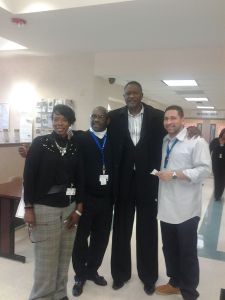
Former NBA Champion and ADA Ambassador Dominique Wilkins at the Health Center

Dominique Wilkins, who was born in France, was diagnosed with Type 2 Diabetes in 2000, just shortly after retiring from his long career. He is now a committed ambassador for the cause, passionate about helping others. While I doubted if many of my patients would travel across town for the other events, I thought some of them might be excited by the prospect of seeing the man with the moniker Human Highlight Film enough to make the effort. I asked Marie to get the date posted on our electronic message board.

A few days later Marie called me into her office and said, look at this email. Our CEO was informing her that the basketball legend’s PR folk had offered us a drop-in appearance at the Health Center and was wondering if we could garner interest with only a few days’ notice. Go for it, I exclaimed giddily, anxious for the opportunity to present some celebrity inspiration at our humble clinic. I quickly found a few other employees who shared my excitement and called a few of my “guys”, apologizing for making any assumptions about race, gender, age, and sports interest. When a 13-year-old patient of mine who I mentioned it to seemed quite aware of Mr. Wilkins’ basketball legacy and excitedly understood the significance of such a visit, I maintained my enthusiasm.

At the appointed day and time, wearing sensible high heels to enhance my own short stature, I walked through the doors to the waiting room and there was Dominique Wilkins–graceful and stunning. I went right up to him, looked way up, introduced myself and shook his hand. We were now on a first-name basis. I told him my husband taught me to enjoy the game of basketball by watching him play. I appreciate sport for its expression of the human body and its choreography, and Dominique certainly embodied both. He seemed touched.

The crowd in the waiting room was small but attentive. Some were there to see him. Others were just innocently waiting for their medical appointments. Dominique addressed his mixed audience. Basically, his impromptu message was that diabetes is a serious but manageable disease. Do what you have to do to deal with it. He matter-of-factly listed the basic dictates: do some physical activity that you enjoy for at least thirty minutes on most days, give up the sweets, stop drinking juice and soda and follow your doctor’s advice.

Apparently, as he was talking his talk, a woman sitting behind me was reacting with noticeable disbelief. He challenged her discomfort and questioned her about what she was thinking. She essentially said she thought he was talking crazy stuff–mere mortals could not do what he was suggesting. These simple declarations which are easy to espouse, are unfathomable and overwhelming to many–no matter who is delivering the message.

Diabetes is crazy-making. It pulls the rug right out from under you when you thought you were just minding your own business. No other health condition asks so much of so many. The multiple actions required for ‘self-management’ are daunting. Once the blood is commandeered by an excessive army of sugar molecules, it demands some pretty strong sacrifice and extreme behavioral changes in a bargain to help assure that you get to keep all your digits. Minions are condemned for just starting the day with that big bright sunny glass of OJ and satisfying thirst with one of those ubiquitous caramel-colored cola elixirs. No one said anything about diabetes and how it damages the heart along with the kidneys, nerves, eyes, and brain, did they? As Dominique gently goaded the woman to challenge her resistance, I saw in her face the communal shock of the masses, the same shock that had evidently once brought this Adonis of a man to his own knees when he received his own diagnosis.

I then raised my hand to ask a question. I was interested to know his thoughts about celebrities–and celebrity athletes in particular–who endorse products known to be detrimental to health. I did mention a player’s name and I did mention a beverage product. Dominique’s defense was a little weak as he responded with “Who wouldn’t do that for a million dollars?”  I don’t know–millionaires, people who know their messages matter, someone who might spend a day with me in my office seeing the onslaught of diabetes–its victims increasingly both younger and more significantly laden with this burden of glucose metabolism gone awry? He rebounded by saying that many athletes give a lot of their time and money to supporting important causes. Yes, this is true, but nonetheless, there it was–the constant contradiction.

Yes, the contradiction that favors and forgives corporate irresponsibility while individual and societal health is decimated in its wake. Another example of the kind that leaves our government and the rest of us pathetically pawing the ground trying to find and fund ways to clean up the mess. Per year, the company that makes the product I referred to, spends something like 1.7 billion dollars–could that be right–on advertising just its beverages; and the athlete will earn about $60 million. May I add that the companies that market diabetes drugs are also raking in some big bucks. Meanwhile, my patients and many like them sit among the rubble of a broken health care and food system often without two good glucometer strips to rub together.

Dominique’s response did not diminish my admiration for his work or for his play. He is doing something valuable in bringing his efforts to diabetes awareness. He showed up and talked to my patients. They and I appreciated it. Still, I sighed deeply. Diabetes can be a grim disease–especially for those without some modicum of financial resources, intelligence or fortitude–and access to good quality food and medicine defined in its truest sense.

Interestingly, Dominique, well endowed with more than a modicum of these necessary ingredients, shared that the most challenging part for him to do in order to address his own condition was exercise. After eighteen years as an elite athlete in top physical form, peeling his body back off the couch and wrangling it back into servitude, was the last thing he wanted to do.

Well, here’s to all the things I would do in service to the public health if I had just a few of those millions of dollars. What do you think? What would you do? Let me know.

Thank you for listening, sharing, following and supporting my writing. Please subscribe in the sidebar to receive notice of new posts. Comments and greetings always welcome.

In health, Elyn

Related Post: Spring Cleaning and the NBA Finals

IMG_5703

Keith’s My Plate

My Plate Haiku

Food is medicine

Farmers are doctors, Cooks priests

Eat, pray, eat, pray, love.

by Gordon

the new food revolution, food stamp cuts and health disparities

My Dilemma cuddled up next to me in bed and rested its head on my shoulder. “What is coconut palm sugar?”, it asked. I explained tenderly while rubbing its dear little head, that it is a natural product made from the nectar of the coconut palm tree. There are several different varieties of palm, and “coconut palm” specifically refers to the coco nucifera plant. It possesses a low glycemic index making it a healthier choice than sugar refined from sugar cane or beet sugar and is an option for diabetics. My Dilemma looked at me with the pure innocent eyes of a child.

English: Coconut Palm tree on the beach in Nus...

English: Coconut Palm tree on the beach in Nusa Dua Bali Indonesia (Photo credit: Wikipedia)

“And what about goat’s milk kefir?”, it then asked. I answered, “Oh, you know. Kefir is a fermented milk product that originated centuries ago in the Caucasus mountains, made from the milk of any ruminant animal–in this case, goat. The various types of beneficial microbiota contained in kefir make it one of the most potent probiotic foods available.”

I thought it might be drifting off to sleep, but then it muttered, “Can you tell me the story about chia and hemp seeds, lukuma, stevia and mesquite sweeteners, oh and kombucha and cacao nibs?”. Try saying kombucha and cacao nibs five times fast. Wait a minute. Looking its way, I noticed a little smirk on its face.

I realized then it must have been looking through some of my papers that I have lying around among all of my resources. It was getting late and I was not in the mood to be playing games–even the one apparently called, describe the recently sourced foods deemed essential to a really healthy diet and that are alternatives to the substances compromising our health. Really, it is getting hard to keep up with these emerging products. I could have been annoyed but instead just planted a kiss on its little cheek. Besides, my Dilemma is always incredibly patient with me as I stagger about waving my sword attempting to slay the conundrums of our modern world’s feeding debacle. It is essentially the Sancho Panza to my Don Quixote–forever loyal.

I plumped the pillow, pulled up the covers and made sure it was quite comfy. It puffed a little sigh, the kind that signals the final controlled exhale of the day, but then it managed one last exertion. “Do you tell your patients at the Health Center to eat these foods?” I remained still and didn’t say anything. I knew if I ignored it, sleep would blanket its cares and it would choose sweet dreams over reality-drenched answers.

I was glad to lay the matter to rest and tucked myself in for the night. But still, I knew my innocent-seeming Dilemma was playing me. It knows that every day as I walk into my office, I pray that I may not alienate my clients by making totally unrealistic suggestions and that I am grateful as I leave that there is still air in my car’s tires. It is quite aware that I oft apologize when I utter things like extra virgin olive oil, stevia, quinoa, almonds, and organic milk. It knows I choke and can’t say grass-fed, locally raised beef and heirloom tomatoes, and that I break out in hives when considering presenting the advantages of a gluten-free diet for certain individuals.

My economic assessments must be made fast and furiously and I cannot instantaneously calculate what a person’s monthly social security income, low wage earnings and varying food stamp dollar allotment translates into in terms of a daily food budget for themselves and their family. I have no lab values measuring the degree of food insecurity. Many of my clients depend on the graces of food pantries–especially at the end of the month; some live in shelters or at rehabilitation centers with absolutely no control of their food choices.

If quizzed, I would say the majority of my patients know the price, more or less, of white rice, corn or vegetable oil, hamburger meat, chicken and twelve-packs of soda–and messing with their math by offering well-meaning alternatives does not make for good calculus. Though food budgeting education is valuable, most of whom I work with are already experts in that regard. I can’t surmise how much wiggle room someone has in order to make their diet more of a priority, but I must venture in and gather and glean some sense in order to gauge what is possible. At the end of the day, I can only hope that I was close if there is to be any hope of meaningfully promoting diet for health.

A shelf in my office contains food boxes and wrappers, non-perishable examples of “consider this” and “please, whatever you do, try to avoid this” foods. The shelf is not big enough. My patients are kind as they pick up from the floor the items that have fallen as I search for something from my display to show them. For those with grass-fed dreams but ground beef budgets, I have a few things to suggest, though I lament that it is nary enough. These include beans, oats, sardines, milk substitutes, flax seeds, teas, lemon juice, spices, dried apples, low-sodium chicken broth, canned salmon, whole grain pasta, boxed tomato sauce, sunflower seeds, and apple cider vinegar. When I can, I offer little samples. On some days I have coupons for the farmer’s markets, the local food coop, and manufacturer’s products to share-and I do have a small group of patients tucked under my wing participating in Veggie Rx, a Produce Prescription Program that provides free fruits and vegetables on a weekly basis.

Almost everyone is thoughtful, attentive and appreciative and willing to try to do something. Hardly anyone looks at me and yells, “Are you kidding me?” as I proffer a baggie of cinnamon. Still, I need a lot more to ameliorate the consequences of the nutritional junkyard that litters the land and to which those living in poverty are most vulnerable. With sugar at 62 cents a pound and coconut palm sugar going for about $5 for that same amount, what I could really use is a more level playing field if I am going to accomplish my goal of minimizing health disparities.

In the morning, I found my Dilemma curled up on the couch with a cup of coconut palm sugar-sweetened teeccino caffeine-free herbal coffee alternative and the newspaper. “Good morning”, it greeted me. “Just reading about the cuts to the food stamp program.” “Have a good day!”, it shouted after me, as I ran out the door to work.

If you have any suggestions or would like to hear what I think my patients could really benefit from, drop me a line.

Thank you for listening, sharing, following and supporting my writing. Please subscribe in the sidebar to receive notice of new posts. Comments and greetings always welcome.

In health, Elyn

P.S. Please take a moment to watch this beautiful video, Place Matters, by Clint Smith

Related Post: Inventive Incentive

IMG_0316

My Plate Cup

My Plate Haiku

Hunger tiptoes in

From bellies, hearts or minds

Feed me now she calls.

By Eva

summer’s end

Before summer goes leaping into fall, as it can tend to do in these parts, I want to offer homage to it and to those who tend its landscape.

In early June, before the sun had reached its northernmost point in the sky and summer’s arrival in this hemisphere had not quite yet been heralded, I was lamenting in “Obesity, oh wait a minute“, about the “collective abdication” of societal nourishment due to the blurry division between culture and corporation. This was written in response to my learning about a local community sacrificing its citizenry for some petty reward from Arby’s–the fast food roast beef chain. The insidious mutiny of our taste buds and natural hungers by corporations who have invested deeply in behavioral psychology, flavor and gene manipulation and marketing in order to usurp our birthright of health, always makes me feel pretty yukky.   

susan fowler's friendship garden The Friendship Garden

I quoted Dr. David Katz who asked, “If you know it’s important to control your weight and attend to your health, but almost everything in your environment and your culture conspires against such efforts- how responsible are you, personally? Are you truly personally irresponsible if you go with the prevailing flow?

When one is swirling about in the prevailing flow, it is hard to either remember or to imagine a different current of possibility. For context, I remind that my work entails helping those who have not just gone with the flow, but who are drowning in it. While much about our modern food situation lurks in shadow, thankfully the enlightening sun continues on its ecliptic journey along the celestial sphere in spite of ourselves. When it reaches the right ascension: 6 hours; declination: 23.5 degrees on June 21st–the longest day of the year, the light shifts, the air warms, and we are blessed with the advent of summer. This is the season that offers the opportunity to paddle over to the river bank and to rest for a while.

At the solstice, the denizens of summer appear. Having spent months in preparation for this precious moment, this is when the sowers and reapers take to the fields, playing midwife to the earth’s fertile bounty that the warm sun beckons forth. One must move slowly and sit quietly to see them. Like little gnomes, hunched low to the ground or up in the trees, they are busy with their work, often in the early hours of the day. They tend to be wary and shy of the noise and bustle of the big cities and crowded highways. Sometimes they commune better with their animals than with people.

But, they are gentle and caring folk, and eventually, they step through the veil of the misty morning and come forth with their beautiful harvest–raspberries, blueberries, currants, peaches and plums, big bunches of leafy chard, heads of tender bibb lettuce, peas, and beans, luscious tomatoes, beets, and carrots pulled from the dirt, melons of many varieties, eggs laid from happy chickens, cheeses curdled from the milk of frolicking goats and tiny bundles of fragrant herbs.

As if awakening from a midsummer’s night dream, when we behold these offerings we are a bit uncertain at first about what is real–are we truly enamored of the jackass or are we brought to our senses by being reminded of what is truly beautiful and deeply nourishing? Can we actually claim this amazing food for ourselves and for our children as well? May we feel more resolute to decry the fodder that misrepresents itself by masquerading as food? It is possible.

Summertime provides me with many wonderful examples that creating new paradigms of food and feeding exist. Two urban, youth-focused programs include the Student Produce Project run by my friends at the Capital District Community Gardens; and the magical school-based Friendship Garden fertilized by many years of hard work and the amazing love of my dear friend, Susan Fowler. Susan is also a wonderful teacher and a whole lot more. Her students call her Mrs. Flower. With her corps of elementary students in her heart and at her side tending the crops, she has been an early crusader in the school gardening movement.

CDCG Produce Project CDCG Produce Project

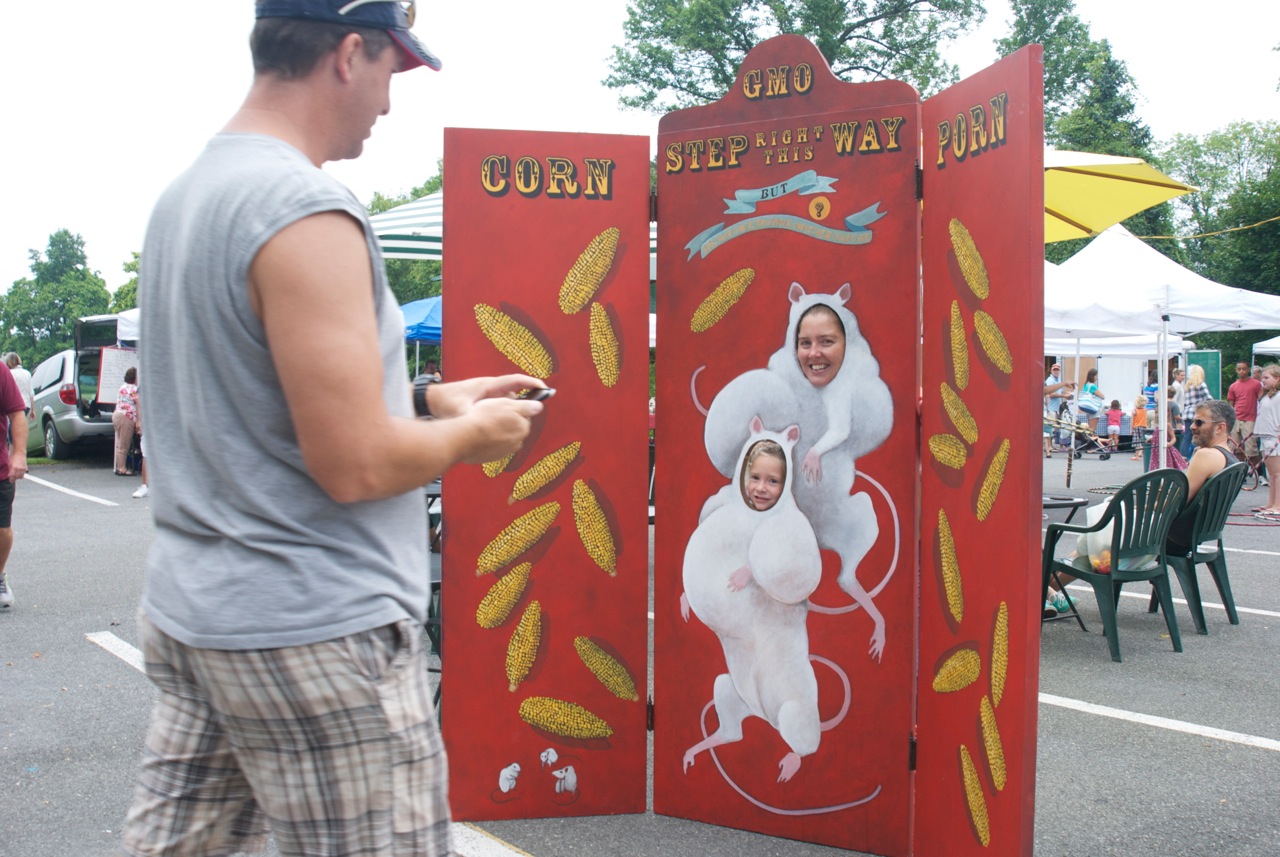
Farmer’s markets also always inspire. This summer, a day trip led me and Pete to the Saugerties Farmer’s Market in the beautiful and bountiful Hudson Valley. There, near the wonderful assemblage of growers, bakers and jelly makers I came upon an educational and artistic display about the health effects of genetically modified organisms (GMOs) in food. Later, I kept wondering how did science meet such creative expression, so I traced my way to the work of the person responsible, Claudia McNulty. Claudia is a painter, designer, sculptor and seemingly, environmental activist as well. Her work is beautiful and thought-provoking. Claudia has provided some links to very important information through her Corn Porn GMO project. These include the Seralini GMO Rat Study and a video interview with an MIT scientist on the effects of the increased use of the herbicide RoundUp required by GMO crops. To appreciate our current health crises, it is essential to understand the influence of GMOs.

front side gmo displayfront side gmo display

But, the earth tenders who most personally influenced my own summer were my friends Justine and Brian Denison, and their crew, the farmers at Denison Farm, providers of my Community Supported Agriculture share. They not only grew but also delivered the amazing produce that graced my own table and fed my family. The film, Radical Roots: Reawakening the Local Food Movement, by Patricia Lane, features their farm. The elements captured in this story really colored my thoughts and inspired me through these long sunny days. I hope it may do the same for you.

So, to all of summer’s tenders who work so hard as stewards of the land and take care to feed us all, I offer deep and profound thanks, and hope that the fall provides some well-deserved rest. And to summer itself, it is always sad to see you go, but thanks for giving respite from our busy year and for illuminating the ways we can re-route the prevailing flow that permits corporate control of our health and environment.

Thank you for listening, sharing, following, and supporting my writing. Please subscribe in the sidebar to receive notice of new posts. Comments and greetings always welcome.

In health, Elyn

Related Baker: Tess Beatrice at Sow Good Bakery--creatively conceived and beautifully presented delicious morsels all gluten-free, refined sugar-free, sometimes raw confections laced with unusual spices and topped with tender flower petals.

IMG_2591

Farmers’ My Plate Plate

My Plate Haiku

Strawberries are too delicate to be picked by machine. The perfectly ripe ones even bruise at too heavy a human touch. It hit her then that every strawberry she had ever eaten — every piece of fruit — had been picked by calloused human hands. Every piece of toast with jelly represented someone’s knees, someone’s aching back and hips, someone with a bandanna on her wrist to wipe away the sweat. Why had no one told her about this before? by Alison Luterman, “What They Came For” (from The Sun magazine)