Archives

set the twilight reeling

Lou Reed died on Sunday. This was strange to me because my relationship with him had only begun on Saturday night. I am a little embarrassed that I was not fully informed about the music of this artist. Of course, I knew some of his songs and was aware of the Velvet Underground and their being part of the Andy Warhol scene, but I think I was just a little too young and a lot too unhip to have accessed more of his music in its time. When I was just a little older and a touch hipper, I did become a fan of Laurie Anderson’s work and got it when she and Lou Reed later became an item.

Being attached to the elements of time, sound and place that Lou Reed inhabited, I would have responded with some curiosity and sadness upon hearing of his passing. But, having been in his presence just the night before, made the news resonate through my being. 

English: Lou Reed performing Berlin at the Globe Annex in Stockholm July 9 2008  (Photo credit: Wikipedia)

What had happened was that on Saturday night, Pete and I found ourselves still adjusting to being parents without boarders. This is what my daughter called us when she moved out recently to start college, leaving us with no kids living in the house. Simultaneous with that event, by means of some cable wire, our computer had become magically capable of projecting things onto our television set–thus widely expanding the viewing opportunities at our disposal. So, giddy with this new means of entertainment against the backdrop of a quiet house, Pete turned me onto a show called Spectacle, where Elvis Costello interviews an array of musical guests. Though this was big news to me, the episodes were recorded between 2008 and 2010. The show is a combination of storytelling and casual performance which I love.

Comfortably curled up for a night of relaxation, we started with Elvis Costello’s interview with Elton John. Right away my rock and roll pulse began to quicken. Next, we chose the one with Lou Reed. With Costello’s thoughtful and serious questions and Reed’s droll but meaningful answers, the segment just began to unfold like a walk through a park. Reed was iconic but also gracious and familiar-seeming. He discussed lyrics, the influence of the Beat poets, songs as stories and the effectiveness of minimal chords. Then, the artist Julian Schnabel joined them on stage. A very close friend of Reed, he told a touching story about loss that brought out the richness of their relationship. He recited Reed’s Rock Minuet as if he were Hamlet. Costello and Reed performed a perfect duet of A Perfect Day and they ended the segment with Set the Twilight Reeling. The combination of the scorching guitars and contrasting vocals was beautiful. I turned to Pete and said that I felt that I had just had a spiritual experience.

So, when on Sunday, as I was home working on some frustrating and soul-constraining activities and then saw the news that Lou Reed had died, I was strangely affected. How could that be? I just saw him the night before. He seemed ok–his heart was full and he treated us to some of Sweet Jane. I texted Pete–who was at a conference–the news. He wrote back agreeing that was very weird. Throughout the rest of the day, in between tending to my mundane tasks, I gobbled up the various contents of the musician’s cholesterol-rich oeuvre by reading articles and listening to his music. When Pete returned, he played me some more. I felt kind of empty. I regretted the loss to the world of a sensitive artist.

My own clinical work can frequently feel quite vapid to me–I am reactive to when there is too much science, too much medicine, too much judgment, and too little soul. The lyrics of my day are littered with mean or inflamed words like hypertension, arthritis, hypertriglyceridemia, gout, GERD, diabetes, obesity, and diabesity. Diabesity–actually sounds like it could be the name of a Lou Reed song. While Lou Reed’s lyrics can be ugly, angry, and crass sometimes too, they are also tender and romantic.

I am always longing for the lyrical and the poetic–and am grateful for artists and their art. For the lives and stories that I am privy to, I imagine something I call Diapoetry–where the impersonal becomes personal, where healing becomes love. This is any artistic or humanistic expression of matters related to health and the conditions that support or hinder it. It has applications wider than its name. There are beautiful renditions of illness and loss; there are healing practitioners whose science is art, there is life-giving food prepared with love and there are acts of service. It can be pretty or not–but it touches emotions and represents our fuller selves. Diapoetry can be represented in many ways. My observation is just that the collective psyche is weary of the bombastic and literal when it comes to our bodies.

So, it was additionally strange when on the following night, Pete said, “El, read this“. He handed me a New York Times article about Lou Reed having diabetes. Apparently, as Reed struggled with what to eat in response to it, the restaurateurs and chefs he knew throughout his little village of New York City began to create special menus for him and helped him to become interested in food for health. I was shocked. Here I am following the life and times of this legendary artist who was known for his often alienating and transgressive behaviors–and he ends up with the same humbling condition that brings many to their knees, praying for culinary and nutritional redemption. Suddenly, Lou Reed who traveled in realms quite foreign to me landed in a place I know a little something about.

The article concluded with a quote from Reika Alexander, the owner of one of the restaurants that nourished him. She said, recalling a strong final hug, “Even a couple of weeks ago he told me that he loved eating our food because it made him feel really healthy. He was really sweet. I really miss him. I was hoping I could see him again.”

That story, that food, that hug and Lou Reed himself–I think that is Diapoetry. It may be a fitting ending for this man who obviously fed the collective psyche. Maybe this beautiful tribute by his friend, Patti Smith, best reflects this sentiment.

Anyway, send word, love and any expressions of Diapoetry you may wish to share.

In health, Elyn

Happy Birthday to my dear husband Peter, who brings a lot of music to my life. Really– jazz, classical, post-rock, electronic, some really weird stuff–and always rock and roll. This video is for you, my love.

My Plate Diapoetry

As the twilight sunburst gleams
as the chromium moon it sets
As I lose all my regrets
and set the twilight reeling
I accept the new found man
and set the twilight reeling.

by Lou (Reed)

summer’s end

Before summer goes leaping into fall, as it can tend to do in these parts, I want to offer homage to it and to those who tend its landscape.

In early June, before the sun had reached its northernmost point in the sky and summer’s arrival in this hemisphere had not quite yet been heralded, I was lamenting in “Obesity, oh wait a minute“, about the “collective abdication” of societal nourishment due to the blurry division between culture and corporation. This was written in response to my learning about a local community sacrificing its citizenry for some petty reward from Arby’s–the fast food roast beef chain. The insidious mutiny of our taste buds and natural hungers by corporations who have invested deeply in behavioral psychology, flavor and gene manipulation and marketing in order to usurp our birthright of health, always makes me feel pretty yukky.   

susan fowler's friendship garden The Friendship Garden

I quoted Dr. David Katz who asked, “If you know it’s important to control your weight and attend to your health, but almost everything in your environment and your culture conspires against such efforts- how responsible are you, personally? Are you truly personally irresponsible if you go with the prevailing flow?

When one is swirling about in the prevailing flow, it is hard to either remember or to imagine a different current of possibility. For context, I remind that my work entails helping those who have not just gone with the flow, but who are drowning in it. While much about our modern food situation lurks in shadow, thankfully the enlightening sun continues on its ecliptic journey along the celestial sphere in spite of ourselves. When it reaches the right ascension: 6 hours; declination: 23.5 degrees on June 21st–the longest day of the year, the light shifts, the air warms, and we are blessed with the advent of summer. This is the season that offers the opportunity to paddle over to the river bank and to rest for a while.

At the solstice, the denizens of summer appear. Having spent months in preparation for this precious moment, this is when the sowers and reapers take to the fields, playing midwife to the earth’s fertile bounty that the warm sun beckons forth. One must move slowly and sit quietly to see them. Like little gnomes, hunched low to the ground or up in the trees, they are busy with their work, often in the early hours of the day. They tend to be wary and shy of the noise and bustle of the big cities and crowded highways. Sometimes they commune better with their animals than with people.

But, they are gentle and caring folk, and eventually, they step through the veil of the misty morning and come forth with their beautiful harvest–raspberries, blueberries, currants, peaches and plums, big bunches of leafy chard, heads of tender bibb lettuce, peas, and beans, luscious tomatoes, beets, and carrots pulled from the dirt, melons of many varieties, eggs laid from happy chickens, cheeses curdled from the milk of frolicking goats and tiny bundles of fragrant herbs.

As if awakening from a midsummer’s night dream, when we behold these offerings we are a bit uncertain at first about what is real–are we truly enamored of the jackass or are we brought to our senses by being reminded of what is truly beautiful and deeply nourishing? Can we actually claim this amazing food for ourselves and for our children as well? May we feel more resolute to decry the fodder that misrepresents itself by masquerading as food? It is possible.

Summertime provides me with many wonderful examples that creating new paradigms of food and feeding exist. Two urban, youth-focused programs include the Student Produce Project run by my friends at the Capital District Community Gardens; and the magical school-based Friendship Garden fertilized by many years of hard work and the amazing love of my dear friend, Susan Fowler. Susan is also a wonderful teacher and a whole lot more. Her students call her Mrs. Flower. With her corps of elementary students in her heart and at her side tending the crops, she has been an early crusader in the school gardening movement.

CDCG Produce Project CDCG Produce Project

Farmer’s markets also always inspire. This summer, a day trip led me and Pete to the Saugerties Farmer’s Market in the beautiful and bountiful Hudson Valley. There, near the wonderful assemblage of growers, bakers and jelly makers I came upon an educational and artistic display about the health effects of genetically modified organisms (GMOs) in food. Later, I kept wondering how did science meet such creative expression, so I traced my way to the work of the person responsible, Claudia McNulty. Claudia is a painter, designer, sculptor and seemingly, environmental activist as well. Her work is beautiful and thought-provoking. Claudia has provided some links to very important information through her Corn Porn GMO project. These include the Seralini GMO Rat Study and a video interview with an MIT scientist on the effects of the increased use of the herbicide RoundUp required by GMO crops. To appreciate our current health crises, it is essential to understand the influence of GMOs.

front side gmo displayfront side gmo display

But, the earth tenders who most personally influenced my own summer were my friends Justine and Brian Denison, and their crew, the farmers at Denison Farm, providers of my Community Supported Agriculture share. They not only grew but also delivered the amazing produce that graced my own table and fed my family. The film, Radical Roots: Reawakening the Local Food Movement, by Patricia Lane, features their farm. The elements captured in this story really colored my thoughts and inspired me through these long sunny days. I hope it may do the same for you.

So, to all of summer’s tenders who work so hard as stewards of the land and take care to feed us all, I offer deep and profound thanks, and hope that the fall provides some well-deserved rest. And to summer itself, it is always sad to see you go, but thanks for giving respite from our busy year and for illuminating the ways we can re-route the prevailing flow that permits corporate control of our health and environment.

Thank you for listening, sharing, following, and supporting my writing. Please subscribe in the sidebar to receive notice of new posts. Comments and greetings always welcome.

In health, Elyn

Related Baker: Tess Beatrice at Sow Good Bakery--creatively conceived and beautifully presented delicious morsels all gluten-free, refined sugar-free, sometimes raw confections laced with unusual spices and topped with tender flower petals.

IMG_2591

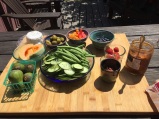
Farmers’ My Plate Plate

My Plate Haiku

Strawberries are too delicate to be picked by machine. The perfectly ripe ones even bruise at too heavy a human touch. It hit her then that every strawberry she had ever eaten — every piece of fruit — had been picked by calloused human hands. Every piece of toast with jelly represented someone’s knees, someone’s aching back and hips, someone with a bandanna on her wrist to wipe away the sweat. Why had no one told her about this before? by Alison Luterman, “What They Came For” (from The Sun magazine)

I Speak for the Fat People

Although I’ve taken a little writing hiatus, the nutritional discourse continues unabated. The stories of our communal incarnate experience resonate with frustration, guilt, and misunderstandings. This is an older piece that I published previously in three parts. I hope it offers some response with a bit of healing balm. Some of its points have been raised and debated among those in the scientific community rather recently. Here it is mended back together. It is longer than my other posts but I think it reads best together.

I speak for the fat people. Like Dr. Seuss’ Lorax who spoke for the trees, someone must speak for the fat people. Unlike the trees who needed a spokesperson because they had no tongues, you would think that the fat people would be able to speak for themselves. Of course, fat people have tongues. If they did not have that taste bud-laden sensory organ, they would not be fat. Given the current weight of the world, this group should not be particularly hard to hear. However, in the huge public dialogue about weight and obesity, the fat people are merely statistics. There are no real people behind the statistics, and this is where they have lost their voice. Therefore, they are stripped of any ability to speak with authority on the topic.

I am not a statistic. Though I have had some years where I toed the chubby line, for the most part, I have done my part in tipping the scales toward societal svelteness. Besides my obligation as a citizen to keep the fat numbers down, as a nutritionist, it is my professional responsibility to pull people out of the fat pool and to keep them from falling in at all.

It is no big secret that the medical and nutritional community has not done a great job in their role as bariatric (the science of obesity) lifeguards. I myself do not have a great track record of turning people into mere shadows of their former selves. But, I have spent my career as a nutritionist hearing the stories and struggles of the fat people and observing the ways of food and eating that define this turn of the century. I am a spy in the house of girth.

The fat community does, in fact, have some spokespeople. There are magazines, journals, books, and websites–written mainly by women–who have spent one day too many in the deprived and depraved world of dieting. There are individuals who are doing incredible and poetic work about re-informing and re-educating on misconceptions about weight and health and respectful self-care. Still, many of these efforts are marginalized or featured in venues that only topic-obsessed people like myself pay attention to. Even Roseanne Barr once said, “It’s OK to be fat. So you’re fat. Just be fat and shut up about it.” For every undertaking that sings the praises of body love and acceptance, there are thousands of counter-voices screaming the imperative to whip this fat away.

Therefore, I believe I must use my credentials to speak out. I hope that the fat people can accept me, a thin person–who is often cold and prone to osteoporosis–and an ex-stress and emotional eater to be their voice. Born of thin mother and adult weight-accumulating father, I will try to do the cause justice.

Let’s begin by putting the issue of overweight into perspective. If we look at weight historically, I’m pretty certain that from the beginning of time, there have been fat people. We have all seen the pictures of early Cro-Magnon and Neanderthal men. Even those quintessential hunters and gatherers seemed capable of packing on a few pounds. After them came Confucius, King Henry the Eighth, Mamie in Gone with the Wind, Jackie Gleason, Pavarotti, Aunt Bea, and my grandmother. Chances are your grandmother was fat, too.

English: Luciano Pavarotti in Vélodrome Stadiu...

Luciano Pavarotti in Vélodrome Stadium, Marseille, France, le 15 juin 2002. (Photo credit: Wikipedia)

Since our early beginnings, human beings have come in varying shapes and sizes and large-size was not necessarily an aberration of medium-size. It is good that there are large-sized people. A world without them would mean a world with fewer great opera singers, chefs, women of ample bosom, football players, construction workers, and cuddly grandmothers.

It is not very difficult to become fat. You do not have to go out of your way to try. If Chinese youth can become fat, then anyone can. Only about 4% of the population has naturally model-thin bodies. That means that many models are starving themselves in order to be models. It also means that the rest of the Size 2 wannabes are expending a lot of physical and mental energy in the pursuit of thinness. Carolyn Knapp, in her book, Appetites, tells the story of a woman who describes the angst she feels putting on her stockings every morning. She wonders what she could have accomplished in her life with the time she has spent worrying about her weight.

There are the naturally skinny–and then there are the neurotically and pathologically skinny; and the metabolically hyper-activated skinny–those who sustain themselves on a steady diet of excessive caffeine and nicotine—or maybe extensive exercise. For the rest of us, the possibility of becoming overweight is just around the corner. We are physiologically and neurologically wired to pack it on. The ability to store fat came in pretty handy a time or two during our multi-millenial evolution. We have about 107 compensatory mechanisms that prevent us from starving to death. A bunch of those certainly kicked in to save our forefathers when they were unable to kill a bison. In people who attempt to starve themselves toward thinness, the body fights back–it regains the lost weight plus more, and then absolutely refuses to budge.

In addition, we are wired for comfort. Research shows that the food habits that sustain us are those that we developed while still wrapped in the loving veil of early childhood. Whether that happened to be gazelle, chicken soup, mashed potatoes or cheeseburgers, you will probably turn to those foods as an adult. Believe me, the corporate world certainly knows this. The Happy Meal ensures that today’s toddlers will become tomorrow’s adult fast-food consumers. The concept of comfort foods is one I hear a lot about during my spy missions. Women have confessed to me that they would choose a good loaf of bread over sex. The quality of the sex is not indicated in this context.

Then, of course, there are our natural temperaments as well as good old genetics. I listened once to the tender story of a woman who was adopted as a child. She never met her birth mother, but she possessed a very old, poor quality home movie that she believes is of her mother. Though she struggles to see the face better in search of subtle resemblances, it is the woman’s thighs that confirm her finding. She states, “Look at the thighs. Those are my thighs.”

On top of all this, let’s sprinkle on a life change, or just daily, chronic stress. Take your pick. Break-ups, abuse, graduate school, poverty, working long hours, caregiving, illness, depression or menopause are possible choices. And, God forbid you should simply possess a deep sensuous life-affirming passion for cooking and eating. Throw any of these on your plate and if your primal wiring wasn’t enough to enlist you, then current circumstances will. Even the once-thins can become the now-fat–especially in this current milieu where food is literally out to get ya. Not even the high school cheerleader is immune. Any emotional state that is heightened, increases for many the desire to seek food for reward. When one is working their way up the weight chart, it is because they are possessed by physical or emotional hunger, or physiological changes that they can neither understand nor control.

I can hear you begin to protest that it has to be more than just this. Aren’t we soooo bad? We ate the piece of chocolate cake (and we loved it). How could we? How dare we? That translates into four hours of floor mopping according to the calorie expenditure charts.  That must be fair penance for the crime. As a spy, my days are peppered with the monologues and dialogues of self-hate and recrimination that people utter like a mantra before and/or after each foray into eating. The guilt is palpable. We must have all been ____________ in a previous lifetime. (insert your own response.)

I was heartened once to hear a man describe his joy-spreading tactic. Essentially, he spends half of his time acquiring special little chocolates and the other half gifting them to people as morsels of universal love. I am either becoming a very cynical nutritionist or a very empathic human being. The collective psyche is longing for the morsel of joy even at the expense of the perfect waistline. The truth is that we have appetites and hungers because we are merely human, not because we are bad people. However, when all of these human tendencies accumulate into extra pounds, getting rid of that weight is very difficult.

A few years ago, I attended a conference on an obesity-related topic. As a group, we were to brainstorm how to counsel a postpartum woman with a Body Mass Index (BMI) of 30. The exercise had me squirming from the get-go. As the attendees were getting rather dead-ended in their attempts to master this case-study, the presenter, a physician and researcher at a major university said, “Let me offer this idea. I am often in my office at my desk and on the phone. I could just sit there and talk on the phone, but instead, I stand and pace as I am talking.” My agitated brain said, “Yes, let’s file that idea to use.” 3889254107_2383b9acea_cNot with my clients but in this article. I could picture Homer Simpson stuffing one more donut in his face while muttering “Ah, vigorous pacing. That’s the ticket.” I wondered when was the last time this guy got out of his office and realized the experiences of real people, real fat people.

Hardly are all defined cases of overweight problematic. Some in the field maintain that the goal is for all individuals to attain an “appropriate” BMI.  Short of that, they will be at risk for various health problems. My intuition and much science beg to differ. Many people are fine–if not perhaps better off–with a little extra weight on them. Pavarotti once said, “The reason fat people are happy is that their nerves are well protected.” My own observations reveal that the neurotically thin tend to be more frayed than their rounder counterparts. Besides, BMI is just a tool. At times it is a cruel tool—or at least a not very nice one. It makes no allowance for age, fitness, or even natural body type. Whether we like it or not, our bodies will shift and change as we age. Nature, with no ill intent, seems to want to round us out a bit as we mature. That is how we get to be grandpas and grandmas. Appropriate BMI does not necessarily confer lack of health risks–only ones of a particular nature. Last long enough, and we tend to eventually shrink back down.

Do not get me wrong. I am not undermining the seriousness of the obesity crisis that we are facing. I understand its consequences perhaps more than most. I see the implications of excessive weight that people struggle with on a daily basis and I strive to alleviate the challenges through educational, lifestyle, and nutritional support. I bemoan the forces that are propelling our society into ever-expanding levels of girth, especially those that are now affecting our children.

Still, I feel a need to call TIME OUT! To stop the madness that makes those who are the statistics speechless. To stop pointing the finger merely at the individual without an understanding of the deeper forces that are at play. There are multi-factorial causes that lie at the root of the weight gain epidemic. Many are so abstract or insidious that it is very difficult for the experts—let alone an ordinary individual–to understand what is going on. Though overeating, bad eating, food addiction, and poor lifestyle choices are definitely a part of it, the magnitude of the communal weight gain doesn’t seem to make sense based on calories alone. In the causative mix lie politics, hormones, pharmaceuticals, poverty, nutrition misinformation, abuse, dieting, food sensitivities, sensory science, profits, changes in the components of our food, environmental toxins, personal and spiritual alienation and lifestyles spinning out of control. There are strange bedfellows in each and every fat cell.

Now, back to our friend the Lorax. For the record, the Lorax, our venerable spokesperson, was rather portly himself. Based on his picture, I’d put him at a BMI of about 29. I’d describe him as neither apple nor pear-shaped but rather pickle-shaped. According to Dr. Seuss, “He was shortish. And oldish. And brownish and mossy.” The final message of the Lorax in his plea to save the environment was UNLESS. “Unless someone like you cares a whole awful lot, nothing is going to get better. It’s not.”

I too am rather shortish. Oldish, brownish, and mossy may someday also describe me. For now, my intention is not to imply an ultimatum. It is, however, to bring a greater sense of compassion and understanding–and a broader lens to the discussion and to the approaches to care.

I do not intend to deny the role of personal responsibility—be that for everyone. It is a big piece of the puzzle. Though it is critical that we address the current weight epidemic–we should not do it with an assault on the fat people. We must not slap everyone silly in an attempt to squeeze them into a size six dress or Speedo swimsuit. Besides, who would be left to sing the blues? And though I’d have been fine to find my grandmother at the gym, it could not replace the experience of cuddling up on her big, warm lap with wonderful smells wafting in from the kitchen.

Thank you for listening, sharing, following, and supporting my writing. Please subscribe in the sidebar to receive notice of new posts. Comments and greetings always welcome.

In health, Elyn

Related Resources (2010): Women Afraid to Eat (Frances M. Berg); Intuitive Eating (Evelyn Tribole and Elyse Resch); Health at Every Size (Dr. Bacon); Dances with Fat (Ragen Chastain)

The end of overeating. Taking Control of the Insatiable American Appetite (David A. Kessler, MD); Born Round:  A Story of Family, Food and a Ferocious Appetite (Frank Bruni)

erin's plate

Erin’s My Plate

My Plate Haiku

Adirondack lake

Soothes us  from the heat–weightless

We float like feathers.

By Elyn

under the waning gibbous moon

Tonight, as sleep calls to me, while the waning gibbous moon that illuminates the night sky is 88% full, I take an excerpt from a previous post, Muse of the Girl, in recognition of Eating Disorder Awareness Week. A gibbous moon is one of the phases of the Moon when the size of the illuminated portion is greater than half but not a full Moon.

Waning gibbous moon. Français : Lune gibbeuse ... Waning Gibbous Moon (Photo credit: Wikipedia)

I want to discuss the war that doesn’t get covered, that wages within many girls and women–of all ages and sizes–who hate their bodies and therefore deny a large part of their selves. Or, who, by not loving themselves, direct a lot of abuse toward their physical temples in both thought and action. Though they often wish they were invisible, we see them walking around in all sizes– including those we deem acceptable and those we envy. Persons, whose self-worth has long been determined by the numbers on a scale or by an image in a mirror.

The war, where the collective pain and problems are as profound as those we ascribe to obesity–and the physical consequences are often more severe or deadly. Here, confusion and dictates about food and eating scar the bountiful landscape. Here, much potential is lost and much love is denied. I think we all have wandered into and many have lingered in this place where reality is distorted and self-flagellation and deprivation seem deserved.

This is the ignored epidemic. Not many resources are designated, but I have apparently been assigned to cover this front. My field notebooks are filled with stories and quotes that are usually too intimate for me to share. But, they reflect the reality that too many females (and increasingly, males) believe that without perfection they cannot be whole and should not take up much space on this generous planet. It is heartbreaking to witness this.

Having been touched by the lives of so many amazing, intelligent, gorgeous, creative, warm, gentle, caring and funny individuals who have been broken in this battle of self and body, these are some things I wish would receive front-page headlines:

Bodies change, contours soften, bellies round, babies fill, bloat happens, hunger informs, weight is not absolute, judgmental words injure, beauty shines, food nourishes, wisdom evolves, body protects, hormones ebb and flow, pleasure is permissible, fat is often just a feeling in one’s head and restriction revolts.

If you are living this, put down the staunch resistance, begin the surrender and trust your inner feminine voice. Please know you are all so beautiful and you possess that which really matters. Take a moment to put your hand on your heart and belly and send love to yourself. Take a deep slow breath and be thankful to your body. Send a healing thought out to other women, because I assure you, you are so not alone. Hold the daughters and ask to be held. Reclaim your place. Change the internal tapes. Know there are many paths to healing available. The world needs everything you have to offer.

How fully illuminated is your feminine moon? What else might you wish for others to know and trust? Any sharings will be welcomed and respected.

Thank you for listening, sharing, following and supporting my writing. Please subscribe in the sidebar to receive notice of new posts. Comments and greetings always welcome.

In love and health, Elyn

Related Posts: Stopping Traffic, Muse of the Girl, Dolls with Faith, A Meteorological Change of Plans, Size Me Down, Nourish Thyself Well Day

my plate My Plate Plate


My Plate Haiku

Deep scarlet red beets

Reveal your sweetness to me

Slip out of your skins

by Elyn

who do i love?

Happy Valentine’s Day. My day started out with a visit from Ms. Henry. Now, if she is not the true expression of this global love fest, I don’t know who is. One might almost expect for her to leave a trail of rose petals behind as she spreads love wherever she goes. Ms. Henry always has some story that both surprises and delights.

Today, she told me that she had informed everyone, that in no way were they to get her any chocolate this holiday. If they wished to get her anything, she would gladly accept red foods. And, wouldn’t you know it, her six-year-old godson and his mom gifted her with apples and pomegranates. And, the little boy told her that they had shopped for the fruits at the food coop. It was only 9:15 in the morning and I felt my heart open wide.

photo (1)

The rest of my workday was filled with more touching moments as I had some other clients tell of their own personal blossomings and awakenings on this lifetime eating adventure. I was feeling light in spirit as I raced out of the office to tend to some mothering duties–and the late afternoon sun granted me enough warmth that I shed my dark winter coat and threw it in the back seat of the car.

Come evening, I was grateful to join a circle of friends who were gathering for a cozy showing of the movie Moonstruck, thanks to the abundant and incredible hospitality of Heidi, whose love flows out through her wonderful culinary gifts and the pouring of the perfect glass of wine. Tonight’s Italian theme-based dinner was baked ziti, (meatballs on the side) and rapini. Rapini is a green and Brassica rapa vegetable, rich in Vitamins A, C, and E, folate, potassium and detoxifying indole-3-carbinol compounds dear to my heart–of course. Oh, and beautiful, homemade individual heart-shaped flavanoid-blessed chocolate cakes. How sweet is that?

So, though my main squeeze was out of town, and all cuddling was reserved for Chico the cat, it was still a special Valentine’s Day. In its honor, I want to take a moment to share a list of some of the (not previously referenced) amazing people I love whose work informs and supports my own and who inspire me by the generous sharing of their wisdom, wit, intelligence, passion and pure love for keeping us all a little healthier and happier.

Nutritional Wisdom: Andrea Nakayama: AnFunctional Nutrition Alliance; JJ Virgin: Exercise Physiologist and Holistic Nutritionist; Paula Owens: Holistic Nutritionist and Functional Health Practitioner; Lisa Nelson: Heart Health Made Easy

Gentle Approaches to Dietary Self-Management and Body Acceptance: Angela Minelli: Stop Emotional Eating and Compulsive Overeating; Deah Schwartz:  Resources for Every Body Every Size

Environmental Toxins and our Personal Health: Lara Adler: Environmental Toxin Education

Parental Amusement: Honest Toddler: (I just love when Zena reads me these tweets!) (Updated 2020: Twitter feed was taken over by their mom.)

Please take a moment to check these out. I hope they will lead you somewhere helpful. Share with me anyone you love whose message is also along these lines.

With full heart, I call it a day–loving you. Like this post or forward me some love by way of comment, subscription or sharing. Or, a My Plate Haiku (or other expressions) or My Plate Plate.

In health, Elyn

Honest Toddler My Plate

My Plate Haiku

Do not tell someone that you love them

And then six hours later

Make them quinoa.

by Honest Toddler

so-duh

I have a confession to make. I recently had a soda. Yes, I did. That means, of my own volition, I purchased the vibrantly colored 12-oz. can, pulled up on that little flip top, and brought that fizzy, bubbly nectar–rife with all its high fructose corn syrup–up to my own lips…and swallowed. Then I swallowed again. And, I did all of this under the bright lights of the public eye. I tell ya. That little burst of Sunkist Orange Soda was quite satisfying.

It was a cold winter’s night. Pete and I had gone to our little local community-run movie theater where nice volunteers staff a humble concession stand. I don’t really know how it happened. I was thirsty. Ordinarily, I would have just purchased water–which was what I was assuming I was about to do again as I approached the counter. However, uncharacteristically, my thirst informed me right then and there that it would not be humored this time by just plain water and it insisted that I consider the offerings stocked in the small glass-front refrigerator.

shutterstock_110861171

Alice and the Cheshire Cat

I was stunned. I did not know what to do. Healthy-oriented me does really enjoy a few lines of lightly sweetened specialized iced teas but there were none of those to be found in that bastion of freon-cooled fare. Instead, there were just waters, sodas and those pouches of Capri Suns that you stick little straws into. I panicked. The cloyingly sweet fruit juice concoctions aroused a mild nausea, the sodas provoked my usual disgust and disdain and the concession people were beginning to look at me funny.

Suddenly, the sun logo on the little orange can seemed to wink at me and I found myself saying, “Yes, I’ll have an orange soda.” When I went back to sit in my chair, Pete turned to tell me that the seat was saved…for me. He really did not recognize me with that can in my hand. The last time he saw me with a can of soda was about 1981 when we were parched and poor living in Dallas, Texas.

Now, you might not think this was such a big deal without appreciating that I have about the lowest per capita soda consumption and am kind of like the Carrie Nation of the soda-drinking world. I tote around soda bottles emptied of their original content and refilled with their hidden sugar equivalency. Like I described in Private Health, I paste pictures of skulls and cross-bones on these bottles. I make my victims hold those bottles while I read them the insidious list of ingredients that their beloved brands contain. I make them weep as they promise to not ever imbibe again. When forced on rare occasions to empty the bottles of their original contents so I can use them for my own devices, I don plastic gloves and a face mask. That is how corrosive I consider these substances to be. And, if anyone had ever dared offer my own kids a soda in my presence, who knows what their fate may have been.

So, imagine my inner confusion as I leaned over and whispered to Pete during the movie, “This is pretty good.” Now, don’t get me wrong. It is not like I never had the stuff. I was raised on soda. The only thing that had stopped me from having a relationship with it long ago was an early adoption of a whole foods, crunchy granola lifestyle, an understanding of the depleting aspects of white sugar and resistance to large multi-national corporations. If I had not had such a strong philosophical position on such matters way back, I might have just gone along enjoying these nice little fizzies with the rest of the masses. Especially the innocent flavors like orange, black cherry, and ginger ale. Sometimes they do just hit the spot like nothing else can. If not bolstered by my iron-clad conviction that soda should be a banned substance, I could easily imagine getting another one of these little cans of sunshine the next time I go to the movies. And then, maybe when I go to a restaurant or if I am on a trip. I could then just keep a few in my own fridge.

Maybe I should have relaxed a little last week with my lovely 300 plus-pound 35-year-old client who was diagnosed with diabetes a year ago. His blood sugars are better but still not in good control. He is drinking way less Pepsi than he used to. Now, he only has one or two cans a day, sometimes none, while on the job during the day as a building maintenance supervisor. Should the fact that he is the father of five– the youngest of which was with him during our consult and who was the cutest thing ever–matter? Is it just a coincidence that he sees a connection between his blood sugar levels and his soda consumption?

Maybe I shouldn’t have tried so hard last week to figure out what was up with my 34-year-old pregnant client. Prior to this pregnancy, her chart indicated that there was evidence of high blood sugar–hyperglycemia–without a full diagnosis of diabetes. She came in bemoaning her foul moods, agitation and lack of both patience and energy. Came to find out she has been consuming 2 to 3 liters of Cherry Coke daily for a long while. Imagine her surprise when I pulled out a sugar-filled bottle of her favorite blend from under my desk.

Once again, there is a new hoopla in the divisive soda world as Coca-Cola is releasing these commercial spots touting their supposed corporate responsibility in the fight against obesity while at the same time ignoring the true effects of their confectionery concoctions. You can watch one of them here. My peeps, Mark Bittman, Marion Nestle, CSPI, and others are thankfully responding to this deceptive campaign accordingly. This is good because I am busy in the trenches.

These little stories I cite above are just examples of situations I really encounter over and over, even in the course of a day. Corroded teeth, eroded stomachs, poor mood regulation, extreme belly fat and of course, diabetes lie in the wake of soda consumption and its adherent addiction. It is this that fuels my manic reaction to the stuff–and will continue to do so.

Being diagnosed with diabetes is like falling down Alice’s rabbit hole. Every day I meet the people who have unfortunately fallen into the hole chasing some elusive White Rabbit. Reality changes mighty quickly and quite extremely. Simply awakening from a strange dream will not make it go away. Eating cake will certainly not help and the Red Queen is apt to yell, “Off with her toes!” And, Coca Cola and Pepsico will have nothing to offer except a Cheshire Cat smug grin.

So, though I enjoyed that little refreshment, it will be a long time until my next one.

Thank you for listening, sharing, following and supporting my writing. Please subscribe in the sidebar to receive notice of new posts. Comments and greetings always welcome.

In health, Elyn

IMG_0595

A Bank of Beverage Machine’s My Plate

My Plate Haiku

Did you really think

That you could hide fish in rice?

Oh, the green paste burns!

by A Cat

(from I Could Pee on This and other poems by cats collected by Francesco Marciuliano)

dear eaters

Recently, having taken the commuter bus to work, I walked past a low-income housing complex that is on the way to the Health Center from the bus stop. As I approached the complex, I saw two women standing on the sidewalk in front of the buildings. I would guess they were both in their sixties. One of them was blind and holding her white cane. The other stood very close to her, ready to guide her if necessary.

Bissau, Guinea-Bissau

I was quickly scurrying along, gauging my pace on my need to arrive at my office on time. As I only take the bus on occasion, I was aware that my mind was taking in very different impulses along this route than when I drive. As the two women came into view, I processed thoughts about the nature of their relationship, kindness, the burden of poverty coupled with blindness, and a reminder to myself to work on my gratitude list. Just as I was passing them, the blind woman said, “And I heard that sugar substitutes aren’t that good for you and that they make you crave more sugar.” The sighted woman replied, “Yes, I heard that too.” (Resources: Sweet Deception, Sweet Misery)

I often say that it does not take long in the course of my day for some nutrition-based message to filter into my consciousness. Yet, this was an unexpected source. By the time the women exchanged the two sentences my steps had already taken me just past them. For a split second, I thought to stop to engage them in a conversation, to inform them of my nutritional proficiency and expound on the topic of artificial sweeteners, affirming what they had heard. Instead, I felt my lips turn into a mild smile that was intended to be for them, but that neither would ever see.

I think I absorbed the experience as a quiet lesson that one never knows how or where new information flows. In this regard, it related to my own work of attempting to expand nutritional consciousness and yet not always knowing how or where my own or others’ efforts are reaching. I internally thanked the women and carried their story into my day–and referenced them as my teachers with some of my clients.

This story also has meaning for me as I come full cycle of having written this blog for two years–and as I contemplate beginning a third. Looking back, I see that I have written seventy-five posts on various nutrition-related issues. I see them as vignettes that describe the milieu that defines eating in this current and complicated time; the challenges that dictate and mutate our food culture and the experience of the real and humble people who eat in response and reaction to this environment. I hope others see them in this way too.

I often wonder if my stories have resonance and purpose and whether they are instructive. Or, if they need be. Many people out there are doing incredible work and informing in clear and beautiful ways on how to address and improve human nourishment. It is not infrequently that I have doubts about the service of my writings and if they justify the time they demand. Are my words flowing into any cracks and crevices that may be helping others that I may never know about? Or, as my wise friend Lisa Dungate, who writes Lion’s Whiskers suggests, if my writing serves to fulfill some need of personal expression, that is adequate as well. Sometimes I don’t know.

But here are a few things I do know:

Every day a small but real number of people from all over the globe are reading my blog. Thanks to the amazing stat collecting abilities of WordPress, I know that people from eighty-four countries have seen The Nutritionist’s Dilemma. Just yesterday I had readers from Poland, Bangladesh, India, Pakistan, and Saudi Arabia. People in Azerbaijan, Mauritius, Guinea-Bissau, Estonia, and Oman have crossed paths with my ideas as well.

My blog is listed in Healthy Living Blogs and I get some nice readers from that connection. This site offers a very vital community for people writing on many diverse topics devoted to health. I encourage anyone interested in writing and reading about these issues to visit and support the members of this site. I give thanks to Lindsey Janeiro and the staff at HLB for creating this exciting space and offering all the amazing opportunities that they do.

That my blog was also chosen by Marc David and the Institute for the Psychology of Eating as one of the Top 50 Emotional Eating Blogs of 2012. Check out #47. This was a big surprise and very exciting. It is particularly meaningful as Marc David’s work has been phenomenally inspirational to me on my own path. I have shared my feelings about the importance of Marc’s contributions in Three Good Mark(c)s.

And finally, that I have a circle of subscribers who do follow me and who offer words of kind support along with relevant insights of their own; as well as a few hundred clients a year who I am privileged to work with and who always inspire me with their courage and capacity for change.

So, though the anniversary date of my blog just happened to occur during one of the most intense of times–in the post-Superstorm Sandy and pre-election week; and, while my own dining room table was still littered with hurricane preparedness supplies and Halloween trappings; and my head swam with thoughts about health care reform and the millions affected by the storm for whom eating had suddenly taken on a new meaning regarding survival, I committed to continuing the blog that I had birthed into being one fall day, two years ago. For the occasion, I have dressed it up with a new decorative theme that I think is very nice and makes for a cleaner read. If you are a subscriber and usually receive my posts via email, do go to my home page to see its new threads. I hope you like it.

My commitment includes my decision to allow myself greater voice and visibility. In my tiny corner of the world, in the confined spaces of my offices, I bear witness to some big and powerful stories. If I can participate in the larger conversation and in turn can give expression to someone’s experience that may help others–then that can be a good thing. Who knows? Maybe a person standing on a sidewalk in Baku, Port Louis, Bissau, Tallinn or Muscan, or even in my own community will help carry the information or inspiration forward.

As always, comments, clicks on the like button, subscribing, sharing, stories, feedback, my plate haikus–and any suggestions for improving the quality, content or technological capacities of my work are greatly appreciated. No, let me amend that–deeply craved. Let me know you dropped by for a virtual cup of tea with me. Thanks.

In health, Elyn

image

Julie’s My Plate

My Plate Haiku

Eat food

Mostly plants

Not too much.

by Michael (Pollan)

just today

Just today, I got an email informing me that the way to eat carbohydrates more efficiently and prevent the insulin resistance associated with diabetes is to take Cinnamomum Burmannii, Berberine, Pterocarpus Marsupium, 4-hydroxy isoleucine, #5 – R-Alpha Lipoic Acid (R-ALA). These substances are available in combination in pill form. Well, that sounds nice and easy, I thought. Now just how could I obtain some of these little Burmanniis and Marsupiums for all of the inefficiently carbohydrate-eating, diabetes-prone poor folk. I wished nutritional supplements were available to my clients. I’d settle for some R-Alpha Lipoic Acid.  IMG_3170

Just today, I did not attend the bariatric conference that I went to last year and described in How Can You Say No to a Brownie.  Therefore, I missed the session on Diet Strategies: Which work and which don’t. I guess I will have to wait, along with the rest of the world, on that breaking news.

Just today, I culled through the medical records of a number of clients at the Health Center, collecting data for a project I am working on. Medical records are literature. They contain the stories of lives weathered by poverty documented by scads of lab results, vitals, hospital discharge papers and consult notes. Lives marked by the chronic health problems of diabetes, hypertension, pain, extreme weight, and hospitalizations. Conditions tended to by a boatload of pharmaceuticals, prescribed in an oft crapshoot manner.

Just today, I missed the webinar I had registered for with Renegade Chef Ann Cooper. Without an ounce of rocket science, she is feeding kids healthy foods in schools. I was disappointed. This would have brought some hope and inspiration.

Just today, I received an e-health report from the American Academy for the Advancement of Science describing that 50% of people with hypertension do not have it controlled. I thought about all the records I had just pored over. Most of those with uncontrolled hypertension are on one to three hypertensive medications.

Just today, I wished again–this time for stress reduction programs for my clients. I left my office near tears. I dreamed about a new line of work.

Just today, on my way home, I heard a news story that the US Army had declared a service-wide stand down to bring attention to the problem of suicide in the military. Army bases around the world were shut down for mandatory suicide prevention training.

Just today, I took a walk. I thought about processed food. I use tweezers to extricate it from my clients’ lives though I could use something a bit stronger–like a Jaws of Life. I wondered about a stand-down calling for a moratorium on the low-quality foodstuffs that glut our food supply. I decided that we need a National Day of Nurturing and Nourishment.

Just today, my amazing, earth-moving niece Shanti shared some stories about the beautiful and remarkable greening, gardening, and food work she does with the Clinton Housing Development Company and Cultivate HKNY in the midst of New York City.

Just today, going to pick up my daughter from crew practice, I drove along a quiet road with the sun setting spectacularly on one side while the harvest moon rose beautifully over the other. Arriving home, I read the team’s paperwork asking me to sell David’s Cheesecakes, Grandma’s Pies and cookie dough for a fundraiser. My heart sank. My inability to broker in sugar will cost me some bucks as I will have to choose the buyout.

Just today, I wrote this blog. As I was calling it a day, an old friend posted information about an organization doing wonderful work. I was glad to learn about One.org which is working with women to address childhood malnutrition and putting nutrition on the global agenda.

Just tonight, I shut out the light, deciding I would do a new little campaign at the Health Center. I will call it One Day One Way encouraging people to take back their own health. By the light of the moon, I wished you all good night.

Thank you for listening, sharing, following and supporting my writing. Please subscribe in the sidebar to receive notice of new posts. Comments and greetings always welcome.

In health, Elyn

my plate

My Plate Haiku

If only we could
Change the world on that one day
By feeding our hearts .

by Julie

a bushel and a peck of ways to address childhood obesity

It seems that we spend a lot of time fixing things that should not have ever become so broken. Not only time is wasted but a lot of resources– that seem to be rather scarce these days.

As this relates to the care and feeding on the physical, emotional and spiritual levels of human beings, we certainly have been drawn off course. Some significant digressions from what should have been a rather intuitive matter or a natural symbiotic relationship with the natural and nurturing environment have occurred.

Healthy Children

Healthy Children (Photo credit: Korean Resource Center 민족학교) drawing by 13 yo Suzy An, Irvine, California

Though early humans expended much of their energy trying to procure food for survival, they still seemed to have had time for other endeavors as well–like discovering fire, inventing the wheel and designing clothes. Nomadic cultures certainly had to find to go or take out food solutions. One would think that at this stage of the game, we too should be able to both nourish and progress.

Listening to the persistent conversation about the problem of obesity one might think evolution-wise we were still inventing the wheel. The top experts in the field are engaged in the mandate to ferret out the problem and find solutions, huge research projects are undertaken, big monies are allocated, programs are created, public health campaigns are rampant. The hunt is on and it has been going on for decades. This time its pursuit is not roaming bison or wild turkey but the reclaiming of our natural homo sapien form and functioning. So far, we seem to have only snagged the primordial beast of ‘eat less and exercise more’.

I wonder if this all has to be so difficult. Where and how did we stray so far off course? How did we allow the school food situation to get so bad? Other nations with way fewer resources have maintained a large degree of nutritional integrity, even if in the form of some hearty gruel. Jamie Oliver, a simple lad from England, has managed to bring nourishing food into kids’ cafeterias.

Today, sadly aware that September is Childhood Obesity Awareness Month, I venture into the childhood obesity debacle to suggest that maybe we can shift the focus, listen to our inherent wisdom, reclaim our cultural connectedness and tweak the approach, to save some of the expended resources that we are currently draining. I know these are complicated matters but perhaps there really are more holistic solutions.

Here are some possibilities:

ð  Legislate paid maternity leave of a valuable length. The United States is one of only three countries in the world that do not offer paid maternity leave. The other two are Swaziland and Papua New Guinea. Most countries provide paid leave of between 14-22 weeks. Norway allows 44 weeks, while Canada allows 50. Mothers here who do get to stay home for a meager six weeks after the birth of their babies generally are those whose jobs provide disability insurance. Wow. What a warped difference in consciousness. maternity leave comparison

ð Implement more generous, equitable and flexible time-off policies. Without time for parents to establish healthy routines, many important aspects related to family and child health are neglected. Additionally, one cannot even begin to discuss weight matters without acknowledging the role of stress on our eating and metabolism.

ð Promote and normalize breastfeeding. It is important to understand the nutritional, metabolic, digestive, and immune implications of replacing human breastmilk with artificially manufactured milk substitutes. Updated 2020: Infant Feeding History Revised

ð  Revisit infant feeding recommendations. Our early feeding practices rely on the introduction of cow milk and soy-based proteins, processed grain cereals and juices as babies’ first foods. Infant feeding recommendations promulgated by physicians professionally under-educated on nutritional matters and baby food manufacturers seem almost sacrosanct in our society. Decades-long infant feeding guidelines are based on often misguided attempts to compensate for and mitigate the negative effects of depriving infants of species-specific breastmilk. The digestive imprinting and physiological adaptations to our first foods provide important clues as to children’s feeding inclinations. Ignoring this stage is short-sighted.

Update 2020: Somehow I missed the memo. While I had known the American Academy of Pediatrics had through the years strengthened their stance on promoting breastmilk as babies’ first food, I did not realize that in 2017 they updated their 2008 guidelines on starting solid foods. Notable changes are recommendations for extended breastfeeding, no juice during the first year, and an increased variety of introductory solid foods instead of just iron-fortified cereals. First foods to give your baby.

ð  Appropriately nurture children’s developing food palates–like other food-conscious cultures do). This means we should not be catering to children’s unformed palates. Doing so dwarfs the development required to appreciate more sophisticated and healthier foods, tastes and textures. Overexposing children early to an onslaught of sweet and chemically-produced tastes inhibits acceptance of the wide variety of foods required for a balanced diet and predisposes them to serious health problems. How the french feed their children;

ð   Stop advertising and marketing food to children. Over thirty-five years ago, Michael Jacobson of the Center for Science in the Public Interest and Action for Children’s Television petitioned the Federal Trade Commission (FTC) to restrict advertising aimed at children–in large part due to its effects on children’s dietary preferences and intake. The FTC agreed that such practices were inappropriate. However, the food, toy, and advertising industries pushed back and unfortunately pressured Congress to halt taking action. Today, 17 to 20 billion dollars are spent annually on the marketing of non-nutrient foods to children.

ð Remove unsavory ingredients from the food system. While our FDA continues to hold to its stance that artificial food dyes and preservatives in our food are safe, other countries have begun to take progressive action to remove these substances from their products–even those made by American manufacturers–for the sake of their young citizens.

ð  Redesign supermarket and drug store layouts so that they do not cater to 4- year-olds’ sensibilities. Next time you shop, pay attention to how many cartoon character endorsed products are populating the food aisles, especially at the eye-catching “end caps” and checkout counters.

ð  Direct adequate funding to school meal programs. School lunch in Japan.

ð  Respect recess. Put it back in the schools if it has been taken away. Provide it daily and preferably before lunch. Children innately know how to move. We just have to ensure that they have the appropriate time and space to do so.

ð  Integrate relaxation/yoga/resilience training and cooking/gardening/movement curriculum at all grade levels.  

ð  Protect farmers and subsidize fruits and vegetables.

Well, using agricultural measurement, I think that is enough for now. If we truly and intelligently wish to address this matter–and to heal what should have never become so broken–we have to restore the capacity of those best equipped to nourish and protect our children–the parents, farmers, cooks, teachers and schools. And yes, it may require the funding, creation, and implementation of policies on a larger-scale which will facilitate that as a nation we are prepared to do so.

May we love our children a bushel and a peck.

Thank you for listening, sharing, following and supporting my writing. Please subscribe in the sidebar to receive notice of new posts. Comments and greetings always welcome.

In health, with a hug around the neck, Elyn

Related Posts: Childhood Awareness Month Obesity; The Humanist Imperative to Nourish and Care for Our Children


My Plate Haiku

Smooth peanut butter

Spread on a peeled banana

Snack time perfection. by Gretchen

the dance of diabetes

It is a modern dance though it has its roots in classical forms. It was originally choreographed for just a handful of dancers but now it is staged for many. In recent years it has been performed all around the world. I have seen it many times.

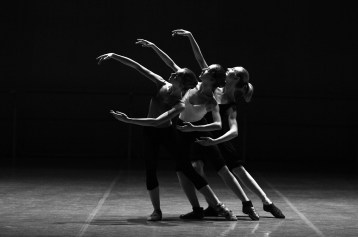
The curtain rises and the stage is empty. Slowly, alone and in pairs, the dancers enter–men and women. They are dressed simply in tights and leotards, all in tones of soft browns and grays, with one wrist wrapped in a band of red fabric. The dancers inhabit their space with sparse yet defined movements, engaged with each other, but each portraying a distinct set of steps.

Suddenly, one of the dancers contracts his center and extends one arm forward, palm facing upward. While he curiously studies the fingers of the upturned hand, his other arm reaches behind and then quickly arcs overhead coming full circle its palm slapping down against the other. As palms meet, the dancer deepens the contraction, a pained look grabs his face. Grazing his fingers along the wristband it unfurls in a flutter of scarlet fabric. He straightens and assumes his previous movements–the colored cloth now flowing behind his every step. ballerinas-g39791c62a_1920

This contraction of the body, where the torso curves forward over the controlled pelvic area is a fundamental movement in modern dance. Martha Graham–the mother of modern dance– developed the gesture from observing the physical manifestation of grief in the body.

Soon, another dancer stops. This time a woman. She too contracts her center, contemplates the fingers on her upturned palm and follows also with the circling arm, the jolting slap and the unfurling of the scarlet rivulet of cloth. And, so it goes. In syncopated rhythms, new dancers initiate the pattern while those already afflicted repeat it over and over. Their eyes now remain fixed on their upturned hands that lead them forward.

As the tempo of the music intensifies so does the frenzy of the dancers now marked in red–about 10 percent of the performers. They respond to the dissonant notes that punctuate the melody while the others maintain a more composed presence. The noise of the slapping of the hands amplifies. Sporadically, they also clasp fist in hand drawing their arms in toward their torso or legs. Again the contraction of their bodies and the grimaced faces. Continually, they return to their earlier movements but always with one palm upturned and leading their way.

As the dancers’ paths intermingle, the rivers of red become intertwined among all of them. There is a flurry of color amid the neutral gray and brown hues. Some of the grieved are gently lifted up and held in the air or are tenderly embraced while others dance quietly alone extending their arms upwards calmly or angrily beseeching the heavens. A few tuck the wounded hand behind their backs, tethering its gestures and move on without it–though the red trail remains.

Eventually, the music regains a slower pace. The dancers all resume the steps of the first part of the piece regaining semblance of movements of everyday life and common interactions. Slowly they each quietly walk off stage. The lights dim.

This is the representation of the experience of diabetes. Its steps are hard to master and its care is tempting to ignore. Unsuspecting individuals in unprecedented numbers, an abrupt diagnosis and suddenly a life marked by the demands of modern blood-letting. Rather than preferring to allow one’s life fluid to course through the body unseen and uninterrupted, diabetes requires a more intimate relationship.

The hand must reluctantly but gracefully present itself. Fingers must be pricked, poked and squeezed multiple times a day begging the deliverance of the droplets of our inner essence. The sacrificial digit must be chosen and its offering must then be measured with precision to determine blood sugar levels. Numbers digitally displayed on a meter determine one’s destiny for the day as well as for the tomorrow. Medications are quickly and somewhat arbitrarily prescribed–some of which are delivered by measured injections to various parts of the body.

Food becomes more enemy than friend and each bite becomes suspect and open to investigation. Kidneys, eyes, and toes–and yes, hearts, are no longer private property but are open to the purview of medical technicians. And yet, the dance of life must go on. Interestingly, Martha Graham once stated that the mission of her work was to “chart the graph of the heart”. In essence, diabetes monitoring requires the same.

Not everyone appreciates modern dance. This is an unsettling piece. But, diabetes can be re-choreographed as its treatment is improved and, more importantly, as its causes are prevented.

Sharings on the experience of managing diabetes respectfully welcomed.

Thank you for listening, sharing, following and supporting my writing. Please subscribe in the sidebar to receive notice of new posts. Comments and greetings always welcome.

In health, Elyn

My Plate

My Plate Haiku

Food is medicine

Farmers are doctors, Cooks priests

Eat, pray, eat, pray, love.

By Gordon