The Google Drool

The Google Drool. This is the reaction we may have upon learning about the employee perks at companies like Google, Facebook, and other big startup or tech companies. We may find spit running down our chins when hearing about such things as barista-staffed coffee bars, top-level chef-prepared fare at various campus restaurants, snack bars arranged to foster healthy choices–not to mention arcade games, bowling, and ping-pong rooms, mid-day yoga and fitness classes, shower rooms with provided towels, lava lamp decor, and even the ability to bring one’s dog to work!                                                       Orange, Office, Fruit, Juicy, Food, Ripe

Tucked behind the big and small amenities that these large and hip companies are able to provide is a strong employer commitment to employee well- being. Clearly, these business-savvy entrepreneurs have recognized the value of recruiting and having happy and healthy workers–and while floating in the tech bubble–have taken time to figure out what promotes such benefit.

For those of us living outside the Google Universe, we may consider ourselves lucky just to have a coffee maker, a vending machine, and maybe a water dispenser; and are giddy when someone brings in a box of donuts to start the day. That’s OK we say. We’ll trudge into work daily loaded down with our necessary sustenance carried in various totes, or use our precious lunch breaks–which we are not paid for–to frantically run out for a sandwich or slice of pizza. We’ll rush to the gym before or after work, if at all, and stuff that soggy or soaked towel back in our bag. We’ll come to work sick because we don’t have sufficient–if any–health care benefits or sick days.

While it may be unrealistic to presume that every business, workplace or employer could even provide a modicum of the level of benefits and types of environments like the Google-type giants, it can still be an important exercise to step back and consider what changes could be implemented in one’s specific setting to enhance the well-being of those who work there–dedicating a big chunk of both their lifetime and energy on another’s behalf.

With the serious state of health care in our nation, and the associated high costs of health insurance premiums burdening both the business sector and individuals, governmental and private entities are trying to find solutions to the problems associated with an increasingly unhealthy populace. While we sit and wait for that to happen, what are some ways employment sites can, on their own, support the health and well-being of the hard-working masses with some small homeopathic doses of supportive care?

If you are responsible for or can affect workplace environments, here are a few little ideas that may just spark the imagination of possibility. They are intended to be relatively easy and hopefully cost permitting. However, each is certainly not applicable or realistic for all settings, in which case, consider them a starting point for what may be for yours.

The Food Culture: The bane of our society. While we seem to understand that what and how we eat really matters, we continuously create apologies for ignoring this, and the workplace is no exception. Foods offered in workplace settings are classically “happy foods”–those which compromise health but which feed the mentality of rewarding everyone for the drudgery at hand. The assumption is that we need these sugary and junk food enticements. But, what if we thought about workplace food as replenishment–and maybe even increased productivity–rather than reward?

  • Beyond the coffee machine, offer a station with a variety of healing teas, good quality water (perhaps an infused water dispenser), a bowl of seasonal fruit or a vegetable platter when possible.
  • Institute Healthy Vending and Healthy Meetings practices. These can send a powerful message to employees, clients and business partners alike.
  • Investigate being a drop-off site for a local Community Supported Agriculture (CSA) program, where local produce boxes are delivered to participants on a weekly basis.
  • Establish relationships with health food vendors and establishments. Hire them to cater any workplace events and see if they can offer an employee discount in return.
  • Model healthy eating behaviors to inspire others.

The Physical Environment: Take a walk around the physical space and look and listen. Well-being can be depleted by a flickering fluorescent bulb, a slamming door, or a moldy carpet. And, it can be enhanced by simple attention.

  • Check to ensure that where possible, the walls are nicely painted, there is nice artwork, and the flooring is comfortable and clean.
  • Soften the internal environment with good lighting, some plants, and relaxing sounds. Consider diffusing essential oils. Create some room to provide employees with a quiet area, and make sure you can accommodate nursing moms with a private lactation area–this is the law in many states.
  • Enhance any outdoor areas so employees can take a walk, do some stretching, take breaks or even do their work.
  • Install a bike rack, a ping-pong table, provide a few pieces of fitness equipment and some yoga mats, and display signage encouraging stair climbing and other health-promoting activities.
  • Make sure that No Smoking policies are strictly enforced and restricted areas are fiercely protected.

The Work Day: Here is where it can get fun to elevate the workday to something a little more special for everyone.

  • Create a “quiet hour” encouraging work in silence to mitigate background noise and foster creative thinking.
  • Create a “movement time” encouraging walking or stretching. Promote a “tag” system where a five-minute movement activity, such as a lap around the building is passed from one employee to the next. There can be “playtime” as well.
  • Review human resources policies. Can any “rules” be re-visited to ensure they promote caring for all rather than preventing abuse by a few? Can flexible leave time replace specified allocations? Are there ways to promote stress reduction simply by reducing punitive leaning policies or by making up your own nice ones?
  • Take advantage of the array of healing arts practitioners and health educators in your community. Create a monthly wellness schedule bringing in various specialists for some mini-sessions. These specialists might be glad to provide discounted pricing to your employees. Reward dedicated (and lousy) employees with a healing art or healthy food gift certificate.
  • Offer in-house chair massages. Many local massage schools have students eager to practice their skills for free.

Essentially, once you begin to look at the workplace as an environment for health, the possibilities are many. Become your own Google when it comes to employee perks. Even a small investment might yield some large or unexpected returns. The bottom line: let your employees know that your business is committed to health promotion because you care about them.

I would love to hear your ideas. What workplace health perks have you provided or received? What do you wish for?  Can you bring your dog to work? Please leave me a comment. Oh, and Happy Mother’s Day. Here’s to a kinder and gentler world.

Thank you for listening, sharing, following and supporting my writing. Please subscribe in the sidebar to receive notice of new posts. Comments and greetings always welcome.

In health, Elyn

Related Recipe: Chickpea Quinoa Burgers  by Hench Herbivore
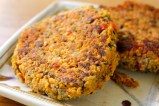
quinoa cake

Hench’s My Plate

My Plate Haiku

Chickpea Quinoa Cakes

Served at two local restaurants

How ubiquitous.

by Elyn


peacock feathers

Recently, I received an inquiry from a writer named Mel D., asking to share a piece of her own story on my blog–to impart her experience and shed light on an eating disorder related condition that is not commonly appreciated or understood–body dysmorphic disorder (BDD). As I give space to a compassionate discussion of eating disorders, I was glad to honor the request.

In considering the manifestations of BDD, I was drawn to the image of a peacock–such a splendid, mysterious and almost mythical creature–and thus named this post. Not surprisingly, peacocks and their resplendent feathers are rich in the symbolism of many cultures, and interestingly, their symbolic and spiritual meanings represent compassion, kindness, patience, all-seeing knowledge, resurrection, renewal, and the reminder to show our true colors. I wonder if perhaps the peacock asks, How stunning must we be to honor our beauty; how much self-compassion required to accept our flaws; and how not show our true and lovely colors?

Prior to becoming a writer, I had a career working in finance. It was a job that naturally came with a lot of stress and time pressures. During my teens and twenties, I had suffered with what I now know to be classified as Eating Disorder Not Otherwise Specified or EDNOS, but at the time I had little idea what was affecting me.

The symptoms of my eating problems developed when I was studying at university and straddled the anorexic spectrum. Anxiety and high stress from being in school prevented me from eating properly and I began to calorie count to gain control over my life. Unlike many other anorexics, I knew I was too thin, but felt powerless to stop what I was doing. I began to also develop symptoms of Obsessive-Compulsive Disorder (OCD) and Body Dysmorphic Disorder (BDD) alongside my eating issues.

BDD is a disorder wherein a person becomes obsessively preoccupied with how some aspect(s) of their body looks and is fixated on trying to correct or cover up the perceived flaw. There’s a clear link between poor body image and eating disorders, although the relationship between the two becomes a vicious circle rather than a linear development.

When poor body image leads to a strong desire to change the appearance, and often this focuses on losing weight, eating disorders such as anorexia nervosa or bulimia can either become triggered or more entrenched. Those who suffer lose sight of the connection between the food they eat, their body, and their physical and mental well being. Although on the surface eating disorders seem to be about losing weight, the weight loss and other physical effects are really just symptoms of the underlying issue, which is rarely about weight at all.

As with all eating disorders and associated BDD, the key to regaining mental and physical health almost always requires professional help—a residential or outpatient treatment program offering multiple therapies.  It’s also often useful to learn to think of food in new ways, to allow the person to start focusing more on nutrition and health, rather than on weight and appearance. Thinking of food in terms of nutrients, rather than calories, and acknowledging all the amazing things that our bodies do with the nutrients we feed them can be a useful tool in recovery.

It was only when I left the world of finance– after a period of time out sick from stress–that my illness was properly addressed. I can’t claim to be fully well, but after time spent in therapy and rehab, I now understand what my triggers are and can better control my behaviors. Having walked away from my job, instead choosing to become a freelance writer, I now try and to write on the topics that are important to me and that may hopefully help others. 

For more information on eating disorders and BDD, check out this article at Bulimia.com. As these are very serious health conditions, please seek appropriate care promptly. You deserve to heal and be well.

Thank you for listening, sharing, following and supporting my writing. Please subscribe in the sidebar to receive notice of new posts. Comments and greetings always welcome.

In health, Elyn

Antiques 2 027

Susan’s My Plate


My Plate Haiku

In the dark places

I ask courage to believe

I am beautiful.

by Anne-Marie

first food

Yesterday, while I was leaving work, my friends wished me a nice weekend, acknowledging that I was taking today off in honor of my birthday. Happy Birthday they chimed while sweetly presenting me with a sunflower plant. As I have for the past twenty-seven years when asked about birthday plans, I am apt to explain that it is also my son’s birthday. Though my day’s celebration is no longer actively intertwined with his as it was when he was young, I cannot extricate my birth from his.

When I mentioned this, Josie commented on how for every parent, the birthday (or receiving day) of their first child marks their own re-birth as well, no matter the confluence of dates. It is the day that changes profoundly everything that may have preceded it. This is quite true. Cathy added that she birthed her first child exactly at the moment Mount St. Helena’s volcano erupted in 1980! While distanced by an entire continent, for her the event was no less spectacular.

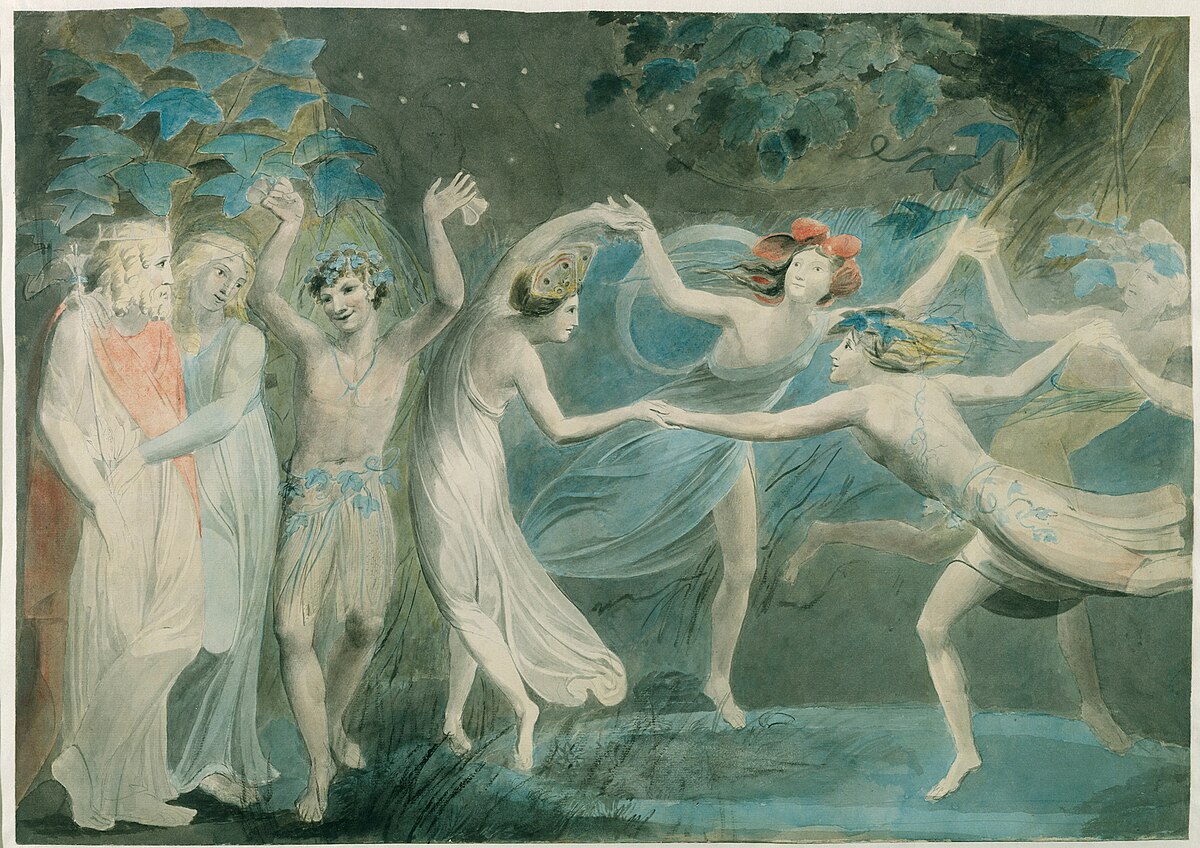
Image result for midsummer night's dream images

Midsummer Night’s Dream

Still, I remain as tickled and surprised by my calendrical coincidence of blazing glory incarnation as I was the mid-summer night it occurred. And, as I have mentioned in previous posts, I enjoy that the date I first brought babe to breast coincides with World Breastfeeding Week/Breastfeeding Awareness Month. As a matter with so many implications for health, nutrition, and societal well being, and one rife with dilemmas, I try to bring attention to this important activism each year. Thanks to Mary Ellen, here’s a nice little video from the W. K. Kellogg Foundation about Growing a First Food Movement Naturally that helps give perspective to the story of infant feeding.

This year’s theme for World Breastfeeding Week is Breastfeeding and Work: Let’s Make it Work. Its focus is on furthering support for nursing women working in formal, non-formal or home settings so as they can continue to breastfeed their babies and maintain their right to breastfeed. The need to return to work–exacerbated by the lack of mandated and satisfactory maternity leave policies–is one of the main factors why women stop nursing. The initiatives associated with this year’s campaign highlight and advocate for improved national and state labor laws and practices; employer awareness and compliance with existing laws; and ways to create clean, comfortable, private and safe areas for women to nurse or to express breast milk in the workplace.

It is encouraging to witness that some real strides are being made. Government agencies, global health organizations, national groups, and local coalitions have been working hard so that women do not have to stop nursing their babies in order to keep food on the table for themselves and their families. Lactation spaces are becoming available in various public and private settings. Closets and storage areas in offices, factory buildings, schools, and daycare centers are being transformed into comfy lactation rooms; and creative and caring entrepreneurs are designing nursing pods for women working, recreating, or relaxing in various field and outdoor settings.

In the fall of 2013, I attended a Nets basketball game at the then newly anointed and crazily crowded Barclays Center in Brooklyn. Navigating the many corridors along with throngs of people was not easy. Having made it up to our seats in the nosebleed section, the female contingent of my party had to then descend back down a few levels to find a bathroom. Literally relieved to find the facilities, we were also quite surprised to find a door marked ‘lactation room’. A burly guard stood by the entrance. Our supportive interest piqued, we asked him about the room. As though protecting a highly paid all-star, he tersely informed us that there was someone in there. Though I probably wouldn’t bring my baby to such a noisy environment–unless it was a nursing toddles or if a family member was playing in the game or singing the national anthem–but if I did, I’d be nursing in my own seat, jumbotron cameras and all. But, for those mamas and babies who deserve a modicum of privacy and quiet dining, having such an option in such an incongruous setting is quite incredible. I wonder who there is to thank for that.

My own awareness of the many aspects of this year’s Let’s Make It Work campaign was heightened yesterday as well, when I was fortunate, as in previous years, to watch SUNY Albany’s School of Public Health/New York State Department of Health’s Bureau of Supplemental Foods annual webcast presentation of Breastfeeding Grand Rounds. This was, as always, an excellent program and it highlighted many great examples of breastfeeding-friendly environments. Though it left me feeling inspired, it also reminded me how amazing women are and how damn hard they work.

Stories and images of women shlepping breast pumps and accessories to work, utilizing break and lunchtime to sit in secluded rooms listening to the whir of mechanical pumps, rushing into daycare centers in the middle of the workday to nurse a baby, sequestering into hidden spaces to feed their young, and negotiating with employers individually for their own rights–god bless them all.

My mixed reaction to the situation also was evident as I attempted to find an image for my new Lifeseeds Nutrition Instagram post to honor the week and encountered some difficulties. The breastfeeding photos I most easily found depicted either beatific, blissed-out industrialized world mothers posed in pristine settings or somber-faced traditional world mothers huddled in sparse environments. Though I appreciate the beauty of both, neither captured what I was looking for– a reflection of how working mothers often feel in our modern society–weary from its many demands and yet comforted in the respite of feeding their child. I hope the one I finally chose came close.

As for my birthday, I wished really only for a little quiet me time. Though no longer tending daily to my children’s needs, with one child still in college I am still a working mom. The memories of running from babysitter to job to various activities with a baby in tow are still pretty fresh and my plate continues to feel pretty full. Thankfully, I got what I wished for. It is a perfect sunny day and my little village is exquisitely tranquil. My front porch cradles me, and I have some time to write. Soon I will have the phone conversation with my son where we simultaneously say, Happy Birthday.

Until then, wishing all the hard-working mommas, and all who support them, good nourishment of both body and soul.

Thank you for listening, sharing, following and supporting my writing. Please subscribe in the sidebar to receive notice of new posts. Comments and greetings always welcome.

In health, Elyn

Related Posts: Blessed Feeding; To She Who Loves Us Before She Meets Us; Breastfeeding Redux; Oh MotherA Winning Goal

My Plate Plate

Momma’s My Plate


My Plate Haiku

Hard toiling mamas

Hear their hungry babies cry

Breastfeeding and work–let’s make it work

by Elyn

Instanutrition

I scurried around the kitchen. There was dinner to be made. I peeled, chopped, sauteed and simmered. I sweated as the hot summer air mingled with the heat from the stove. I held an icy glass of water against my cheek. I ran the compost out back. I let the cat out. I let the cat in.

IMG_0904

Lifeseedlings Posting

My daughter sat calm and cool at the table. She asked me a few questions. She danced her fingers around a little. She called me over to look at some things. Way sooner than the time it took for the meal to be ready and without barely moving a muscle, she created a new portal into the universe for me–by opening an Instagram account for The Nutritionist’s Dilemma. She turned the first MyPlate Haikus into little lovely portraits. She chose nice hashtags and linked this to that. She set the table. She let the cat out.

I am excited about my new Instagram account. There, I hope to highlight the little morsels of collective poetic wisdom that illuminate the experiences of self-nourishment that many have contributed to my blog along with other pearls that I have gathered along the way. The concept is to cobble together a creative and meaningful expression of how feeding ourselves may look and feel. It is a conceptual revisioning of the dietary constructs of the USDA MyPlate model of nutrition. (These messages can also be seen at the bottom of the blog’s sidebar.)

New My Plate Haikus or any other poetic expressions and My Plate Plates are always welcome and will be necessary for me to hold my space in this new environment. For general instructions and examples, please see Accepting Haikus. We will see how this goes. It could be fun.

I’d also like to highlight some of the ongoing work of Michelle Obama to brighten the futures of the nation’s children through nutrition and health initiatives. For the past four years, the First Lady has sponsored a rather competitive Children’s Healthy Lunchtime Challenge Cooking Contest. Winners are chosen from each state and U.S. Territory and are treated to a Kids’ “State Dinner’ at the White House. This year’s event was held a few weeks ago and (spoiler alert) included a surprise guest. The impressive recipes of these culinary kids are also compiled in the Epicurious Healthy Lunchtime Challenge Cookbook. Maybe a child you know can participate.

The Kids’ State Dinner gathering also provided a platform for the First Lady to announce her new anti-big food advertising campaign, FNV Prepare to Be Marketed To which employs the efforts of celebrities and famous athletes to redirect their messaging power toward healthy eating. Coincidentally, this is what I wrote about in my last post, Spring Cleaning, and the NBA Finals.

I am off to start following Michelle on Instagram. And who knows, maybe she might follow me. And you can follow me on Instagram @lifeseedlings, and on Twitter @lifeseedsnutrit.

Thank you for listening, sharing, following and supporting my writing. Please subscribe in the sidebar to receive notice of new posts. Comments and greetings always welcome.

In health, Elyn

(Update 2017: Jason Brown of First Fruits Farm was the highest-paid Center in NFL history, but he walked away from a 35 million dollar contract with the St. Louis Rams to grow food for others.)

(Update 2020: Today, as I reviewed this post, the world learned of the tragic loss of basketball legend Kobe Bryant. To honor his spirit, his fatherhood, how he inspired others, his dietary consciousness, and how he used his celebrity, it is quite apt that I just found this article Kobe wrote for Michelle Obama’s Let’s Move blog on Five Healthy Habits.)

20150614_173007 (1)


My Plate Haiku

Did you really think

That you could hide fish in rice?

Oh, the green paste burns! by Francesco\

by A Cat

(from I Could Pee on This and other poems by cats collected by Francesco Marciuliano)

spring cleaning and the NBA Finals

Today, I thought I’d do a little freshening up–a little spring cleaning if you will–of some of my previous posts. Instead, I am sitting and watching Game 5 of the NBA finals–Cleveland Cavaliers v Golden State Warriors–realizing that the postseason with the advance of Cleveland and LeBron James has necessitated this postscript to “Dominique et Moi”. There, I wrote about my meeting with NBA legend and ADA Diabetes Ambassador Dominique Wilkins on his visit to the Health Center where I worked. (Yes, really! Did you miss that one?)

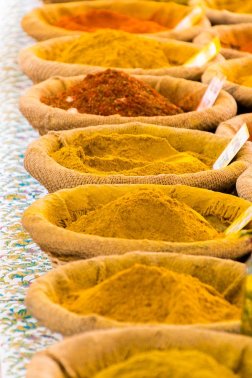
spices-2591559_1280

Curry Varieties Image by TeeFarm at Pixabay

In that meeting, I asked Dominique how he felt about famous athletes using their celebrity to market unhealthy products–making reference to LeBron’s Pepsi ads which were running at that time. Though not to single out LeBron, I do find certain celebrity endorsements particularly troubling. During this year’s final rounds, LeBron has been featured in an ad for Kia automobiles.

The spot starts out with him sitting alone at his kitchen table with a bowl of cereal and a box of Fruity Pebbles prominently displayed. The milk is in a plain, round, unmarked glass bottle. Just as he raises the spoon to his mouth, his zen moment is interrupted by a maintenance worker outside the window wielding a noisy leaf blower. LeBron leaves the table, miffed that his quiet moment has been disturbed–but not before five camera shots feature the Fruity Pebbles. A few more distractions, including his kids playing with a ball, pursue him until he finally finds solace in the quiet, obviously roomy and reclining back seat of his very clean and crumb-free fancy Kia.

I have been catching up on recent seasons of Mad Men so I know how these pitches are made by ad companies. But, can someone please tell me what marketing seduction was intended here? Does Kia own Post Foods or are they just sleeping together? What demographic is eating kids’ cereals and buying fancy cars? Long-legged adolescents saving their lawn mowing money? And, why is LeBron party to it all?

Ironically, recently as I watched LeBron on the court, I noticed he seemed more lean and lithe than I remembered. I turned to Pete, my source for all things sport and nutrition-related. Concerned he may have missed something, I implored him to get me some scoop on LeBron’s diet. Thirty seconds later he was back to me with a report that sure enough, this incredible sports phenomenon was adhering to a lower carbohydrate diet and was playing minus fifteen to twenty pounds this season. I was not surprised. I knew it! No Fruity Pebbles for King James. Notice, he doesn’t actually eat the cereal in the ad. And, I am also going to venture that he’s likely lactose intolerant and/or not much of a milk drinker.

Well, I do hope that these athletes heed some warning from Dominique. Not even the creme de la creme, including the seemingly immortal, are immune from negative dietary impacts and diabetic consequences. And, they should be mindful of the messages they embody through their endorsements. But, hey, what is that food that Lebron’s nemesis is hawking on his jersey? Curry? You mean that anti-inflammatory spice blend that may lower the risk of type 2 diabetes and that contributes to some spectacular shooting? I wonder who is marketing that.

The truth of the matter is that increasingly, many athletes (and teams) are caring a lot about diet and nutrition and making it a prime focus for performance and endurance–and for helping others. Why still participate in promoting ultra-processed and sugar-laden food products so deleterious to the population’s health– including that of children–that they are likely not eating themselves? As ubiquitous as these foods are, they are far from benign.

Here is what LeBron is really fueling on, and what he actually drives. Here is what Steph Curry is doing to promote healthy eating. And, here is an (updated) glimpse of his eating and self-care habits as a seasoned player.

Thank you for listening, sharing, following and supporting my writing. Please subscribe in the sidebar to receive notice of new posts. Comments and greetings always welcome.

In health, Elyn

Related Posts: Dominique et Moi, Wings of Desire, Love is Love

Update: OH, DEAR ME.  In my search for the ingredients of Fruity Pebbles (rice, sugar, canola and/or soybean oil, salt, artificial and natural flavors, red 40, yellow 6, blue 1, turmeric oleoresin, BHT and BHA) I came to find out that Fruity Pebbles is also a LeBron James-endorsed Nike Air Foamposite One sneaker!!  And, more recently, the Lebron 4 Fruity Pebbles.

Update 2025: At age 40, Lebron James is still dominant, and the oldest player currently in the NBA– with a 22-year professional career.

eat-547511_640

Child’s My Plate

My Plate Haiku

Food is medicine

Farmers are doctors, Cooks priests

Eat, pray, eat, pray, love.

by Gordon

the tables turned

Or, how I was outed at Trader Joe’s.

So you know how the employees at Trader Joe’s are all chipper and friendly? Well, my checkout clerk on that Friday afternoon was no exception. It was the end of a long work week, and though I was tired and anxious just to get home, there was still the shopping to get done. I wove my way quickly through the store, stocking my cart well. As I rounded the final corner from the far aisle, I was glad to see that there was an open checkout lane. With the late hour and the subsiding commuter traffic, this was likely to be my last stop for the day.

refreshment-768743__180The checkout set up at Trader Joe’s is unusual. Your cart goes one way, while you go the other. Rather than allowing for the often awkward and yet inward zen task of unloading your own groceries, here, by receiving your full cart, the clerk both unloads and scans for you. Here you come face to face with your clerk more immediately and this results in your connection unfolding both more quickly and more intimately–and usually quite cheerfully. They maintain greater contact with your food–that which you have selectively chosen to feed yourself and maybe your family–than at most regular markets.

Having just turned over custody of my cart, I suddenly found myself in a conversation about cats. Apparently, if not for her mother’s allergy, my adorable, young clerk would have a cat because she loves them. I quickly realized that the cat food I was purchasing had prompted the comment and suddenly I was revealing that I had two cats. Most people I work with every day don’t know that about me.

I tried to bring the topic back to groceries by offering to help bag, but that resulted in a friendly argument. She counseled that I take the checkout experience as an opportunity to relax while I insisted that I did not find bagging to be stressful and that my help would expedite matters and could get me home sooner. I won that one, but clearly, in the process, our professional/client relationship had deepened. While I usually conduct my nutritional assessments and evaluations in the privacy of an office, this dedicated professional offered her services right in the checkout lane. As my purchases transferred rhythmically from her hands to mine, she hesitated and looked me in the eyes, and said, “Oh, I thought you were a vegetarian.”  I looked down as she passed me the plastic-wrapped piece of salmon that was swimming along solo in the long queue of plant-based products.

I stuttered and stammered. Believe you me. I have stood on many a grocery-style line with a keen eye going through the contents of the carts around me. I am a nutritionist so I am apt to assess for the number of essential amino acids, calculate the percentage of the daily value for manganese and vanadium–and to make judgments. But, here, the tables were turned. The little punk of a young woman had my number. The words fell clumsily from my mouth as they tried to follow orders from command central. I could have just said it was for my cats. But, instead, I explained that I was a vegetarian, but that on occasion I do eat some fish. “Oh”, she corrected, “A pescetarian.” I balked as I felt I was being assigned to the wrong religion, maybe like being called a Methodist when you were, in fact, a Lutheran.

The arena of eating patterns does not make easy allowances for any gray areas. You either are or you aren’t. But still, I doth protested. The date of this encounter coincided with my 40th anniversary of becoming a vegetarian. It was a long time ago–I was a teenager– but I am pretty certain that it was in the month of May. During these forty years, I have only once eaten meat when I chose to have a few bites of turkey at a NOFA conference in Vermont. And, only a spoonful of times I have allowed a chicken stock-based soup to pass my lips.

But it is true that I have eaten fish and seafood. I have had years where I did not eat any, and in recent years have largely avoided it due to myriad reasons, but more than not it has been there as a backup. Some of these were times of surrender like when I needed to appease my mom; or when traveling made vegetarian options hard to find. But, more often it was a conscious choice–albeit a choice of exception. I mainly choose “pesce” when eating out–especially when at a seaside location; when I feel like my body needs a denser or “yang” protein; when I think that I might benefit from a dose of fish nutrients; or when it will just be nicely satisfying. A fish-based soup on a cold winter’s night might fit this bill. I eat fish maybe once per month. That piece of salmon that I just put into my shopping bag was likely to find itself shelved in my freezer for a while and might eventually be consumed by Pete–a 41-year long vegetarian who also just occasionally eats fish.

There is no arguable rationale, but I still clamor to consider myself a vegetarian. I carry an identity with this definition and it guides my ethical and social compass. In some ways, it does serve as my religion and it begs many questions regarding behavior as religion is apt to do. It is most certainly my favorite cuisine and I bask in nature’s brilliance and creativity of plant offerings. Nutritionally, it seems to serve me though I have little data for comparison. Forty years of many types of beans, kernels of grains, colors of vegetables, with nary a need for a table knife most certainly buys me membership in the club–maybe within an “essentially vegetarian” or “low pescetarian” category. At least, I should not have to be explaining myself or justifying this to a random check out clerk, right? Even if her parents are vegan and she’s been vegan her entire life as she then did go on to share with me at the end of my babbling. I would peg her at twenty-two years at best, so I still have a few nuts and seeds on her.

Still, the encounter did make me ponder my attachment to this aspect of my life and what it represents. Though maintaining a non-carnivorous diet is a lot easier than it was forty years ago, with vegetarian and vegan options now more widely available and even commonplace, the whole matter of who we are as eaters has become way more complicated with many different belief systems to be an adherent to. What did I need to defend and what else would I defend so stridently?

As I finished up my bagging duties, she said, “Oh, I see you didn’t purchase many dairy products”, further assessing the plant-based percentage of my diet. She actually got a good glimpse and did a pretty good analysis. Such work is much easier from that platform instead of relying on diet recalls or scribbled and food-stained dietary records as I traditionally have had to do.

I paid for the consult, I mean groceries and loaded the bags back into the cart. I started for the exit thinking we were done. But, there was one more thing. “Oh”, she giddily exclaimed as I walked away, “I love your socks!” Once again she had surprised me. I realized I was wearing a funky yellow paisley pair that was peeking out from the bottom of my skirt and through the top of my shoes. I smiled. Maybe we could just be friends.

Thank you for listening, sharing, following and supporting my writing. Please subscribe in the sidebar to receive notice of new posts. Comments and greetings always welcome.

In health, Elyn

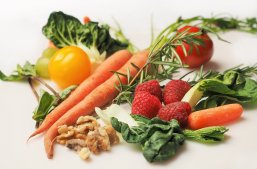
vegetables-1085063_1920

Vegetable My Plate                    Image by Deborah Breen Whiting from Pixabay


My Plate Haiku

Do you carrot all for me?

My heart beets for you, with your turnip nose and your radish face,

You are a peach. If we cantaloupe, lettuce marry.

Weed make a swell pear.

Author unknown

Nourish Thyself Well Day

Despite its lack of a full complement of days, the tiny month of February (from the Roman februarius or Latin februum–to purify or atone) so kindly embraces Valentine’s Day as well as Eating Disorder Awareness Week–both emotionally-laden events. The two are not ordinarily associated and their purposes may seem disparate, but, with a little tweaking, I think that each celebration might find a friend in the other or a rationale for their coincidence.

February from my window

February from my window

To sort this out a little, let’s acknowledge that Valentine’s Day is a veritable Hallmark Card hootenanny, with messages cloyingly sweet and with a power so strong that it provokes the panicked purchase of chocolates and roses in hopes of successfully and sufficiently demonstrating one’s love for the “other”. While we celebrate Valentine’s Day’s High Middle Ages Chaucerian and 18th-century traditions of courtly love, the holiday has deeper, darker and rather confusing origins. It aligns on the Roman calendar with the celebration of Lupercallia and on the Christian liturgical calendar with the honoring of one or more early Christian saints named Valentinus for whom several martyrdom stories were associated–only some of which were tinged with elements of romantic love.

Eating Disorder Awareness Week commands no shelf space in the greeting card aisle, passes without widespread recognition–and certainly has no such reckless exchange of confections. However, in bringing forth awareness of the prevalence of eating disorders and avenues for treatment and healing, it does have cause for celebration as well. It shines a light on these complex and misdirected eating behaviors which thrive in the vampire-esque darkness of secrecy and shame. It serves to bring support to the many who struggle alone–those who battle too in martyr-like fashion against these soul and life-threatening conditions.

Both our desire for romance and the rigid control (and lack thereof) of eating disorders express the longings of the fragile little hearts that beat within all of us. They share opposite sides of the same coin of our need for love. While Valentine’s sentiments relate to one’s love for the “other”, eating disorders expose the imbalance manifested when we lack the capacity to love the “self”. Apparently, we cannot quite master one without the other. Eating Disorder Awareness Week provides hope that one can nurture successfully and sufficiently such requisite self-love, while Valentine’s Day might (and should) remind that we can love ourselves as well as others.

A number of years ago, while I was working on a college campus–an environment where eating disorders are more widely acknowledged–I created an activity which was part of a series of events being held during Eating Disorder Awareness Week. By means of various campus communications and a distributed flyer with a banner stating, “Life is too short to waste time hating our bodies”, I brought forth “Nourish Thyself Well Day”. The name implied a broader sense of nourishment and did not distinguish between “well” as an adverb or adjective. The concept was to present a challenge to the self-limiting thoughts and behaviors regarding our diets and our bodies that rob us of our health and well-being. Believing that most of us carry around at least a handful of these, I asked people (anyone and everyone) for just one day to choose a body-affirming or nourishment-providing action that held meaning for one’s personal issues or struggles.

Recently, I came upon the flyer and the list of the suggestions I proposed at that time. They included:

I will not weigh myself today * I will eat when I feel hungry * I will not use food to cover my emotions * I will not diet today * I will not eat/use nutrient-deficient diet foods * I will ask a friend for support if I need it * I will not associate guilt or shame with eating certain foods * I will listen to my body and respond to its needs * I will enjoy hot cooked foods * I will welcome foods with fats * I will honor my right to be an eater * I will have dessert * I will eat slowly and stop when full * I will not entertain starvation throughout the day*  I will not say anything negative about my body or my eating * I will not say anything negative about anyone else’s body or diet * I will not judge my value based on the scale * I will acknowledge my true value.

In revisiting this list, I recognize it has some limitations and does not fully capture the possibilities and alternatives available to us in redirecting or re-imagining how we behave around or think about these issues, but it’s a start. At the time, I could only fit so many ideas on the page and I had no mechanism for receiving any feedback. I only released it as an intention that it would seep its way through some crack or crevice and find its way to someone who might find some meaning in it for themselves. I hope it did.

And, so now, in this time between Valentine’s Day and Eating Disorder Awareness Week, I send the intention of “Nourish Thyself Well Day” out on its own once again. I hope dear little February can handle another event–albeit, a made-up one–and one that is really just an extension of the others. Besides, it has been a really frigid winter, and we can all use an excuse for anything that may warm the heart–and lighten the burden.

With hand on heart, feel free to choose your own day and way to celebrate “Nourish Thyself Well Day”. Pick from the above suggestions or create your own, and welcome the experience of shifting old embedded patterns and beliefs.

Thank you for listening, sharing, following and supporting my writing. Please subscribe in the sidebar to receive notice of new posts. Comments and greetings always welcome.

In health and with much love, Elyn

Related Posts: Stopping Traffic, Muse of the Girl, Dolls with Faith, A Meteorological Change of Plans, Size Me Down

Heidi's Plate

Heidi’s My Plate


My Plate Haiku 

Love is a deeper season

Than reason

My Sweet One.

by e.e. (cummings)

where has all the produce gone?

Perhaps it is due to the recent one year anniversary of the passing of Pete Seeger that has this title coming to mind–but this is something I have been thinking about for a while.

I have had a few experiences lately, where a brilliant idea of mine that I have kept gestating in some corner of my mind, waiting for just the right labor to bring forth, is birthed by someone else–and I read about it somewhere. I hate when that happens, especially as brilliance is not my forte and such ideas are few and far between. And, so now I must act quickly to share–and thus take credit–for these rare flashes of genius. 

As you may know, I have been swimming around in this primordial soup for many years–somewhat akin to, um, yes, let me see, ah yes, the great Soviet biologist Alexander Oparin–father of the primordial soup theory–seeking answers to some of life’s most pressing questions. While Mr. Oparin had been searching for the origin of life on Earth, I am anxious to find a solution to this little problem of sanely feeding the carbon-ignited populace of whom he divined the spark.

I was already concocting my own brilliant idea when a friend sent me this article, Can America Learn to Love Misshapen Veggies? by Elizabeth Segran. It is about the vision of Doug Rauch–the former president of Trader Joe’s– to create markets for oft misshapen produce and other food that might otherwise be headed prematurely and unnecessarily into the waste stream. Having seen the high degree of such waste and the exorbitant cost of such a loss while hunger is rampant in our country, he is experimenting with opening grocery stores that would sell such abandoned produce at low-cost in high-need neighborhoods. He seems to know a thing or two about the grocery business, and I am glad to learn of his concern and his efforts. Maybe he’ll like my idea–it is along the same lines.

You see, kind of like Sisyphus, I am among those dedicated to rolling a giant Hubbard squash up to the top of a mountain, only to have it roll back down again–ceaselessly repeating the effort. Sisyphus’ fate “as much through his passions as through his torture”–is similar to the plight of the modern-day nutritionist. “Eat your vegetables!”, we implore. “Three cups a day!” “Eat all the colors of the rainbow!” We beg, we cajole, we try to be cute. We strive mightily to bring the veggies to the people, but we can’t make them eat. (Horses, on the other hand, accept them rather well.) Undaunted, like Sisyphus, we perforce keep trying.

Albert Camus, in The Myth of Sisyphus, states that the gods had condemned Sisyphus to his labor, reasoning that there is no more dreadful punishment than futile and hopeless labor. But, he continues, “If one believes Homer, Sisyphus was the wisest and most prudent of mortals.” Ah! My personal interpretation of the text provides some vindication for our insanity.

Vegetables can be daunting to buy, prepare and cook. They can be expensive. When they go bad they look quite sad. Certain vegetables require strong muscles, a good set of sharp knives, and a certain finesse to commandeer properly. As a food group they are complex and complicated, and many times a relationship with them must be carefully nurtured. Some challenge the taste buds with a propensity to be bitter or earthy. Plus, they often carry baggage from our collective childhoods.

But, they are so gooooood! And, rich in vitamins, minerals, fiber, Omega-3s, enzymes and phytonutrients to help our hearts, bones, skin, hydration, and mood–they are good for us! The benefits of a plant-rich diet are well established, and with so many different types, including what I might like to think of as a starter kit vegetables for the disinclined, there are plenty for all to enjoy and benefit from–in spite of early experiences. But, with so many real and perceived obstacles, to the chagrin of Mr. Rauch and myself–many march needlessly to their unconsumed demise, after much time, love, care, and commitment were dedicated to their growth by hard-working farmers. Some, just because they do not meet the standard definition of beauty.

So, my basic idea is this: In an effort funded and supported by health care collaborations, corporate and/or governmental subsidies–grocery stores, and other appropriate establishments should create space for the preparation of freshly made, nutrient-blessed vegetable-based juice–oh, and yes, soup–for sale to the public at an affordable cost. Incentives for purchase by SNAP (Supplemental Nutrition Assistance Program formerly known as food stamps) recipients could be implemented, similar to those being offered at Farmer’s Markets. These products can be available year-round in frequented food environments.

Vegetable juices and soups (made with well-prepared broths that can also utilize other ingredients that might otherwise be wasted–such as meat bones) are perhaps the simplest health-promoting and disease-preventing foods available. Increasing the exposure to and ease of access and consumption of these may be a powerful antidote to the scourges of our chronic health ills. Call me naive, but my experience informs me that many appreciate the taste of health–particularly when health has become an elusive concept. Returning health to our food establishments is mildly becoming a not so foreign idea. In my nearby city, a local health insurer and the YMCA have partnered with a food chain–and health classes and services are offered right in the grocery store. And golly, our supermarkets often house pharmacies–so, why not grandma’s penicillin?

The benefits of my little “Primordial Soup and Juice Program” include opportunities to expand vegetable education, improve the visibility of nutrition specialists, eliminate barriers to vegetable purchasing and intake, and affirm the age-old wisdom of food as medicine. Plus, it can contribute to the reduction of food waste and spare the feelings of those poor misshapen vegetables. What well-intentioned juice or soup maker would not warmly welcome them? Right, Mr. Rauch?

Oh, and Pete, Where has all the produce gone? Thirty-one percent of it into the waste stream, everyone. When will we ever learn? When will we ever learn? New verse: Assimilated well into our cells, everyone. Any thoughts to help embellish this vision?

Thank you for listening, sharing, following and supporting my writing. Please subscribe in the sidebar to receive notice of new posts. Comments and greetings always welcome.

In health, Elyn 

Update March 8, 2015. Just elaborating by suggesting that this idea can be implemented in our schools as well as in all of our subsidized food programs serving both young children and adults in group care facilities

IMG_1298

Mock Turtle’s  My Plate Plate

My Plate Poem

Beautiful soup so rich and green

Waiting in a hot tureen

Who for such dainties would not stoop

Soup of the evening beautiful soup. by The Mock Turtle


beatific untrodden twelvemonth

Beatific untrodden twelvemonth! This is my alternative greeting for the advent of the new year. Besides doubling the number of syllables, I think it also increases the intensity of possibility, suggests that we can go somewhere never before ventured, and adds a sprinkle of Shakespearean flavor.

As we reckon time in yearly increments, here are a few basic numbers as concerns annual dietary matters. At a minimum, given a structure of three basic meals per day, or two and a snack, we eat 1,095 times between the beginning of January and the end of December. If we bring that up to five times per day, influenced by a meal plus snack pattern or a small frequent meal philosophy, we are up to 1,825 intimate interactions with placing food in our mouths as we are buckled in for our celestial journey. Add in the multiple nibbles that usually enhance our existence, and the number grows even higher.
Each food encounter also reflects a commitment of time in regard to food procurement, preparation, consumption, digestion and usually some cleanup. Hmmm, let’s see. If I take an estimated average of 1,500 feeding encounters per year and multiply that by some unscientific number of minutes per encounter of sixty-four, we spend 79,500 minutes, 1600 hours, 66 days or 2.4 lunar orbits per year keeping ourselves alive (or killing ourselves) with food.

This, of course, does not take into account how much time we spend thinking about food; and thinking about what we think about food. To figure that out would require some advanced calculus, but I can tentatively say it even exceeds the number of times men are purported to think about sex. My recent inquiry into the matter seems to debunk the every seven seconds or 7,200 times per day oft-quoted in scientific or urban myth circles with newer research suggesting that it may be as low as one time per day. Whether there is a direct or inverse relationship with food thoughts is still open for investigation.

In my own role as homo sapiens eater blessed with options and plenitude, I have to acknowledge my own challenges, decide which I wish to or can address, and stop and make adjustments to my own way and style of eating as well. My decisions are based largely on environmental concerns, maintaining health, a vegetarian orientation, a love of umami and savory tastes–and quiet moments with chocolate. Not everyone needs to be inclined toward putting their attention to matters of diet, but it seems like many are ultimately forced to do so when our mortal coils doth protest too much.

As I remain vigilant observing the cultural messages about food and eating that bombard us, the food environments that surround us, the toxic insults to our planet, the stressful eating habits of the masses, the angst and agita that accompany us and the consequences associated with the whole gestalt, my dilemma–that is sensitive to the complexities of human behavior and the realities that define our lives– feels an increased compunction to guide towards increasing the capacity to nourish in a way that we all deserve and that serves us individually and as a society.

In the spirit of the beatific untrodden twelvemonth, I would like to give you an opportunity to share a glimpse of your internal dialogue. This is not an exercise in divulging deep secrets, but more of an inventory of the challenges, barriers, that confront us or positive intentions or actions that may be available to us all. May it be a chance to shed an ounce of the burden of our thoughts which often goes unspoken and becomes an insidious mantra that gnaws away at our nexus of well-being; or to be a way to gain a pound of insight to inspire personal (or community) action for change. Might it just make one of those 1,500 feeding encounters or 79,500 food-related minutes a little better for you, and maybe for those you love too, in this new year.

Here is one for me. (There are no formatting rules.) I give myself permission to sit and smell the (matcha) tea as a reminder to hydrate more, inhale and ingest the gifts of the plant world, worry less and allow for grace to happen with more trust and less force.

I give you good morrow, and well be with you.

Vous souhaiter une bonne et heureuse annee remplie de peche et une bonne sante.

Thank you for listening, sharing, following and supporting my writing. Please subscribe in the sidebar to receive notice of new posts. Comments and greetings always welcome.

Wishes for a happy new year filled with peace and good health, Elyn

susan plate

Oriental My Plate

 My Plate Haiku 

Deep scarlet red beets

Reveal your sweetness to me

Slip out of your skins.

by Elyn

the cookies are coming, the cookies are coming!

I did not consider that the setting would be more than nutritionally neutral. It was a required training on a non-nutritional topic at an off-site setting dedicated to health. Though it was an all-day event, I did not know it included lunch, so I had my own packed in my bag. If anything, I supposed it would include the perfunctory coffee and some offering of basic breakfast carbohydrates to start the day and amuse the attendees, but that would be it. My, was I in for a surprise.

have your peeps call my peeps

have your peeps call my peeps

It was a cold morning so I was glad for the teabag and hot water. But, as I found myself in line with the others waiting for their morning jolt, I, of course, noticed what was available, and reflected on how nutritional awareness now means let’s serve some fruit along with the wide array of pasty pastries. I am more disheartened about such food offerings in my professional settings where health and nutrition are purported to matter. Still, having a day out of the office, to learn about the proper design of research studies, I thought I would pass the day imagining myself as a research scientist, rather than a nutritionist. Increasingly, I find myself interested in matters of investigation and evaluation, and though I lean strongly toward the qualitative, I like to unveil that quantitative data as well.

The presenters were all quite knowledgeable and held my attention with their touches of humor and accessibility, despite the somewhat dry subject matter. At the end of the morning, we were ushered across the hallway for the lunch–which apparently was provided– and consisted of a selection of sandwiches and wraps, bags of chips, cans of soda and bottles of water. As I looked down the three long lines of tables where we were sitting, my clearly not quieted nutritionist mind acted up. I was tempted to count how many people had chosen a soda and what kind and to then count the total number of people and begin some analysis.

Just as I reminded myself to not play probing, annoying nutritionist, the facilitator took to the microphone and informed the group about the schedule for the afternoon sessions. He then apologized that the cookies had not arrived but that they would be coming soon. The group emitted a palpable response. And, when at break time he did announce the advent of the cookies, as promised, the audience broke into applause. Really, the previously lackluster assemblage of folk, mainly there due to the mandatory nature of the event, responded with animated cheering. Forget the soda study. Where was my neurobiology team when I needed them to measure the excited brainwaves in the prefrontal cortex when exposed to just the anticipation of a sugary surge? I observed the same sparks in the eyeballs of those three-year-olds who just the week before had come to my door disguised as pirates demanding candy. Wow. But, there was still one more twist to come.

As the group got up to dive into and divvy up the cookie bounty, I headed down to the bathroom. On my way back, a woman was heading in my direction. My own brain flipped into one of its pre-programmed reactions. Young, attractive, stylish–I suddenly feel quite bad about myself. As we got closer, she held up a cookie to me and said, “Yeah, I know I am so bad.”

Shocked out of my own internal self-admonishment, I asked, surprised, “What?” She said, “I know I shouldn’t be eating this, but I can’t help myself. I am sure this is emotional eating. I should be better tomorrow. This was a tough week.” Confused and concerned, I said, “I am sorry, but why are you telling me this?” She reminded me that she knew I was a nutritionist because we had come upon each other while walking near my office the month before, and I had told her what division I worked in. We had talked together for about five minutes before we went our separate ways. Now, here, out of context, it took me a moment to recognize her.

Stupidly grasping for something to say, I stuttered, “Then, if I have any power granted in me as a nutritionist in this very moment, please do not feel guilty and bad about yourself because of a cookie.” “Thank you, Elyn”, she said, sounding relieved as she walked away. She had only just shared a common feeling that many suppress. But her conflict makes her a potential subject for this big human study of who we are as eaters–along with all the rest of us. We are tasked with needing to be cognizant of our food choices, in a toxic food environment, while mysterious uncontrollable drives often control our behaviors. Pretty complicated stuff, this eating thing, aye matey?

Well, I really am quite aware that any situation can present me with a nutritional conundrum. This one concerned how a little cookie can magnify our longing, our regret and all the places in-between. In response, may I suggest that as best you can, nourish yourself in many ways, observe what lights up your prefrontal cortex, avoid long boring meetings, and most of all be gentle and loving with yourself.

Thank you for listening, sharing, following and supporting my writing. Please subscribe in the sidebar to receive notice of new posts. Comments and greetings always welcome.

In health, Elyn

By my own personal accounting, this is the 100th post of the Nutritionist’s Dilemma, and as you can see, the dilemmas persist. To help me embark on the next hundred, if you are a subscriber, regular reader, occasional visitor, or someone who has just stumbled upon my blog, I would greatly appreciate your taking a moment to: write a comment (below) to let me know how my writings resonate (cogent, amusing, inspiring, galvanizing) or just that you were here (Hi El, Yes, I DO read your blog); share one of my posts (forward to a friend or share on Facebook); click an available like button; subscribe (on side); or invite me on some interesting joint venture to change the world, near or far. 

(I would also love some new haikus as I am now relying on ones written by a cat.)

A deep thank you to those of you who have supported my humble efforts to give voice to my experience and to feed my quiet muse.

Blessings to all and Happy Thanksgiving!

My Plate

My Plate

 My Plate Haiku

I lick your nose, I lick your nose again

I drag my claws down your eyelids

Oh, you’re up? Feed me.

By a cat

from I Could Pee on This and other poems by cats collected by Francesco Marciuliano