Archives

where has all the produce gone?

Perhaps it is due to the recent one year anniversary of the passing of Pete Seeger that has this title coming to mind–but this is something I have been thinking about for a while.

I have had a few experiences lately, where a brilliant idea of mine that I have kept gestating in some corner of my mind, waiting for just the right labor to bring forth, is birthed by someone else–and I read about it somewhere. I hate when that happens, especially as brilliance is not my forte and such ideas are few and far between. And, so now I must act quickly to share–and thus take credit–for these rare flashes of genius. 

As you may know, I have been swimming around in this primordial soup for many years–somewhat akin to, um, yes, let me see, ah yes, the great Soviet biologist Alexander Oparin–father of the primordial soup theory–seeking answers to some of life’s most pressing questions. While Mr. Oparin had been searching for the origin of life on Earth, I am anxious to find a solution to this little problem of sanely feeding the carbon-ignited populace of whom he divined the spark.

I was already concocting my own brilliant idea when a friend sent me this article, Can America Learn to Love Misshapen Veggies? by Elizabeth Segran. It is about the vision of Doug Rauch–the former president of Trader Joe’s– to create markets for oft misshapen produce and other food that might otherwise be headed prematurely and unnecessarily into the waste stream. Having seen the high degree of such waste and the exorbitant cost of such a loss while hunger is rampant in our country, he is experimenting with opening grocery stores that would sell such abandoned produce at low-cost in high-need neighborhoods. He seems to know a thing or two about the grocery business, and I am glad to learn of his concern and his efforts. Maybe he’ll like my idea–it is along the same lines.

You see, kind of like Sisyphus, I am among those dedicated to rolling a giant Hubbard squash up to the top of a mountain, only to have it roll back down again–ceaselessly repeating the effort. Sisyphus’ fate “as much through his passions as through his torture”–is similar to the plight of the modern-day nutritionist. “Eat your vegetables!”, we implore. “Three cups a day!” “Eat all the colors of the rainbow!” We beg, we cajole, we try to be cute. We strive mightily to bring the veggies to the people, but we can’t make them eat. (Horses, on the other hand, accept them rather well.) Undaunted, like Sisyphus, we perforce keep trying.

Albert Camus, in The Myth of Sisyphus, states that the gods had condemned Sisyphus to his labor, reasoning that there is no more dreadful punishment than futile and hopeless labor. But, he continues, “If one believes Homer, Sisyphus was the wisest and most prudent of mortals.” Ah! My personal interpretation of the text provides some vindication for our insanity.

Vegetables can be daunting to buy, prepare and cook. They can be expensive. When they go bad they look quite sad. Certain vegetables require strong muscles, a good set of sharp knives, and a certain finesse to commandeer properly. As a food group they are complex and complicated, and many times a relationship with them must be carefully nurtured. Some challenge the taste buds with a propensity to be bitter or earthy. Plus, they often carry baggage from our collective childhoods.

But, they are so gooooood! And, rich in vitamins, minerals, fiber, Omega-3s, enzymes and phytonutrients to help our hearts, bones, skin, hydration, and mood–they are good for us! The benefits of a plant-rich diet are well established, and with so many different types, including what I might like to think of as a starter kit vegetables for the disinclined, there are plenty for all to enjoy and benefit from–in spite of early experiences. But, with so many real and perceived obstacles, to the chagrin of Mr. Rauch and myself–many march needlessly to their unconsumed demise, after much time, love, care, and commitment were dedicated to their growth by hard-working farmers. Some, just because they do not meet the standard definition of beauty.

So, my basic idea is this: In an effort funded and supported by health care collaborations, corporate and/or governmental subsidies–grocery stores, and other appropriate establishments should create space for the preparation of freshly made, nutrient-blessed vegetable-based juice–oh, and yes, soup–for sale to the public at an affordable cost. Incentives for purchase by SNAP (Supplemental Nutrition Assistance Program formerly known as food stamps) recipients could be implemented, similar to those being offered at Farmer’s Markets. These products can be available year-round in frequented food environments.

Vegetable juices and soups (made with well-prepared broths that can also utilize other ingredients that might otherwise be wasted–such as meat bones) are perhaps the simplest health-promoting and disease-preventing foods available. Increasing the exposure to and ease of access and consumption of these may be a powerful antidote to the scourges of our chronic health ills. Call me naive, but my experience informs me that many appreciate the taste of health–particularly when health has become an elusive concept. Returning health to our food establishments is mildly becoming a not so foreign idea. In my nearby city, a local health insurer and the YMCA have partnered with a food chain–and health classes and services are offered right in the grocery store. And golly, our supermarkets often house pharmacies–so, why not grandma’s penicillin?

The benefits of my little “Primordial Soup and Juice Program” include opportunities to expand vegetable education, improve the visibility of nutrition specialists, eliminate barriers to vegetable purchasing and intake, and affirm the age-old wisdom of food as medicine. Plus, it can contribute to the reduction of food waste and spare the feelings of those poor misshapen vegetables. What well-intentioned juice or soup maker would not warmly welcome them? Right, Mr. Rauch?

Oh, and Pete, Where has all the produce gone? Thirty-one percent of it into the waste stream, everyone. When will we ever learn? When will we ever learn? New verse: Assimilated well into our cells, everyone. Any thoughts to help embellish this vision?

Thank you for listening, sharing, following and supporting my writing. Please subscribe in the sidebar to receive notice of new posts. Comments and greetings always welcome.

In health, Elyn 

Update March 8, 2015. Just elaborating by suggesting that this idea can be implemented in our schools as well as in all of our subsidized food programs serving both young children and adults in group care facilities

IMG_1298

Mock Turtle’s  My Plate Plate

My Plate Poem

Beautiful soup so rich and green

Waiting in a hot tureen

Who for such dainties would not stoop

Soup of the evening beautiful soup. by The Mock Turtle


the cookies are coming, the cookies are coming!

I did not consider that the setting would be more than nutritionally neutral. It was a required training on a non-nutritional topic at an off-site setting dedicated to health. Though it was an all-day event, I did not know it included lunch, so I had my own packed in my bag. If anything, I supposed it would include the perfunctory coffee and some offering of basic breakfast carbohydrates to start the day and amuse the attendees, but that would be it. My, was I in for a surprise.

have your peeps call my peeps

have your peeps call my peeps

It was a cold morning so I was glad for the teabag and hot water. But, as I found myself in line with the others waiting for their morning jolt, I, of course, noticed what was available, and reflected on how nutritional awareness now means let’s serve some fruit along with the wide array of pasty pastries. I am more disheartened about such food offerings in my professional settings where health and nutrition are purported to matter. Still, having a day out of the office, to learn about the proper design of research studies, I thought I would pass the day imagining myself as a research scientist, rather than a nutritionist. Increasingly, I find myself interested in matters of investigation and evaluation, and though I lean strongly toward the qualitative, I like to unveil that quantitative data as well.

The presenters were all quite knowledgeable and held my attention with their touches of humor and accessibility, despite the somewhat dry subject matter. At the end of the morning, we were ushered across the hallway for the lunch–which apparently was provided– and consisted of a selection of sandwiches and wraps, bags of chips, cans of soda and bottles of water. As I looked down the three long lines of tables where we were sitting, my clearly not quieted nutritionist mind acted up. I was tempted to count how many people had chosen a soda and what kind and to then count the total number of people and begin some analysis.

Just as I reminded myself to not play probing, annoying nutritionist, the facilitator took to the microphone and informed the group about the schedule for the afternoon sessions. He then apologized that the cookies had not arrived but that they would be coming soon. The group emitted a palpable response. And, when at break time he did announce the advent of the cookies, as promised, the audience broke into applause. Really, the previously lackluster assemblage of folk, mainly there due to the mandatory nature of the event, responded with animated cheering. Forget the soda study. Where was my neurobiology team when I needed them to measure the excited brainwaves in the prefrontal cortex when exposed to just the anticipation of a sugary surge? I observed the same sparks in the eyeballs of those three-year-olds who just the week before had come to my door disguised as pirates demanding candy. Wow. But, there was still one more twist to come.

As the group got up to dive into and divvy up the cookie bounty, I headed down to the bathroom. On my way back, a woman was heading in my direction. My own brain flipped into one of its pre-programmed reactions. Young, attractive, stylish–I suddenly feel quite bad about myself. As we got closer, she held up a cookie to me and said, “Yeah, I know I am so bad.”

Shocked out of my own internal self-admonishment, I asked, surprised, “What?” She said, “I know I shouldn’t be eating this, but I can’t help myself. I am sure this is emotional eating. I should be better tomorrow. This was a tough week.” Confused and concerned, I said, “I am sorry, but why are you telling me this?” She reminded me that she knew I was a nutritionist because we had come upon each other while walking near my office the month before, and I had told her what division I worked in. We had talked together for about five minutes before we went our separate ways. Now, here, out of context, it took me a moment to recognize her.

Stupidly grasping for something to say, I stuttered, “Then, if I have any power granted in me as a nutritionist in this very moment, please do not feel guilty and bad about yourself because of a cookie.” “Thank you, Elyn”, she said, sounding relieved as she walked away. She had only just shared a common feeling that many suppress. But her conflict makes her a potential subject for this big human study of who we are as eaters–along with all the rest of us. We are tasked with needing to be cognizant of our food choices, in a toxic food environment, while mysterious uncontrollable drives often control our behaviors. Pretty complicated stuff, this eating thing, aye matey?

Well, I really am quite aware that any situation can present me with a nutritional conundrum. This one concerned how a little cookie can magnify our longing, our regret and all the places in-between. In response, may I suggest that as best you can, nourish yourself in many ways, observe what lights up your prefrontal cortex, avoid long boring meetings, and most of all be gentle and loving with yourself.

Thank you for listening, sharing, following and supporting my writing. Please subscribe in the sidebar to receive notice of new posts. Comments and greetings always welcome.

In health, Elyn

By my own personal accounting, this is the 100th post of the Nutritionist’s Dilemma, and as you can see, the dilemmas persist. To help me embark on the next hundred, if you are a subscriber, regular reader, occasional visitor, or someone who has just stumbled upon my blog, I would greatly appreciate your taking a moment to: write a comment (below) to let me know how my writings resonate (cogent, amusing, inspiring, galvanizing) or just that you were here (Hi El, Yes, I DO read your blog); share one of my posts (forward to a friend or share on Facebook); click an available like button; subscribe (on side); or invite me on some interesting joint venture to change the world, near or far. 

(I would also love some new haikus as I am now relying on ones written by a cat.)

A deep thank you to those of you who have supported my humble efforts to give voice to my experience and to feed my quiet muse.

Blessings to all and Happy Thanksgiving!

My Plate

My Plate

 My Plate Haiku

I lick your nose, I lick your nose again

I drag my claws down your eyelids

Oh, you’re up? Feed me.

By a cat

from I Could Pee on This and other poems by cats collected by Francesco Marciuliano

brought to tears

I actually found it in a garbage can at the Health Department where I now work. I’d been trying to get my little fingers on one of these for a while, so I was not totally put off by its lowly circumstances. It really should have been in the recycling bin at least, but there it lay, abandoned, thankfully, right on top. I gingerly lifted it from its resting place of refuse and walked it right over to a nearby sink. tissues-1000849_1920

I unscrewed the cap which I was about to discard until I noticed that it too was an artifact of interest to me– but that was secondary to the bottle, at least for starters. The bottle was still half full or half empty, so my next quasi-distasteful act was to pour the hazardous saliva-mixed remains down the drain despite my uncertainty regarding proper disposal procedures for what might be considered a toxic substance.

A few months back I had become aware of some new Coca-Cola campaign entitled Share A Coke. Cans and bottles of the ubiquitous beverage now have one of about 250 first names, like Debbie, along with other emotionally tinged monikers like Bestie, Grillmaster, Wingman, Mom and Dad prominently displayed on the label under the directive to Share a Coke with the dearly imprinted. Just hearing about this manipulation of the human psyche triggered my shivers down the spinal reflex. But, when I began to see the bottles for sale in my local convenience store and in the cafeteria in my office building it was downright spooky. But, here I was now, up close and personal with one.

Things must have been getting pretty bad over there at Coca-Cola. Previous promises of perpetual happiness associated with imbibing the sugar-laden, highly acidic, caffeine-laced, teeth-rotting, gut-deteriorating, illness-promoting fizzy elixir must have begun to go flat. Were sales lagging? Was the logo no longer recognizable the world over? What else could have initiated a marketing blitz that reeks of malevolence as it strives to ensnare our fragile egos and enslave our purchasing behaviors?

I remember being excited when those little mini license plates with names on them that you could attach to your bike seat first came out. But, I also recall the immediate chagrin when you could not find your own name hanging from the metal display rack. Suddenly you felt second-rate, not worthy of a plate. I am not certain of all of the psychological underpinnings that are attached to this probably billion-dollar campaign, but I am sure they are many. Does seeing our name emblazoned in such a public way make us feel validated, loved, powerful and more connected in this alienated world?

I don’t really get the campaign. I am sure, most of the time, you have to buy a bottle with someone else’s name on it. How much can you bother to search for a bottle that idolizes yourself or a loved one? Must you settle for John when you are really seeking Mario? And then, what if you don’t have a person to share it with? That is probably what happened to my bottle, Nicole. Half-finished and tossed aside, unshared and hopes dashed. Even the reward points offered on the cap were left unclaimed and discarded. Reward points? Really?

I don’t want to go any further on this except to say that this unbridled assault on our health through such methods of aggressive advertising can and does bring me to tears. I’ve written about this before. One does not have to look too hard to see the real rewards of such consumption, but you have to care to be looking and looking to care. I am too verklempt even thinking about needing to reiterate the effects of these substances anymore.

Originally, the reason I wanted to get a bottle without purchase was to be able to include it as a photo for this post–but now I don’t even wish to give it any publicity or visibility. We are clearly easy targets for seduction even when clearly it is not in our best interest. So, Nicole will now go directly into my recycling bin and instead, I am posting a photo of a box of tissues. My only hope is that an unexpected outcome of the campaign will be that with all that sharing of cans and bottles, per capita consumption will actually shrink by at least half.

Anyway, while there are sad tears there are also happy ones. I specialize in both. Recently, while also at work–it may have even been the same day that I retrieved the Coke bottle, I received an email from the Alliance for a Healthier Generation. It included a video that spotlighted healthy and healing practices being undertaken at the West Side High School for at-risk students in New York City through a powerful investment in a gardening program, real food, and intensive physical activity– by a dedicated and devoted principal and staff.

Thirty-six seconds in and there I was bawling (yes) in my little, oh not so private cubicle. In my last post, Childhood Awareness Month Obesity, I wrote about my reservations about the bulk of nutrition and health activities being directed at obesity prevention efforts whereas I believe the implications and consequences of our cultural dietary and health insults are so much greater. I did not get much response on that so I would still be interested in hearing your thoughts. But, in this video, simply and beautifully, a young woman named Tenia expresses why eating proper foods is important for both emotional and physical well-being–aside from weight-based associations.

This glimpse of transformation that occurs when the birthright of health is granted, when it is given priority and nurtured, and not compromised by those so willing to sacrifice our young in an endless pursuit of profit is worth viewing. I highly recommend it. Here is the link. Note, don’t forget the tissues.

Just a mention that my own recent favorite brew has been matcha, a fine green tea powder. I enjoy it as a tea or mixed in smoothies. It is fuller or richer than regular green tea and it gently provides a touch of focus and energy. I was initiated with a gift of a package of Matcha from Kiss Me Organics that was exceptionally pleasant and which has become a welcomed part of my day and my diet. There are many benefits of matcha to explore and it can be incorporated into many recipes. Give it a peek.

Thank you for listening, sharing, following and supporting my writing. Please subscribe in the sidebar to receive notice of new posts. Comments and greetings always welcome.

Na area da saude, Elyn

Related Posts: Private Health, Childhood Awareness Month Obesity, So-Duh

Nirinjan's Plate

Nirinjan’s My Plate

My Plate Haiku

It is easier

To reprimand the sinner

Than change the system.

by Julie

whirled peas

It was a truly resplendent summer here in the Northeast. Temperatures warmed and drew some beads of sweat, but they did not oppress. Evenings were maybe a little muggy, but a gently blowing fan was enough to protect well-deserved sleep and allow for midsummer night dreams. Flowers popped open on schedule, and gardens did not disappoint. Skies stayed mainly blue and sunny, and, the occasional rains rewarded with magical rainbows. And yes, the full moons were super.

Yet such tranquility did not settle in so easily around the world. Each day seemed to bring news of some atrocity greater than the day before. New global conflicts arose and old ones were reignited. People in an airplane came crashing to the ground. Unimaginable violence was perpetrated. Many lives were lost and many hearts were hurt. The world became a less funny place.

It is hard to fathom events like we have witnessed so intensely over these past few months in particular. Who leaves their homes to go and inflict such pain and to scorch places once graced by beauty and poetry? I know this is a big and naive question. logo

Thankfully, my awe and faith in humanity are inspired by those who have stayed close to home, close to their land and their communities, working from deep places in their hearts to consciously nourish others-while minding their own business(es). A few months ago, some lovely folks reached out to me to let me know about Farm to People, and I am glad they did.

Farm to People is a small assemblage of persons whose mission is “to make it easy to discover and buy from small-batch artisanal producers”. They represent producers mainly from the Northeast, but their reach is spreading. Through Farm to People’s online marketing system, producers are able to source their products and consumers are able to learn about and have these great products shipped right to their doors. Their standards are locally-crafted, with no GMOs, small-batch, nothing artificial, and humanely raised.

To look through their list of about ninety producers and their amazing products is enough to make one cry–well, me at least–I cry easily. It also makes one imagine that world peace could and should be certainly attainable through a shared commitment to each other expressed via a culinary experience. These producers are cranking hard day and night, around the clock, in cities and countrysides, in barns and kitchens, just by their little lonesomes. These are true labors of love–the kind that makes mommas and poppas proud. Many of the traditions and recipes that they use are those that have been handed down from generations past.

A sampling of what these little businesses alone could bring to the table of global détente includes:

  • Ramp Spaccatelli from Sfoglini Pasta Shop, Brooklyn, NY
  • Sriracha Chili Sauce from Jojo’s, Brooklyn, NY
  • Fromage Blanc, from Tonjes Farm Dairy, Callicoon, NY
  • Moroccan Harissa from Mina Harissa, New York, NY
  • Pickled Jalapenos from Katchkie Farm, New York, NY
  • Roasted Garlic Achaar from Brooklyn Delhi, Brooklyn, NY
  • Caraway Kraut from Crock and Jar, Brooklyn, NY
  • Finnish Rye Cranberry Loaf from Nordic Breads, Long Island City, NY
  • Ginger Pear Jam from Christina Maser, Lancaster, PA
  • Stone Ground Polenta from Wild Hive Grain Project, Clinton Corners, NY
  • Acorn Squash Seed Drizzling Oil from Stony Brook Wholehearted Foods, Geneva, NY
  • Whiskey Sour Pickles from Brooklyn Brine, Brooklyn, NY
  • Muesli from Seven Sundays, Minneapolis, MN
  • Umami Shiso Fine Mustard from Anarchy in a Jar, Brooklyn, NY
  • Hot Sopressata from Hickory Nut Gap Farm, Asheville, NC
  • New Jersey Wildflower Honey from Tassot Apiaries, Milford, NJ
  • Applewood Smoked Maine Sea Salt from Maine Sea Salt Company, Marshfield, Maine
  • Almond Coconut Macaroons from Sweet, Brooklyn, NY
  • Mango and Juniper Dark Chocolate from Antidote Chocolate, Long Island City, NY
  • Tea Cocktail Mixers from The Owl’s Brew, Brooklyn, NY

The list goes on. It is hard for me to not include them all, but I wanted to make sure the basics for the menu were covered at least, including a good pickle. This wonderful melange of culturally blended flavors and aromas may just indeed elicit the same mid-summer’s night forgetfulness as does Puck’s flower elixir love potion. Upon awakening in the morning after this heavenly repast, all the players in this worldly travail would experience only love for each other.

Farm to People offers lovely bundles and gift basket arrangements such as Daddy Dearest, Help Mom Relax, I Love You Berry Much, A Burger’s Wardrobe and Labor Day for pregnant women. Besides food, there are other items that support healthy living such as apothecary tonics and elixirs, body soaps and lotions, laundry detergent and even beautifully crafted cutting and serving boards. The packaging is as beautiful as the intention and the businesses have adorable names like We Rub You, Meow Meow Tweet, Better Off Spread, and the above mentioned Brooklyn Delhi. A monthly tasting box subscription is also available which includes free shipping. Special offers and deals are there for the asking as well.

One might say that Farm to People provides a pod for the little peas and is giving the peas a chance. With some dashes of their wonderful spices and seasonings, I am sure they can whirl ordinary and oft-mocked pablum into an incredible and greatly needed dish. Can you visualize?

I have just been given an opportunity to help spread the word about the work of these kind and gentle folk nourishing both people and the planet–causes dear to my heart. Please check them out, read about the producers and their products and support their delicious efforts by placing an order. And, let me know which culinary delight you tried!

[Dated information: If you place an order with Farm to People by September 30th, 2014 and use the discount code “DILEMMA 15”, you will receive a 15% discount. Yes, just for being a reader of the Nutritionist’s Dilemma. I have no financial relationship with this company.]

Thank you for listening, sharing, following and supporting my writing. Please subscribe in the sidebar to receive notice of new posts. Comments and greetings always welcome.

In health, Elyn

Related Nutrition Info: Green Pea Nutrition: Green peas have lots of important nutritional, antioxidant and anti-inflammatory benefits. They contain phytonutrients particular to them including pisumsaponins and pisomosides, that along with ferulic and caffeic acid, catechin and epicatechin may have marked impacts on our health. And, they are environmentally-friendly. A nitrogen-fixing crop, peas increase nitrogen availability in the soil without the need for added fertilizer.

Farm to People  My Plate Plate

My Plate Poem

Peas you sow in early May, Will clamber up a curly way, And bloom for you some pearly day, When rain comes down a swirly way

And when the sun comes out to shine, Pods will grow about the vine, And fatten up–all stout and fine. Then what delicious peas there’ll be, For you to eat–and me! and me!

By Mary Q. Steele, from Anna’s Garden Songs with pictures by Lena Anderson

a winning goal

I would feel a little remiss were I to not make mention this year of World Breastfeeding Week (WBW). In previous years I have always made a point to do so. But, it is late. I should already be in bed. Besides, I have to get to work early tomorrow in order to partake in a webinar that is celebrating the week and its important mission. So, I will be brief. wbw2014-logo-hd

Perhaps after tomorrow’s webinar, I will have something more inspiring or informational to offer with a larger perspective. Tonight, I sit quietly with only my personal experience–the one that reminds me that twenty-six years ago at this very time I was deeply in labor, nestled in my midwife’s quiet birthing room in the foothills of the Catskill Mountains. On the other side of midnight, in the dark of night of the day of my own birthday, my son would make his way into the world. Our breastfeeding relationship would begin immediately thereafter.

But, during that time, the practice of breastfeeding on a larger global scale was diminishing with serious consequences for maternal and child health, with societal and environmental implications as well. In 1981, the World Health Assembly adopted the International Code of the Marketing of Breastmilk Substitutes, to remediate the malnutrition suffered by infants and young children due to the inappropriate marketing of commercial formula. And, then in 1990, exactly two years after my own bond was formed in connection with the dying art of breastfeeding, the Innocenti Declaration was signed by government policymakers, WHO, UNICEF and other organizations to protect, promote and support breastfeeding. It designated the first week of August as World Breastfeeding Week.

Twenty-four years later, though there have been significant gains made in reversing the declining trend, there is still work to be done. There are also newer nutritional impacts of breastfeeding being investigated as we begin to better understand the myriad functions of the gut microbiome.

This year’s WBW slogan is Breastfeeding: A Winning Goal for Life. I suppose it relates to this year’s Football World Cup. Could that be? That’s a little funny to me because my son has been a soccer player and is a devoted fan of the sport. Though no longer on the field much, he is hoping to be working in the field of professional soccer someday. May I also parenthetically add, that throughout and since the World Cup games, I’ve noticed that I have had an almost daily blog reader from Brazil–so apparently not everyone in the country was focused on the sport. A special hello to that reader(s).

The objectives of WBW 2014 are strongly linked to the Millennium Development Goals (MDGs), set by governments and the United Nations to fight poverty and promote healthy and sustainable development in a comprehensive way by 2015. A description of how breastfeeding is linked to the MDGs can be found here. The connections are quite profound.

I am interested to see what I will learn in the course of tomorrow’s session. I will let you know if there is anything particularly interesting. In the meantime, please take a moment if you will and have a look at these powerful photos. They will say much more than my usual thousand words.

Thank you for listening, sharing, following and supporting my writing. Please subscribe in the sidebar to receive notice of new posts. Comments and greetings always welcome.

In health, Elyn

P.S. The webinar session was yesterday. It was sponsored by the SUNY School of Public Health and entitled, International Code of Marketing of Breastmilk Substitutes and Promoting and Supporting Exclusive Breastfeeding. I applaud the school’s long term commitment to this topic and recommend the session highly. I believe it will be available soon for viewing online. Dr. Ruth Lawrence, an international breastfeeding authority, and author of Breastfeeding: A Guide for the Medical Profession, whose pioneering work and advocacy for breastfeeding dates back to the 1950s, is on the panel.

The webinar described some examples of successful applications as well as egregious violations of the International Code of Marketing, and also shared some exciting outcomes in regard to increasing initiation and exclusivity of breastfeeding in some NYC hospitals and in the Vermont WIC Program due to some dedicated efforts. It also discussed commerciogenic malnutritionin this context, referring to the marketing of breastmilk substitutes and its impacts on babies, but I may ponder some wider implications as well.

Thank you for listening, sharing, following and supporting my writing. Please subscribe in the sidebar to receive notice of new posts. Comments and greetings always welcome.

In health, Elyn

Related Posts: Blessed Feeding; To She Who Loves Us Before She Meets Us; Breastfeeding Redux; Oh Mother

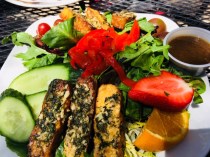
Today’s My Plate is the beautiful watermelon cake prepared for me by my office “birthday angel”.

Related Recipe: Watermelon Fruit Cake 

photo (3)

Cathy’s My Plate


My Plate Haiku

Hearts are not just reserved for romance

Every living thing

Is in love.

by Kat

you feed her what?

I asked and have received. In my post, Coming Full Circle, I invited guest writers to my blog. Hillary Savoie has kindly offered this story that deeply reminds how profound, intimate and powerful is the act of feeding ourselves and others. Thank you, Hillary.
The hospital dietitian looks at me surprised, a vague air of concern crossing her face. She’s been called in because the nurse didn’t understand my answer to his question about what Esmé eats.
“Esmé gets a blenderized diet through her g-tube,” I say, slowly. This isn’t my first rodeo, and I know what’s coming.
 “You mean hypoallergenic formula?” Skeptically…
“No, she’s allergic to the elemental formulas. She gets a blenderized diet. You know, regular food, just blended.”
Hillary and Esme

Hillary and Esmé

“Ok. But, what’s in it?” Yeah, now she’s clearly nervous.
This is the point at which I get annoyed. I want to say “Food. Food is what’s in it.”
I want to ask if she asks every parent what they feed their child or just those of us who feed our kids through a tube. I want to ask if she understands how much time my husband and I spend obsessing over establishing the perfect balance of nutrients…and if we could talk about something substantive instead. Really, I sort of want to ask her to leave, but I know that this might be helpful if I can hang on a bit longer.
Instead, I look her square in the face and say, deadpan: “We blend a mixture of Oreos, Doritos, and Happy Meals, that should be ok right?” Because most three-year-olds have consumed those things. Mine hasn’t. My child eats a textbook healthy diet: good fats, organic foods, lots of veggies, no sugar…balanced beautifully–for her– every day.
Now that I have passive-aggressively made my point, I say, “I have a spreadsheet outlining her diet and all of the nutritional components. Would you like me to email it to you so you can review it?”
“Yes, I will look it over and we can talk in a bit about it.”
An hour later she is back, “This is actually very good, can we discuss a few items in more detail?”
Now I know we’ve reached the point where we might get somewhere…where I might be able to gather some more information about how best to fine-tune her diet and keep Ez healthy. I know the dietician didn’t mean any harm. She probably had no idea that I am the sort of compulsive and nerdy mom that keeps excel spreadsheets monitoring not only Esmé’s nutrition but also her seizures, meds, input, and output. (Although had she read our chart it would likely have been clear).
Here’s the thing, though, having a child who is medically fragile and developmentally delayed involves letting people into all aspects of your parenting. My interactions with Esmé have been obsessively monitored and analyzed almost from the first time I held her. And it gets exhausting…nowhere more so than with regard to her food. Because it still feels like an assault on my very ability to care for my child–to nourish her properly and safely.
And I get it, my daughter is tiny–like below the first percentile tiny. And she’s medically fragile. She obviously needs optimal nutrition…but she is, first and foremost, my daughter. Feeding her properly is one of the most fundamental things I can do to care for her…and over three years of having our feeding choices questioned by people who do not understand the whole picture has just worn me down.
It seems that at some point everyone has had an opinion. But it is rare that someone can actually grasp all of the elements that come into play regarding how we feed Esmé and why we feed her the way we do. The tube part is easy–she was aspirating her food, likely since birth. She developed severe aspiration pneumonia and had cardio-respiratory arrest as a result. There was no choice but to use a feeding tube for Esmé. It saved her life, plain and simple.
Where it gets more complicated is when we discuss what goes into her tube. The majority of children with feeding tubes are fed some form of commercial formula–in our case originally it was a prescription hypo-allergenic elemental formula. I have nothing but gratitude that these life-sustaining formulas exist…they keep so many children healthy and alive. But they are absolutely not the answer for every child with a feeding tube. In Esmé’s case, these formulas make her ill, causing terrible vomiting, retching, and unhealthy weight gain. Unfortunately, no one could have predicted this–and by the time we had sorted it out I no longer had my stockpile of frozen breast milk. So we started looking for alternatives and found that a number of people who are tube-fed eat a blenderized diet. Blenderized diets can include almost any food you can think of–just blended up so that it can pass through the tiny opening in Esmé’s feeding tube.
When we started giving Esmé puréed fruit in her formula as a trial, we immediately noticed a change in her demeanor, frequency of vomiting/reflux, and strength. When we brought our findings to our (then) new gastroenterologist at Boston Children’s, I was worried we would be told that we weren’t allowed to do this. That it was a bad idea. And that we should go back to the status quo.
However, fortunately for us, our doctor not only saw the change we saw in Esmé, but she had experience with blenderized diets and she was completely supportive–helping us find resources on how to approach Ezzy’s diet, encouraging us to experiment with mixing in new foods that Ez might be eating by mouth if she was developing typically, brainstorming with us.
But more than that, she was the first doctor who helped us feel as though WE were driving Esmé’s nutrition, that we were the experts in Esmé and that the doctor’s job was to support us. She handed us back control over what went into our child’s body. She helped us feel like Esmé’s parents, rather than medical assistants carrying out doctor’s orders. And, thankfully, it was a fantastic answer for Esmé’s overall health and well-being.
We love making Esmé’s food. It feels like such a basic and caring thing that we can do for her. We wouldn’t do it if she was healthier on formula. But since she is thriving in this way, we truly relish in it, mixing it up every night with love, monitoring how changes affect her. I’m actually sort of jealous of Esmé’s diet. It’s filled with high-quality veggies, meat, oils, grains, and in pretty astounding variety. And, who knows, maybe an Oreo or two.
Hillary Savoie is Esmé’s mom, the founder of The Cute Syndrome Foundation, Chief Communication Maman at the Feeding Tube Awareness Foundation, and a recent Ph.D. in Communication and Rhetoric. She also writes a blog about life with Esmé: thecutesyndrome.blogspot.com. Please check out her important work that is striving to save lives.
Thank you for listening, sharing, following and supporting my writing. Please subscribe in the sidebar to receive notice of new posts. Comments and greetings always welcome.


In health, Elyn

my plate

My Plate Plate

My Plate Haiku

Food made joyfully

As a gift of time and self

Feeds body and soul.

by Anne-Marie

serenity now

In my last post, Peepin’ Out, I described my encounter with some test bags of Doritos Jacked. Since then, I realized that the incident was still bothering me. I am reluctant to write anything more about it because I do not wish to bring any attention to the product. Neither do I wish to linger in its wake. I am sensitive to being in the proximity of things that have bad energy.

I also worry that I drone on too much regarding matters related to junk food. There are so many more interesting things to focus on and write about in this big world of food and eating to which I devote my attention. Should I not be promoting positive messaging and discussing new and wonderful ways to nourish the body and soul? Can’t I just be perky and progressive? I find and follow so many adorable and inspiring blogs. It seems, however, that I have been assigned to the night shift, enlisted to cover the underbelly of the nutritional world. My beat is often in the neighborhoods of the most vulnerable. So, forgive me this further investigation of the matter.

a summer day at uncle bob's A serene summer day at Uncle Bob’s

My mission is to help the masses achieve both physical harmony and emotional bliss as it relates to what we put in our mouths. Teach people to eat right states my job description. Restore the order of things. Ensure that each generation attains a longer lifespan than the previous one. Put back “adult-onset” into the description of Type 2 Diabetes. Decrease health care expenditures on lifestyle-related chronic diseases and save our economy. Oh, and make us all be sleek and slim.

OK, I say as I don my kale green robe and lemony yellow gloves as part of my requisite super nutritionist uniform. How hard can it be? Humankind has achieved many miraculous things. Solutions to myriad problems have been creatively achieved. Hearing and sight have been restored, outer space has been explored, cars will soon no longer require drivers. All I have to do is make people eat more fruits and vegetables. Onward. And then, damn, I am brought to my knees by my arch-nemesis–a bag of chips.

Throughout the past few weeks, I have been swimming in the usual news–efforts by some members of Congress to roll back the Healthy, Hunger-Free Kids Act which set higher standards for school lunches, increases in global obesity, the recent opening of the film Fed Up, and gun violence. Amid these stories, I realized I had not gotten over the chip thing.

Initially, I had presumed that the promotion of those test bags was being carried out only in the convenience store where I was–another strategic plan just to annoy me. It then dawned on me that maybe it was actually part of a larger effort and perhaps there was something more I could learn about it. A quick search led me to an online discussion of these new test flavors. Apparently, Frito-Lay/PepsiCo charges customers to help them develop new sensory-stimulating ingredient formulations. I also learned that this jacked variety already existed. Yikes. It was already too late then to intervene with a large-scale letter-writing campaign. The chips were already jacked.

What did jacked even mean? None of the definitions I have found seemed really applicable to snack food. Is it market speak for GMO corn laden with MSG, seven artificial colors, and 140 calories per six chips? Does it refer to the bigger, bolder, and thicker attributes that the angry-looking packaging boasts? Are regular Doritos tiny, meek and scrawny by comparison? I really have no clue about the answers to any of those questions, but I am certain we have been jacked enough–and certainly hijacked when it comes to feeding the citizenry health-sustaining food.

Recently, Olivier de Schutter, the United Nations’ Special Rapporteur (cool title), submitted his final report to the UN Human Rights Council on the right to food. Mark Bittman summarized the report which “analyzes a food crisis that is international and systemic. It maintains that the will of the citizens and countries of the world can be powerful tools in making a new food system, one that is smart and sustainable and fair and describes that all over the world food systems are being rebuilt from the bottom up. And, it argues for statutory regulation on the marketing of food products.”

It is worth a look at the company link above to see the extreme global reach of these ill-devised products that find their way into the mouths of babes. An article in the recent issue of periodiCALS (the magazine of Cornell University’s College of Agriculture and Life Sciences) discussed current efforts in India to address malnutrition and growth stunting (which affects an estimated 341 million children worldwide). A researcher described the work being done in an extremely remote village that cannot be reached by land transport for three months a year during the rainy season. There, where such problems are endemic, young children are observed buying shining packets of cheese puffs and potato chips. The infiltration of this junk into this far corner of the world is noted. I am not shocked, though I am disturbed.

What motivates the continued development and insidious promotion of these adulterated and manipulated foodstuffs? When do their makers say, enough already? Let’s lay down our guns and claim our pyrrhic victory for the damage has been done and enough money made at the expense of others. I believe it is time to act upon de Schutter’s assessment that, “Many of us have arrived at the conviction that junk food and sugary drinks are like tobacco and deserve to be treated in the same way.”

There are so many wonderful people promoting incredible efforts to nourish the earth and its inhabitants in a kind and gentle manner, intelligently and respectfully. Their work is beginning to make a difference. No jacking required. I hope to highlight some of the amazing, loving and creative initiatives that have come to my attention in some upcoming posts. I am humbled by and grateful for what they are doing. They are making my job easier.

Well, thanks for letting me get this off my chest. Let’s welcome summer,  its bounty and those who grace us with its goodness.

Thank you for listening, sharing, following and supporting my writing. Please subscribe in the sidebar to receive notice of new posts. Comments and greetings always welcome.

In health, Elyn 

P.S.  Your My Plate Photo or Haiku can be right here when you send them to me!

IMG_1527

My (Jacked) Plate

My Plate Haiku

Pick your own today,

Happy kids in wide-brimmed hats,

Sweet summertime fruit.

by Nan


peepin’ out

easter-2120601_640 (1)Right before Easter, word got through to me that Peeps would now be sold year-round. I can’t say if I was aware or not that Peeps, those brightly colored marshmallow bunnies and chicks, only appeared on the market for a relatively short period of time each year in order to celebrate the Resurrection, but apparently, this change was newsworthy.
Truth be told, I am really naive and poorly informed on certain things, like candy and religion. I have been confused for decades between Cabbage Patch Dolls and Sour Patch candies–I think that is what they are called. During nutritional consults, I confess that I have uttered the words, “Do you eat like Cabbage Patch Doll candies?” Not just randomly of course, but in the context of an assessment when I am trying to professionally interpret someone’s intake while sounding like I know what I am talking about.

Somewhere halfway between childhood and deciding to become a nutritionist, I managed to wean myself off of my predilection for sugar woven into various seductive forms. Maybe the end of my relationship with Peeps coincided with my commitment to a vegetarian diet. Eating anything with a face became more distasteful, even if it was just an adorable ball of fluff. I have managed to avoid the things for a long while except for a time where a co-worker enjoyed flaunting her love of them in front of me like the Adoration.

But, upon hearing the news that Peeps would be popping up in stores on a daily basis, I reacted like Puxatawny Phil seeing his shadow on that fateful Groundhog’s Day. Down into the burrow, I hastily fled. Just when I thought that maybe things were getting a little better regarding our capacity to ameliorate incoming incarnations of sugar, this information startled me. To soften the blinding light of blatant commercialism, I had no choice but to go into the dark place below.

By candlelight, I read the small print. Peeps are stewarded by the Just Born Company in Bethlehem, Pennsylvania. According to the website, the wonderful combination of sweet colored sugar and fluffy marshmallow creates an unforgettable taste experience. And, furthermore, it states a great candy isn’t made, it’s just born. Jesus! Don’t these guys realize how bunnies multiply and that chicks are no slackers either when it comes to population growth? I guess they do. Apparently, 5.5 million Peeps are born each day! OMG. See how!

This pronouncement of a seemingly immaculate conception in Bethlehem, rather than some sticky mess, presented a whole new ball of carnauba wax–one of the ingredients in Peeps along with sugar, corn syrup, gelatin, potassium sorbate, natural flavors and red 3, blue 1, yellow 6, or yellow 5 depending on the color. With 6.8 grams of sugar, each Peep is endowed with 1.5 (rounding down) teaspoons of essentially pure sugar–the kind that sends our bodies into metabolic-altering, insulin-demanding, fat-storing sugar shock. (Maybe best to use them to make amazing dioramas and Peep Shows.)

Eventually, In my quest to find out more about this situation, I was forced back above ground. Donning sunglasses, my research led me to my local national chain drug store where I made a few laps around the multi-aisle candy section disguised as a normal sugar craving person. I was forced to blow my cover by asking the clerk where the Peeps were. She reacted as if I must be from another planet. I did not bother to defend my citizenship as an earthling and neither did I explain the whole groundhog thing. But I did say my query had a scientific purpose–or something like that. Obviously, Peeps were not to be found after Easter. I was six weeks too late.

But, I said, I thought they were available all year now, in a widening array of flavors. She had not gotten that memo. She instructed me to go to the company website if I wanted more information. I thought that was funny. She did add though that this year she had gotten her little daughter some watermelon ones, so maybe I was right. I  stiffened like a stale Peep.

Like Catcher in the Rye’s Holden Caulfield who deemed himself the protector of childhood innocence, perhaps I take my influence as a nutritionist of the people and for the people a bit too seriously. In my head, I am charged on a daily basis to personally obliterate obesity, or on a larger scale to clean up this whole nutritional mess and its adherent ills. I liked the care and assistance the drug store clerk had given me despite her initial recoil, and now by association, I cared about her daughter. Could I not issue a global recall of these wolves in chicks’ clothing candies due to salmonella poisoning, avian flu or something to save the children? My usual quandary about how to reconcile the intentions of capitalist markets and the public health smacked me in the face along with another more subtle underlying dilemma–who am I to take sugar from a baby? Don’t they need some sweetness in this cruel harsh world?

Well, I figured it was time to move back up. As by now spring had finally arrived in these parts after the long, extended rodent-predicted winter, I decided it should be safe to step back into the sunlight. Besides, another holiday was upon us– Memorial Day. This one, should actually quell our insatiable appetites, right? But, alas, like Holden, I was once again in for some surprises.

A little weekend travel led me into a highway rest stop convenience store. There, upon the laden Frito-Lay chip rack, I noticed two different generic bags labeled, Doritos Jacked–Test Flavors 404 and 2658. Jesus. I am not positive, but I think the deal is that if you buy a bag you get to let someone know how jacked you were. Have you ever encountered such a thing?

The ingredients list was complete with all of the usual suspects that entice and entwine us. I had a sudden urge to barricade the rack to prevent the innocents from getting their hands on these hyperactivity-inducing substances. But, then I thought, hey, don’t those good folk down there at Frito-Lay and PepsiCo deserve to make a little profit? Just look at all those flavor scientists they are providing work for. And, aren’t our kids maybe just a little too mellow? Besides, I have read the Frito-Lay Promise (link no longer available). Apparently, I can relax, it is all good. And, soon, kiddos are going to be able to make their own snacks on 3-D Printers anyways. Yikes.

Thank you for listening, sharing, following and supporting my writing. Please subscribe in the sidebar to receive notice of new posts. Comments and greetings always welcome.

In health, Elyn

Related Post: Wings of Desire

Related Recipe: 5-Minute Carrot Truffles (bunny approved)

(Update 2018: And, oh my goodness, it looks like there is some trouble down on the peeps farm regarding the Just Born Company’s employee pension plan.)

(Update 2020: This just in! Hot Tamale Peeps. No comment.)

IMG_0612 Emma’s My Plate

My Plate Haiku

The farmers’ market

Each egg at the dairy stand

A different color.

by Enki


meditation v medication march madness rerun

This is a slight revision of one of my earliest posts.   I present this older one while I am busy meditating this week on matters such as the recent break through news about saturated fats and heart disease; 24/7 automated cupcake dispensaries; and, the myriad of nutritional dilemmas that cross my path daily.  

Once upon a time, I was walking down the hall of the Health Center. Passing a closed exam room, I heard the doctor who was inside with a patient say, “Here’s a meditation for you”.  Ah, meditation. Instantaneously, I felt my spine lengthen, my breath deepen and my third eye got a nice little buzz.

Anne-Marie’s eggs

But wait. Which of the Young Living Essential Oils that I frequently use had I just inhaled? Was it the oil blend Hope or Dreamcatcher? I must have been hoping or dreaming. By the time my foot that was in back had overstepped the other one and placed itself in front on the cold, hard and very clean commercial tile, I realized she hadn’t said meditation. She said medication. Of course, silly of me. Where did I think i was?

I must digress for a moment.  The floors in the Health Center are incredibly shiny.  Everyday, they are cleaned in Zen-like fashion by a woman named Pam.  After dancing with the waxing machine,  she traces every seam with a long stick with a tennis ball attached to the end, and then with tiny little tools she meticulously erases every scuff mark with the hands of a surgeon.  The place glistens.

Perhaps my momentary delusion was fueled by the fact that the night before I had seen this amazing film called, May I Be Frank.  It is the true tale of transformation on the physical, emotional and spiritual planes of an overweight, lonely, ill, middle-aged ex-addict named Frank, living in San Francisco.  His soul yearning unexpectedly leads him into a raw food restaurant named Cafe Gratitude and the story begins. Through the use of whole foods, affirmations, holistic health modalities, and the receiving of love, true and profound healing ensues. In the film, there is a scene where he goes to a massage therapist. The massage unleashes a deep emotional release in Frank that simultaneously relieves his chronic back pain. I noticed that on the table in the massage room was a collection of Young Living Essential Oils that I am sure were used.  I tell you, these oils are powerful.

How many times a day is the word medication used in the Health Center?  I even say it about eleven times — and  I am mainly talking about green beans and sardines. Venturing a guess–seven hundred and nine times. No, I don’t think I am exaggerating. If anything, I am underestimating.  There is a lot of medication going down.  (Just today I saw a statistic that said 70% of Americans are on at least one prescription medication.)

Imagine if we could subliminally say meditation instead of medication this many times. What meditation are you taking? I am going to prescribe you some meditation. What’s that? You are calling for a refill on your meditation? Which one? You can pick it up at the sanctuary–along with your wheat grass. That would simply and certainly alter the medical paradigm.

We would do well to consider our health facilities more so like holy temples with acolytes arriving for sustenance and to promote meditation as a veritable ally in the healing of ills.  Though the practice of integrative medicine is growing in acceptance and availability–my yearning is to see it accessible and as a model of care–particularly in high risk communities. This film is one of many these days that provide witness to inspiration, possibility and even necessity.  Pam’s devotion to her task has prepared the sacred ground.  When the time comes, may we be ready.

In health, Elyn

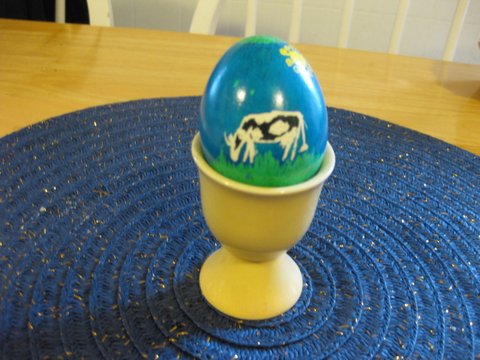
In honor of the egg–its promise of rebirth, its seasonal symbolic representations and its role as an example of dietary dithering–for the month of April I will gladly accept submissions of MyPlate Eggs of your own inspiration.  Thanks to my multi-talented friend Anne-Marie for her beautiful  Ukranian pysanky eggs.  Please submit in comments or at zimcat@verizon.net).

IMG_0612

Emma’s My Egg


My Plate Haikus

The farmers’ market/Each egg at the dairy stand/A different color.  by Enki

Food made joyfully/As a gift of time and self/Feeds body and soul.  by Anne-Marie

Sid Caesar Salad

It happened again–my finding a nutrition-related story (or it finding me) where I least expected it. This time it was not “not a laughing matter”–but actually rather amusing.

Always appreciative of those who have made the world a funnier place, the recent passing of comedian Sid Caesar led Pete to look for some footage of this icon of American humor. I sat nearby as he clicked here and there on his computer. He immediately started laughing, listening to the “double talk” for which Caesar was particularly famous.

Image result for sid caesar health food restaurant

Sid Caesar and Imogene Coca Health Food Restaurant

Soon I was giggling with him. A few minutes later, he told me to come to look at what he just found. I leaned over as he played a sketch for me from Caesar’s long-running TV show, Your Show of Shows, called Health Food Restaurant. This piece dates to the early 1950s. Caesar and Imogene Coca play a married couple out to dinner at a fancy New York City restaurant. Yet instead of the steak, sausage, snails and hot tamales that Caesar craves, here at the Vitality Health Food Kitchen where Coca has taken him, there is only Pala Paka plant blossoms; the Vitamin B1 B2 B3 C D and H Dinner for Two; homogenized bone meal and wheat germ with a side of cructose; and spaghutti, made from a cabbage extract and a cauliflower derivative. Caesar of course mocks, whines, pleads and gags his way through the menu as described by the waiter, played by Carl Reiner–who you may recall, I once met. But, impressed by the youthfulness and vitality of the other diners, and in an earnest attempt to appease his wife, he forgoes his personal desires and literally digs into the dinner salad served with a set of gardening tools for silverware.

Although “health food” and “plant-based” proponents and movements have probably been around since our Paleo beginnings, there was just something very surprising about seeing this sketch which was made during a period after which we seemed to have left vegetables behind on rural farms and before the Back to Nature movements of the 1970s. It was a time maybe of boiled potatoes and blanched green beans at best which also coincided with the peak years for deaths from heart disease. As this interesting history details, it was also a  time marked by an increase in the use of hydrogenated fats and vegetable oils and the advent of pasteurized milk.

I am not sure we can pinpoint the nadir of the American diet. Though the 1950s can be critiqued for its focus on meat and dairy along with the increased use of processed foods, plasticized fats, and high smoking rates, things seem to have gotten a whole lot worse since then. I don’t think we have hit bottom but there are some signs we are beginning to emerge from the Dark Ages.

Perhaps I am just being a little naive. Just as we don’t believe that people in the “old days” ever had sex, maybe I can’t imagine the nature of health food consciousness before my own time and the dietary context in which it existed. Though the use of refined sugar is presented as a modern-day scourge, its grip took hold long ago. A brief look into biographical information about health and fitness guru Jack LaLanne who was born in 1914–ages ago–interestingly states that he described himself as a sugarholic and junk food addict as a young boy with associated behavioral problems. His early education about natural foods changed the course of his life. Of course, attention to the attainment of physical, emotional and spiritual health has coursed through human history, the admonishment of gluttony is a big theme in the Bible, and there have always been grandmas telling us to eat our vegetables.

Nonetheless, Health Food Restaurant seems quite anachronistic for its day–at least six years before Jack LaLanne’s pioneering fitness show began airing nationally in 1959. Although it was just a spoof, it seemed rather prescient addressing current anti-aging and food toxicity issues. One of the dishes is mentioned to be good for the ankles. The edema of the lower extremities is a common symptom of poor heart, kidney or liver function. Interestingly, Sid Caesar who seriously battled alcohol addiction and depression eventually became a devoted natural food and fitness adherent to which he credited his healing–and maybe his longevity, being 91 at the time of his passing.

The sketch touched on a few things that I think about. It reveals the intensity of our food attachments and belief systems and even their influence on relationships. Though we usually reference money, sex and religion as divisive issues, food, and eating habits probably belong somewhere on that list.

Additionally, it looks at the center of a society’s dietary culture at any given time and how far out is its fringe. How and why did the standard American diet evolve and deteriorate in such a relatively short period of time compared to other cultures? What was sacred and what was sacrilege as we shifted from rabbit stew and acorns to beef and potatoes, to chicken nuggets and french fries? Nature, economics, politics, biology, capitalism, and science all drove this complicated national trajectory. For all that was good and bad, it seems that we did not slow down and smell the Pala Paka blossoms and those that did were either ignored or derided. It is interesting now to see how the tide is turning as we confront current health and environmental crises. It is those who were on the fringe who may be forging our new direction.

Mockery is an innate behavior with evolutionary purposes that makes us defensively joke before we proceed. Some from the tribe must be brave enough to venture out while the others sit back and have a good laugh at their expense. Thank God laughter seems to be good for our health. I am particularly grateful to those who bless us with their humor because as I look down as I stomp around in the primordial swamp of our food culture, I see far too many swollen ankles–enough to break my heart. RIP Mr. Caesar.

Well, as they say at the Vitality Health Food Kitchen, “Good Health To You and Good Health To Everybody”.

Thank you for listening, sharing, following and supporting my writing. Please subscribe in the sidebar to receive notice of new posts. Comments and greetings always welcome.

In health,  Elyn

(Update 2020: RIP Carl Reiner who recently passed away at age 98–vital until the very end.)

IMG_1796

Susan’s My Plate Drink

My Plate Haiku

Do you carrot all for me?

My heart beets for you, with your turnip nose and your radish face,

You are a peach. If we cantaloupe, lettuce marry.

Weed make a swell pear. Author unknown

(This post is dedicated to my friend Susan who is heading out to join the Peace Corps. May her plate be filled with tasty Armenian cuisine and her heart  with good things.)