Archive | August 2012

the dance of diabetes

It is a modern dance though it has its roots in classical forms. It was originally choreographed for just a handful of dancers but now it is staged for many. In recent years it has been performed all around the world. I have seen it many times.

The curtain rises and the stage is empty. Slowly, alone and in pairs, the dancers enter–men and women. They are dressed simply in tights and leotards, all in tones of soft browns and grays, with one wrist wrapped in a band of red fabric. The dancers inhabit their space with sparse yet defined movements, engaged with each other, but each portraying a distinct set of steps.

Suddenly, one of the dancers contracts his center and extends one arm forward, palm facing upward. While he curiously studies the fingers of the upturned hand, his other arm reaches behind and then quickly arcs overhead coming full circle its palm slapping down against the other. As palms meet, the dancer deepens the contraction, a pained look grabs his face. Grazing his fingers along the wristband it unfurls in a flutter of scarlet fabric. He straightens and assumes his previous movements–the colored cloth now flowing behind his every step. ballerinas-g39791c62a_1920

This contraction of the body, where the torso curves forward over the controlled pelvic area is a fundamental movement in modern dance. Martha Graham–the mother of modern dance– developed the gesture from observing the physical manifestation of grief in the body.

Soon, another dancer stops. This time a woman. She too contracts her center, contemplates the fingers on her upturned palm and follows also with the circling arm, the jolting slap and the unfurling of the scarlet rivulet of cloth. And, so it goes. In syncopated rhythms, new dancers initiate the pattern while those already afflicted repeat it over and over. Their eyes now remain fixed on their upturned hands that lead them forward.

As the tempo of the music intensifies so does the frenzy of the dancers now marked in red–about 10 percent of the performers. They respond to the dissonant notes that punctuate the melody while the others maintain a more composed presence. The noise of the slapping of the hands amplifies. Sporadically, they also clasp fist in hand drawing their arms in toward their torso or legs. Again the contraction of their bodies and the grimaced faces. Continually, they return to their earlier movements but always with one palm upturned and leading their way.

As the dancers’ paths intermingle, the rivers of red become intertwined among all of them. There is a flurry of color amid the neutral gray and brown hues. Some of the grieved are gently lifted up and held in the air or are tenderly embraced while others dance quietly alone extending their arms upwards calmly or angrily beseeching the heavens. A few tuck the wounded hand behind their backs, tethering its gestures and move on without it–though the red trail remains.

Eventually, the music regains a slower pace. The dancers all resume the steps of the first part of the piece regaining semblance of movements of everyday life and common interactions. Slowly they each quietly walk off stage. The lights dim.

This is the representation of the experience of diabetes. Its steps are hard to master and its care is tempting to ignore. Unsuspecting individuals in unprecedented numbers, an abrupt diagnosis and suddenly a life marked by the demands of modern blood-letting. Rather than preferring to allow one’s life fluid to course through the body unseen and uninterrupted, diabetes requires a more intimate relationship.

The hand must reluctantly but gracefully present itself. Fingers must be pricked, poked and squeezed multiple times a day begging the deliverance of the droplets of our inner essence. The sacrificial digit must be chosen and its offering must then be measured with precision to determine blood sugar levels. Numbers digitally displayed on a meter determine one’s destiny for the day as well as for the tomorrow. Medications are quickly and somewhat arbitrarily prescribed–some of which are delivered by measured injections to various parts of the body.

Food becomes more enemy than friend and each bite becomes suspect and open to investigation. Kidneys, eyes, and toes–and yes, hearts, are no longer private property but are open to the purview of medical technicians. And yet, the dance of life must go on. Interestingly, Martha Graham once stated that the mission of her work was to “chart the graph of the heart”. In essence, diabetes monitoring requires the same.

Not everyone appreciates modern dance. This is an unsettling piece. But, diabetes can be re-choreographed as its treatment is improved and, more importantly, as its causes are prevented.

Sharings on the experience of managing diabetes respectfully welcomed.

Thank you for listening, sharing, following and supporting my writing. Please subscribe in the sidebar to receive notice of new posts. Comments and greetings always welcome.

In health, Elyn
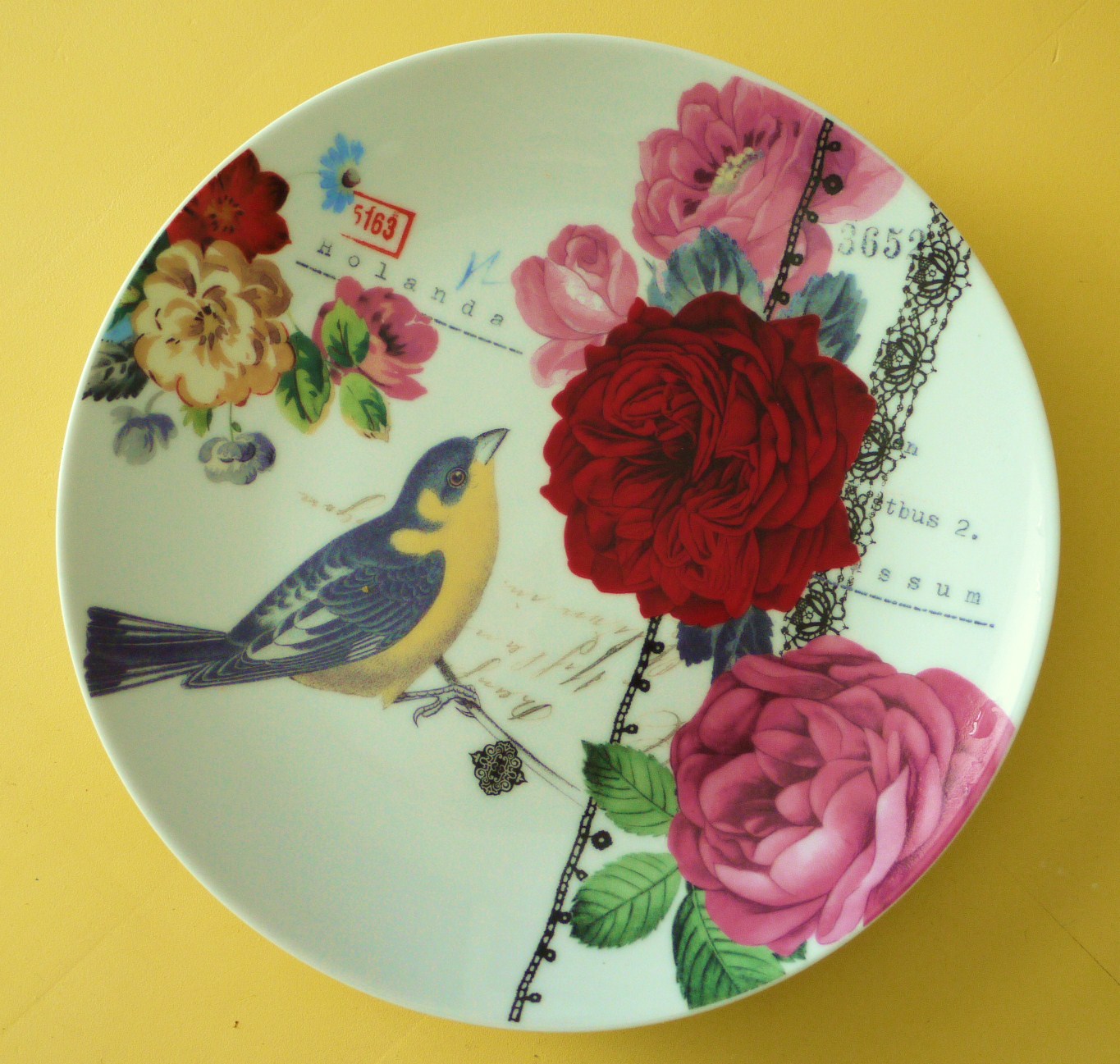
My Plate

My Plate Haiku

Food is medicine

Farmers are doctors, Cooks priests

Eat, pray, eat, pray, love.

By Gordon

oh mother

I was hoping not to have to work today. It is Sunday and I promised myself a little repose. So there I was actually lounging on the couch this morning when the news of New York City Mayor Michael Bloomberg’s announcement of the New York City Health Department’s Latch on NYC breastfeeding initiative filtered into my airspace from an NPR podcast.

breastfeeding

breastfeeding (Photo credit: sdminor81)

Clearly, the launch of this voluntary program for New York City’s hospitals was timed to coincide with World Breastfeeding Week. The story started off nicely enough with a rational presentation of the benefits of breastfeeding and informed that 27 out of 40 New York City hospitals have already signed on to the recommended policy. But, it then whacked me with a tirade of the backlash (and responses) to the initiative–bemoaning that women do not want to have their parenting decisions enforced, especially by a man–and specifically not by health policy promoting Mayor Michael Bloomberg.

I rolled over and groaned into the cushions. My hopes for a relaxing day were shattered. I intended to glue my attention to the Olympics–one of the rare times I surrender to watching TV– but this report was going to interfere. Having discussed the topic of breastfeeding previously, I had no choice but to respond to this in a timely manner. Water polo and volleyball could wait, but this must be addressed before track and field and gymnastics takes to the screen.

In brief, Mayor Bloomberg did not make up these policies, and in fact, they are not mandated. These are recommendations consistent with the guidelines of the Baby-Friendly Hospital Initiative. Other larger jurisdictions have already implemented these policies. The intention is not to take choice away from women or to impound life-giving nourishment. It will not send women back into the kitchen chained to the stove with babes pulling on the teat as some editorials that I read implied.

Instead, it is a long-overdue remediation of a situation that separated the human species from their species-specific milk and compromised in both subtle and profound ways the health of many moms and babes. The superiority of human milk, as compared to artificial milk or formula, for human babies is not disputed and its immuno-protective properties are well established. There are many other benefits as well of mother’s milk as a substance and breastfeeding as a method.

What is not as well-known is that formula companies have participated in the disruption of this mother and child feeding relationship for many years and that this has promoted a cultural ignorance about the benefits of breast milk and a communal lack of wisdom regarding supporting women in this most natural of human behaviors. Big corporations have been the beneficiaries of immeasurable profits by influencing infant feeding using extreme measures by literally getting invited right into the hospital.

Pregnant women are wooed with coupons, samples, and free merchandise. New moms are given goodie bags with loyalty promoting formula brands. What formula a baby is started on has nothing to do with the baby or the doctor, but by whatever company got their hands on those tiny sucking lips first. Where else does this marketing intrusion occur so blatantly in matters related to health?

Women’s efforts to nurse have been sabotaged in hospitals for decades by babies being given sugar-water or formula without consent. Birth attendants including doctors and nurses not educated in lactation have also impeded the mother’s success at nursing. The result is a society that for decades has been led to believe that nursing is difficult, inconvenient and an impediment to maternal freedom. What has created barriers for mothers choosing to nurse is not nursing, but a lack of education, limited support, pathetic maternity leave policies, lack of comfortable places for nursing and pumping and a prudish culture that has turned to feed at the breast into a lascivious act aggravated by laws that even make nursing in public illegal in some places.

If you wish to discuss enslaving factors as regards women’s choices, this is what people should be concerned with–not the new policies. Of course, there will be some situations where babies will require formula, and there will be women who will choose formula feeding for a multitude of reasons. But, I am pretty sure the locked cabinet that the policy suggests will not be in the hospital basement by the janitors’ supplies and that women won’t be found dragging their IV poles down the hall in desperate search of a contraband formula to sate their starving babies. And, I strongly doubt that nursing staff will be utilizing methods of intimidation to enforce breastfeeding.

This is just an opportunity to fully educate and inform and to take the profits out of our babies’ bellies. It is one of a long series of efforts by many health care professionals to enhance the health of women and children in both the short and long-term. This is not rocket science nor is it evidence of a nanny state. If we as mothers have to choose our battles–this is not the one to wage.

Thank you for listening, sharing, following and supporting my writing. Please subscribe in the sidebar to receive notice of new posts. Comments and greetings always welcome.

In health, Elyn

Related Posts: Blessed Feeding; To She Who Loves Us; A Winning Goal; Breastfeeding Redux

photo (3)

Cathy’s My Plate

My Plate Haiku

Blueberry bushes

Three children with empty pails

Pluck, pluck, crunch, exhale.

by Michael